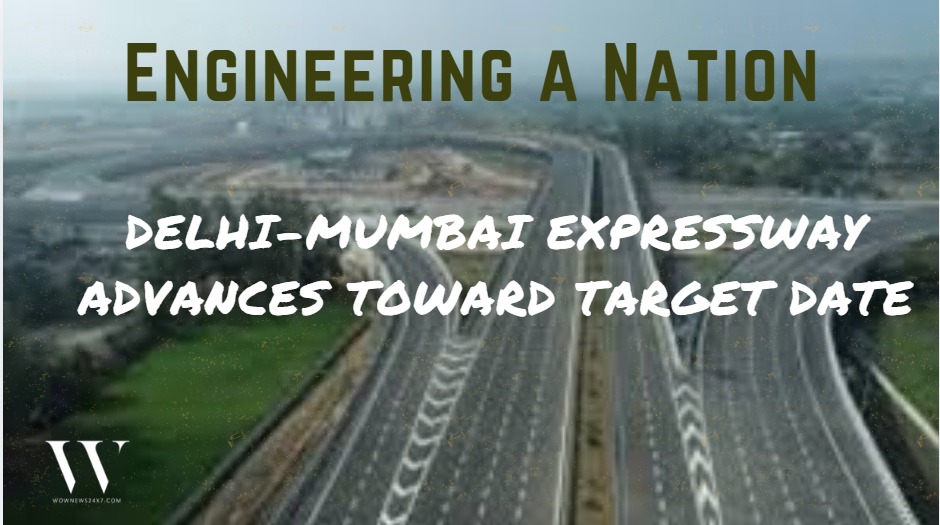
As of June 2026, the Delhi-Mumbai Expressway is significantly operational, with the Delhi-Vadodara stretch nearing completion. The 1,445-km project, aimed at slashing travel time between India's major financial hubs by half, is utilizing advanced traffic management systems to ensure safety while driving long-term economic growth across six states.
The Delhi-Mumbai Expressway, a cornerstone of India’s infrastructure modernization under the Bharatmala Pariyojana, is moving toward its critical completion window as the government pushes for the final operationalization of key segments. Designed to slash travel time between India’s national capital and its financial hub, the Delhi-Mumbai Expressway represents a significant leap in regional connectivity across six states.
While large portions of the project are already facilitating high-speed transit, officials have confirmed that the Delhi-Vadodara section is on track for completion by June 2026. This development marks a vital step in easing the logistics burden on existing arterial routes and fostering economic corridors between the northern and western regions of the country.
Progress and Current Operational Status
The project, which encompasses a total length of 1,445 km including spurs, is being implemented in 54 distinct construction packages. According to recent data from the National Highways Authority of India (NHAI), approximately 929 km of the expressway is currently operational.
The route traverses Haryana, Rajasthan, Madhya Pradesh, Gujarat, and Maharashtra. Significant milestones have already been achieved, including the completion of India’s first eight-lane road tunnel in Kota, Rajasthan, which allows for seamless transit through the ecologically sensitive Mukundara Hills Tiger Reserve. While the majority of the expressway is progressing toward its target, some specific packages in Gujarat are facing localized delays, with completion in those segments now projected for March 2028.
Enhancing Safety and Infrastructure Standards
Beyond the physical construction, the NHAI is prioritizing safety and traffic management on the operational stretches of the Delhi-Mumbai Expressway. Authorities have begun the implementation of advanced traffic monitoring systems, including the use of high-tech Automatic Number Plate Recognition (ANPR) cameras.
These systems are being deployed to enforce strict lane discipline and speed regulations. Officials noted that the software has been upgraded with specific "offence codes" to detect dangerous driving behaviors, such as sudden lane changes, which have been identified as primary causes of accidents on high-speed, access-controlled corridors.
Impact on Economic Growth and Logistics
The significance of the Delhi-Mumbai Expressway extends well beyond reduced commute times. By serving as a high-speed logistical backbone, the expressway is expected to:
Reduce Travel Time: The transit duration between major economic hubs like Gurugram and Vadodara is expected to drop from the current 20–22 hours to approximately 10–12 hours.
Boost Industrial Corridors: Improved connectivity is designed to facilitate faster movement of goods, supporting industries in Rajasthan, Madhya Pradesh, and Gujarat.
Future-Proofing Infrastructure: The design includes a 21-meter-wide median, allowing for future expansion to 12 lanes to accommodate rising traffic volumes over the coming decades.
Official Statements on Project Timeline
In a recent address to Parliament, Road Transport and Highways Minister Nitin Gadkari emphasized the government’s commitment to finishing the project. Officials stated that while some segments in the Gujarat corridor have experienced logistical hurdles, the broader objective of connecting Delhi to the financial capital via a high-speed, signal-free corridor remains a top priority for the Ministry. The deployment of Special Purpose Vehicles (SPVs) like DME Development Limited (DMEDL) has been instrumental in ensuring a sustainable financing model for the remaining phases.
Key Facts at a Glance
Total Project Length: 1,445 km (including spurs).
Current Progress: 929 km is currently operational for traffic.
Design Standards: Access-controlled, 8-lane (expandable to 12-lane) highway designed for speeds up to 120 km/h.
States Covered: Delhi, Haryana, Rajasthan, Madhya Pradesh, Gujarat, and Maharashtra.
Frequently Asked Questions
1. When will the full Delhi-Mumbai Expressway be finished?
While the Delhi-Vadodara section is slated for completion in June 2026, some specific packages in Gujarat are expected to be fully ready by March 2028.
2. How much time will it save for travelers?
The expressway is expected to cut the travel time between major points, such as Gurugram and Vadodara, by more than half, down to 10–12 hours.
3. Is the expressway currently open to the public?
Yes, significant stretches of the expressway, including sections in Haryana, Rajasthan, and Gujarat, are already operational.
4. What safety measures are in place?
The NHAI has implemented strict speed limits, automated lane-violation detection via ANPR cameras, and dedicated wildlife crossings to ensure safe and efficient travel.
Source: Ministry of Road Transport and Highways, National Highways Authority of India, Press Information Bureau