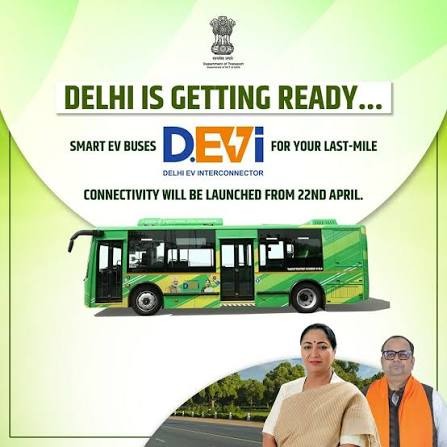
The Delhi government is planning to launch 7-seater electric vans to improve last-mile connectivity in congested and narrow residential areas. This initiative, part of the broader Delhi Electric Vehicle Policy 2026, aims to bridge gaps between neighborhoods and public transit hubs using an affordable, eco-friendly shared mobility model.
The Delhi government is initiating a new shared mobility pilot project to bridge connectivity gaps in the capital's most densely populated residential zones.
NEW DELHI — In a strategic move to address last-mile connectivity challenges, the Delhi government has announced plans to introduce a fleet of 7-seater electric vans designed to navigate the city’s narrowest lanes and most congested neighborhoods. Transport Department officials confirmed on Thursday that the initiative aims to provide an affordable, eco-friendly transit solution for areas currently underserved by standard public bus networks.
The proposed service is envisioned as a flexible feeder system, linking residential colonies, village clusters, and unauthorized settlements directly to major Metro stations and primary bus corridors.
Bridging the Last-Mile Gap
Transport officials describe the plan as a modernized, electric evolution of the existing "Gramin Sewa" model. While large-scale bus infrastructure serves the city’s arterial roads, the 7-seater electric vans will be specifically tasked with maneuvering through dense residential pockets where traditional vehicles cannot operate.
The initiative is a component of the recently unveiled Delhi Electric Vehicle Policy 2026, which seeks to establish the capital as a global hub for electric mobility. By integrating these smaller vehicles, the government intends to offer a multi-stop service model that prioritizes convenience and accessibility over point-to-point taxi services.
Strategic Operational Model
The project is currently in the preliminary stages, with the government preparing to engage with stakeholders, including electric vehicle (EV) manufacturers and private operators. The Transport Department is expected to invite proposals regarding vehicle specifications to ensure the chosen models are robust enough for daily urban usage while maintaining strict safety standards.
"We are exploring an EV-based shared mobility model similar to Gramin Sewa for last-mile connectivity," an official stated. "The goal is to introduce small electric vehicles that can comfortably operate in narrow lanes while providing affordable shared transport."
The vehicles will likely be managed through a mix of government operations and certified private operators, with a fare structure designed to be lower than existing shared transport options to encourage public adoption.
Impact on Urban Mobility
The deployment of these electric vans is expected to yield several long-term benefits for the capital:
Emission Reduction: By replacing fossil-fuel-dependent paratransit with electric models, the city aims to further lower its vehicular emission footprint.
Enhanced Connectivity: Residents in previously isolated or congested clusters will gain reliable, frequent access to the broader public transit grid.
Economic Efficiency: The move supports the growth of the EV ecosystem in Delhi, aligning with the government's investment of nearly ₹15,000 crore in the broader EV policy.
Official Sources
Delhi Transport Department: Provided the preliminary details regarding the 7-seater van model and the objective of the project.
Delhi Electric Vehicle Policy 2026: The overarching framework guiding the capital’s shift toward sustainable public transport and the electrification of commercial fleets.
International Council on Clean Transportation (ICCT): Experts have highlighted the electrification of paratransit as a critical step in achieving sustainable urban mobility.
Why It Matters
This project is significant because it addresses the "last-mile problem" that often deters commuters from using public transport. By making it easier to reach a Metro station or bus stop from one’s doorstep, the government expects a shift in commuting habits, which could lead to reduced private vehicle usage and lower traffic congestion across Delhi's busiest wards.
Key Facts at a Glance
Capacity: 7-seater electric vans designed for narrow, high-density lanes.
Objective: Last-mile connectivity between residential neighborhoods and transit hubs (Metro/bus corridors).
Policy Context: Aligns with the Delhi Electric Vehicle Policy 2026.
Operational Mode: Multi-stop feeder service, functioning as a shared mobility model.
FAQ
1. Who will operate these 7-seater electric vans?
The service is planned to be operated by either the Delhi government or government-certified private operators.
2. When will the service be operational?
The project is currently in the preliminary phase; the government is now inviting stakeholders and manufacturers to suggest suitable vehicle models.
3. Will the fares be different from current shared transit?
Officials indicated that the service aims to operate at fares lower than existing shared public transport options.
4. Why are these vans being introduced?
They are specifically designed to navigate narrow residential lanes and congested areas where full-sized electric buses cannot reach.
Source: Delhi Transport Department; Delhi Electric Vehicle Policy 2026; Press Information Bureau (PIB).