The Delhi government is launching a pilot project to install the capital's first "solar tree" at the Delhi Secretariat. Developed by the power department, the vertical metal structure optimizes solar capture on a minimal footprint, featuring public seating and battery storage to power local street lighting.
NEW DELHI — The Delhi government is executing a new green infrastructure initiative with the planned installation of the national capital's first "solar tree" at the Delhi Secretariat. The metal, branch-like photovoltaic structure will serve as a pilot prototype designed by the power department to pioneer compact renewable energy generation in space-constrained urban environments. Located at the central administrative complex that houses the offices of the chief minister, cabinet ministers, and senior bureaucrats, the project aims to establish a scalable framework for deployment across high-traffic intersections and public spaces citywide.
Technical Specifications and Urban Space Optimization
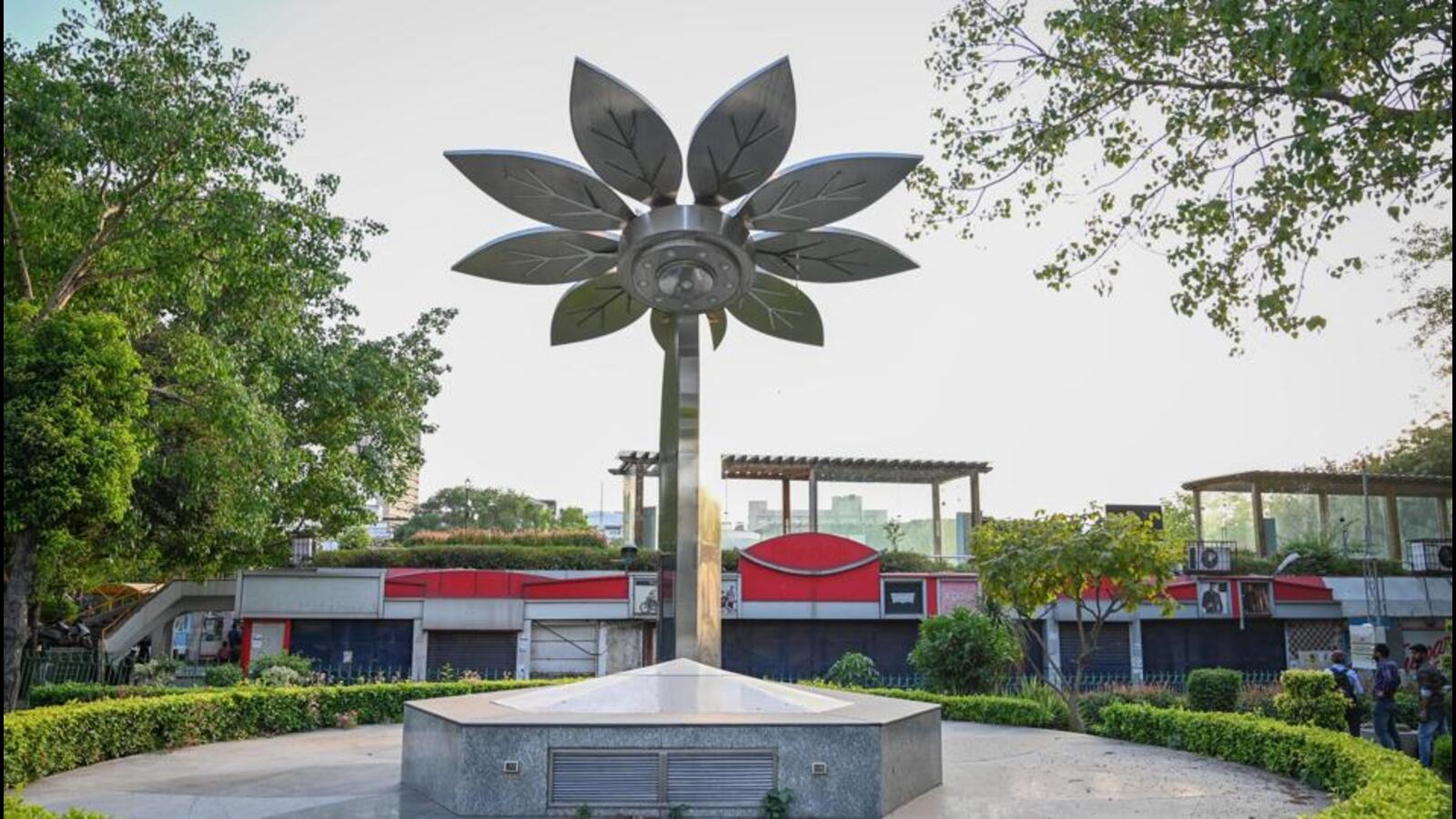
Unlike traditional rooftop or ground-mounted solar arrays that require extensive horizontal space, a solar tree uses a vertical architectural layout. Photovoltaic panels are mounted on metal structures that mimic tree branches, substantially reducing the physical footprint required on the ground. According to power department officials, this vertical arrangement allows multiple solar cells to capture sunlight at optimized angles while occupying minimal land.
The pilot installation at the Delhi Secretariat is being engineered to serve a dual civic purpose. The base of the metallic tree structure will incorporate public seating arrangements, creating shaded resting spaces for visitors and pedestrians. The energy harvested by the solar branches during peak daylight hours will be directed into integrated battery storage systems built directly into the foundation. This stored energy will function independently to power localized public utilities, reducing strain on the regional grid.
Grid Integration and Smart Solar Architecture
The Delhi Power Department is developing the project in active consultation with municipal engineering agencies. Technical evaluations are currently underway to finalize the optimal kilowatt capacity of the tree, the structural alignment of the panels, and overall electrical grid feasibility.
Engineering teams are assessing the inclusion of automated mechanical tracking systems. These systems allow the solar panels to rotate dynamically throughout the day, tracking the sun’s trajectory to generate up to 10% to 15% more electricity than conventional static solar installations. The clean energy generated by the Secretariat pilot will be routed directly to feed localized infrastructure, including public street lighting networks and outdoor electronic utilities.
If the pilot achieves its projected net-generation targets, the Delhi Government intends to replicate the design at major roundabouts, commercial hubs, and public parks across the National Capital Region (NCR).
Strategic Impact on Urban Consumers and Businesses
The deployment of localized solar trees addresses a critical challenge faced by municipal planners in dense megacities: the scarcity of open land for clean energy production. For urban citizens and pedestrians, the structures provide immediate micro-utilities, such as shaded public seating and green-powered device charging stations.
For commercial enterprises and municipal systems, the scalable adoption of solar trees opens up new avenues for distributed energy resources (DERs). By leveraging vertical spaces like traffic islands and walkways, the city can systematically scale up its renewable generation capacity without needing costly land acquisition processes. This decentralization helps stabilize local distribution grids during peak summer load periods, contributing to lower carbon emissions across the metropolitan area.
Official Sources Section
Project outlines, site assignments, and engineering goals are based on public statements issued by the Energy Efficiency and Renewable Energy Management Centre (EEREM) under the Delhi Power Department. Structural designs follow the standardized vertical photovoltaic guidelines established by the Council of Scientific and Industrial Research (CSIR) and the Central Mechanical Engineering Research Institute (CMERI), which previously pioneered early solar power tree innovations in India.
Quote Section
"Discussions are underway regarding the capacity of the solar tree, the alignment of solar panels and its overall feasibility. The plan is to utilise the electricity generated by these solar trees for street lighting and other public infrastructure."
— Delhi Power Department Official
"According to organizers, the installation at the Secretariat is intended to serve as a functional prototype, demonstrating how green energy infrastructure can be integrated into high-density civic spaces without compromising public land utility."
Why It Matters
This pilot project marks a practical shift in how metropolitan areas approach renewable energy adoption. By utilizing vertical design principles, the initiative proves that dense commercial and administrative zones can actively generate clean energy without requiring acres of dedicated land. Success at the Secretariat will provide a blueprint for smart-city developers across India to turn everyday public structures into functional micro-power plants.
Key Facts at a Glance
Prime Location: Delhi’s first experimental solar tree will be installed inside the central Delhi Secretariat complex.
Space Efficiency: The vertical, branch-like design minimizes the ground footprint, making it ideal for dense urban spaces.
Public Utility: The design features built-in pedestrian seating underneath, along with a battery storage base to power streetlights.
Scalability Goal: The power department will use this pilot to assess rolling out similar structures across major civic intersections.
FAQ Section
What exactly is a solar tree and how does it function?
A solar tree is a vertical metal structure designed to look like a tree, with solar panels mounted on its branches. It captures sunlight vertically, converting it into electricity that is stored in a battery base to power nearby utilities.
Why is the Delhi government installing this at the Secretariat?
The Secretariat houses top government offices, making it an ideal high-visibility testing ground. The installation serves as a live pilot project to test the technology's structural and electrical feasibility before a wider city rollout.
How will the electricity generated by the solar tree be used?
The harvested power will be stored in localized batteries and used primarily to run public street lighting and nearby municipal infrastructure around the complex.
Source: Delhi Government Official Portal, Delhi Solar Portal - Department of Power, Council of Scientific and Industrial Research Press Registry.