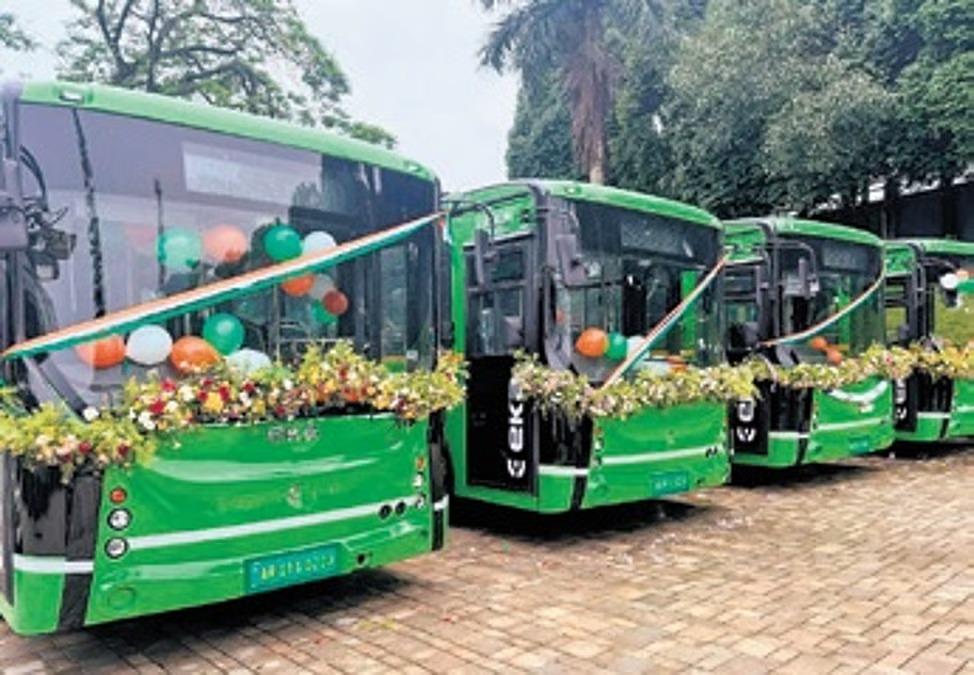
The Delhi government will induct 2,800 air-conditioned low-floor electric buses under the Centre's PM E-DRIVE scheme, Transport Minister Pankaj Kumar Singh announced. Split equally between 9-meter and 12-meter models, the expansion will strengthen last-mile connectivity and help scale the capital's green transport fleet to 7,500 units by year-end.
NEW DELHI — The Delhi government will significantly scale up its public transport system with the planned induction of 2,800 air-conditioned low-floor electric buses. Funded through the Central Government’s flagship PM E-DRIVE (PM Electric Drive Revolution in Innovative Vehicle Enhancement) scheme, this major transit expansion aims to modernize the capital's commuter grid, strengthen last-mile connectivity in peripheral zones, and accelerate the transition toward zero-emission urban transit.
Balanced Fleet Strategy for Core and Feeder Routes
Official administrative briefs from the Delhi Transport Department reveal that the newly sanctioned allocation will be divided equally into two distinct vehicle layouts. The state will deploy 1,400 standard 12-meter electric buses alongside 1,400 mid-sized 9-meter electric buses.
This dual-fleet structure addresses structural bottlenecks in Delhi’s urban planning. While the 12-meter low-floor units are designated to manage heavy passenger volumes along major trunk corridors, the shorter 9-meter variants will serve local feeder systems. This builds directly upon the operational success of smaller electric buses currently bridging high-density metro stations with neighboring residential colonies and previously underserved peripheral regions.
Scaling Infrastructure to Support a 14,000-Bus Fleet Target
The delivery of these 2,800 electric buses will occur in structured phases, pushing Delhi's operational electric bus inventory toward unprecedented levels. Currently, the city operates approximately 4,300 electric buses—already making it one of the largest electric transit networks globally. The local administration intends to scale this zero-emission fleet to nearly 7,500 units by the end of 2026.
To prevent grid constraints from stalling the rollout, the Delhi Transport Department is simultaneously modernizing underlying utility hardware across its central bus depots. Upgrades include setting up high-capacity charging networks, distributing localized power substations, and deploying automated fleet management panels to track real-time battery drainage and charging cycles. These developments form the cornerstone of Delhi’s overarching master plan to expand its cumulative public bus fleet to nearly 14,000 operational vehicles by the 2028–29 fiscal year.
Institutional Backing Under Central EV Programs
The expansion is subsidized through the Ministry of Heavy Industries via the newly introduced PM E-DRIVE scheme, which replaced the previous FAME-II framework. The national program focuses on the rapid electrification of public shared transport vectors, specifically subsidizing 14,028 electric buses across nine Indian mega-cities with populations exceeding 40 lakhs.
According to parliamentary data tabled by the Ministry of Heavy Industries, out of the total 13,800 electric buses formally allocated to state transport undertakings across India during Phase-I tendering, Delhi secured 2,800 units, positioned just behind Bengaluru’s allocation of 4,500 units. Looking ahead, the Delhi government is actively pursuing an additional 3,330 zero-emission vehicles under Phase-II of the scheme, which will introduce ultra-compact 7-meter electric models to navigate narrow commercial alleyways.
Official Sources Section
The operational parameters and deployment metrics of the upcoming green mobility roadmap were formalized during a high-level review meeting led by state transit officials.
According to the project outlines compiled by the Delhi Transport Department, the vehicle procurement models will operate on a public-private partnership concession system, ensuring long-term maintenance and battery degradation risks are absorbed by the manufacturing contractors.
Quote Section
Announcing the mega transit program, Delhi Transport Minister Pankaj Kumar Singh stated:
"Delhi is committed to building a cleaner, greener, and more efficient public transport system. The planned induction of 2,800 new electric buses will significantly strengthen connectivity, improve commuter convenience, and accelerate our transition towards sustainable mobility. This initiative reflects our commitment to providing world-class public transport while reducing vehicular emissions across the city."
Why It Matters
For daily commuters, office workers, and urban residents, a large-scale shift to electric buses provides practical structural benefits. Increasing public transit options directly lowers private vehicle use, helping ease chronic traffic congestion on main roads. Systematically replacing aging internal combustion engine buses with zero-emission fleets removes heavy particulate matter and nitrogen oxides from the air. This change addresses seasonal winter smog issues and reduces carbon footprints for businesses relying on local staff transport.
Key Facts at a Glance
Total Fleet Expansion: 2,800 fully air-conditioned, low-floor electric buses to enter active service in Delhi.
Segment Breakdown: Divided into 1,400 high-capacity 12-meter buses and 1,400 neighborhood-focused 9-meter variants.
Scheme Framework: Fully backed and subsidized under the Central Government’s new PM E-DRIVE program.
Immediate Milestone: Pushes Delhi's total electric bus network from 4,300 units toward a year-end target of 7,500.
Long-Term Target: Forms a key part of the state’s broader master plan to reach 14,000 public transport buses by 2028–29.
Frequently Asked Questions
How will the 9-meter and 12-meter electric buses differ in their deployment?
The 12-meter low-floor electric buses will handle long-distance, high-volume trunk corridors, while the shorter 9-meter buses will serve as neighborhood feeders to improve last-mile connectivity from metro stations.
What central scheme is funding this massive public vehicle procurement?
The procurement is supported by the Centre's PM E-DRIVE scheme, an initiative launched by the Ministry of Heavy Industries to accelerate EV adoption and build public charging infrastructure.
How many electric buses does Delhi plan to have running by the end of 2026?
Building on the current operational base of nearly 4,300 electric buses, the Delhi government plans to increase the total number to roughly 7,500 units by the end of this year.
Source: Ministry of Heavy Industries Official Notifications, Delhi Transport Department Press Bureau