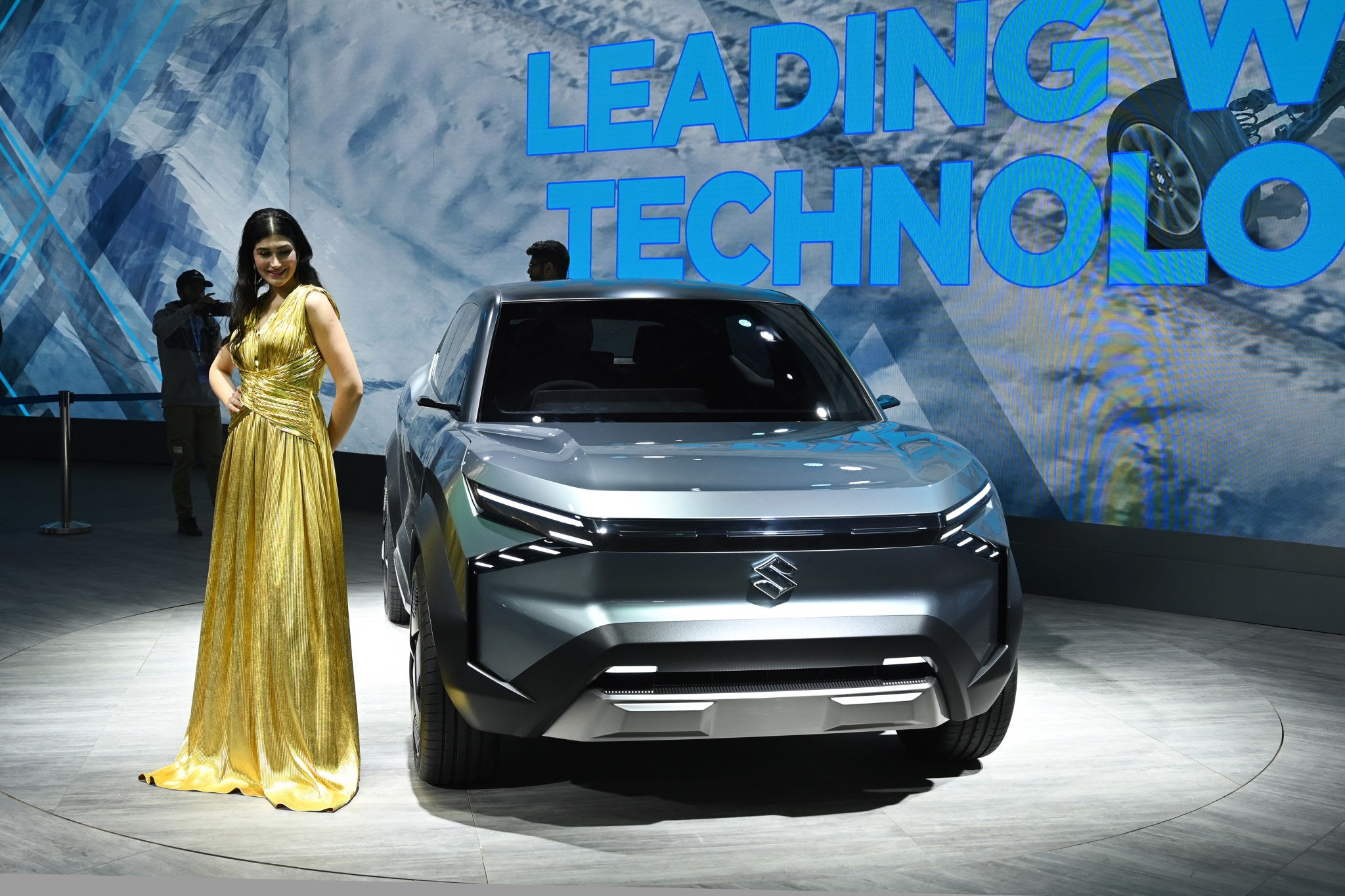
Maruti Suzuki India Limited has announced plans to launch a range of nine products over the next three years. The upcoming portfolio will feature the company's first pure electric SUV, the eVX, alongside high-efficiency hybrid and utility models, aimed at defending its domestic market share through a versatile, multi-fuel strategy.
India's largest passenger car manufacturer, Maruti Suzuki India Limited, has finalized a strategic roadmap to launch a range of nine products over the next three years. In an official communication detailed on June 8, 2026, the automaker outlined an aggressive portfolio expansion designed to protect its dominant domestic market position. The multi-year vehicle offensive will introduce highly anticipated battery electric vehicles (BEVs) alongside refreshed internal combustion engines (ICE), compressed natural gas (CNG) variants, and next-generation hybrid systems to address shifting regulatory and consumer preferences.
Pivoting Toward Electrification and Hybridization
The scheduled arrival of nine products over the next three years represents a major technological transition for Maruti Suzuki. Historically reliant on small, affordable petrol hatchbacks, the manufacturer is adapting to a domestic auto landscape shaped by stricter Corporate Average Fuel Economy (CAFE) limits and rising fuel costs.
A core pillar of the upcoming product pipeline is the company's debut in the pure electric segment. Leading this transition is the production-ready version of the eVX mid-size electric sport utility vehicle (SUV). Developed in collaboration with parent firm Suzuki Motor Corporation and global partner Toyota, the eVX utilizes a dedicated electric architecture. Road testing data indicates the model features a 60-kilowatt-hour (kWh) battery pack capable of achieving a certified driving range of up to 550 kilometers on a single charge. This SUV will compete directly with established electric offerings from domestic rivals like Tata Motors and Mahindra & Mahindra.
Expanding the High-Volume SUV and MPV Segments
Beyond pure electric models, Maruti Suzuki's nine products over the next three years will target higher-margin utility vehicle categories. Company product managers have prioritized the development of an all-new three-row premium SUV. Internal factory logs identify this vehicle under the codename Y17, and it will be manufactured at the company's recently expanded industrial complex in Kharkhoda, Haryana.
The upcoming product pipeline also includes entry-level and compact crossover refreshes. These updates aim to address the ongoing structural sales decline seen in traditional small hatchbacks, as consumers increasingly prefer micro-SUVs. To support this demand, the upcoming launches will incorporate Suzuki's newly engineered series hybrid powertrain technology, known internally as the HEV system. This setup uses a highly efficient 1.2-liter, three-cylinder petrol engine solely as a generator to charge a compact lithium-ion battery, delivering estimated city fuel economy metrics exceeding 30 kilometers per liter.
Manufacturing Scale and Financial Outlook
To support the delivery of these nine products over the next three years, Maruti Suzuki is executing a massive capital expenditure program to expand its domestic manufacturing capacity. The company aims to add 10 lakh (1 million) units of incremental production capability by the 2030–31 fiscal year, bringing its cumulative domestic output potential to 40 lakh vehicles annually.
This manufacturing expansion is backed by steady financial performance. In its latest regulatory audit filings submitted for the fiscal year ending March 2026, Maruti Suzuki reported consolidated revenue from operations of over 1.4 lakh crore rupees, supported by record annual domestic sales volumes exceeding 20 lakh units. Financial analysts indicate that maintaining this volume growth through a broader, more premium product lineup will be crucial for protecting operating margins against rising raw material costs and ongoing investments in localized battery assembly plants.
Official Sources Section
The long-term product rollout strategy, production capacity investments, and powertrain development timelines were validated through official investor presentations and regulatory compliance sheets submitted to national bourses.
The corporate expansion blueprints operate under the "Suzuki Innovation Strategy," ensuring complete technological alignment between Maruti Suzuki's Indian engineering centers and Suzuki's central research and development laboratories in Hamamatsu, Japan.
Quote Section
Detailing the forward-looking product execution strategy in the company's regulatory filings, senior executives outlined the operational rationale behind the portfolio expansion.
According to officials from the company's corporate planning division:
"Maruti Suzuki India is working on a comprehensive plan to launch a range of nine products over the next three years to meet changing consumer demand across multiple price points and technology frameworks. This upcoming portfolio will blend electric vehicles, high-efficiency hybrids, and advanced clean-fuel options. Our objective remains to provide accessible, sustainable personal mobility solutions while steadily lowering our fleet's overall carbon footprint."
Why It Matters
For Indian car buyers, automotive component suppliers, and equity investors, Maruti Suzuki's aggressive mid-term product offensive provides clear visibility into where the country's mass-market passenger vehicle sector is heading. By spreading its engineering investments across electric, hybrid, and CNG technologies rather than focusing exclusively on single-fuel platforms, the market leader is helping insulate its vast dealership network from localized policy shifts. This balanced product strategy ensures that everyday consumers can choose highly efficient vehicles that match regional charging infrastructure realities.
Key Facts at a Glance
Strategic Goal: Maruti Suzuki will introduce nine products over the next three years to refresh its passenger vehicle lineup.
Core Technology: The product rollout balances battery electric vehicles (BEVs) with advanced series hybrids and localized CNG options.
Electric Debut: The production version of the eVX mid-size electric SUV will lead the company's entry into the zero-emission market.
Capacity Expansion: The firm is building an incremental manufacturing capacity of 10 lakh units to support long-term volume goals.
Financial Foundation: Deployed following a record fiscal year where annual domestic sales volumes crossed the 20 lakh unit milestone.
Frequently Asked Questions
What types of vehicles are included in Maruti Suzuki's upcoming multi-product plan?
The nine products over the next three years will include a mix of zero-emission battery electric SUVs, three-row premium utility vehicles, compact crossovers, and upgraded series-hybrid passenger cars.
When will Maruti Suzuki launch its first fully electric vehicle in India?
The automaker's first pure electric model, based on the eVX mid-size SUV concept, is undergoing advanced real-world testing and is scheduled to debut within the current three-year launch window.
Where will the production versions of these upcoming vehicles be built?
The manufacturing run will be shared across the company’s primary industrial hubs in Gurgaon and Manesar, alongside the new high-capacity facility currently being developed in Kharkhoda, Haryana.
Source: National Stock Exchange of India Corporate Filing Portal, Maruti Suzuki India Limited Investor Relations Disclosures