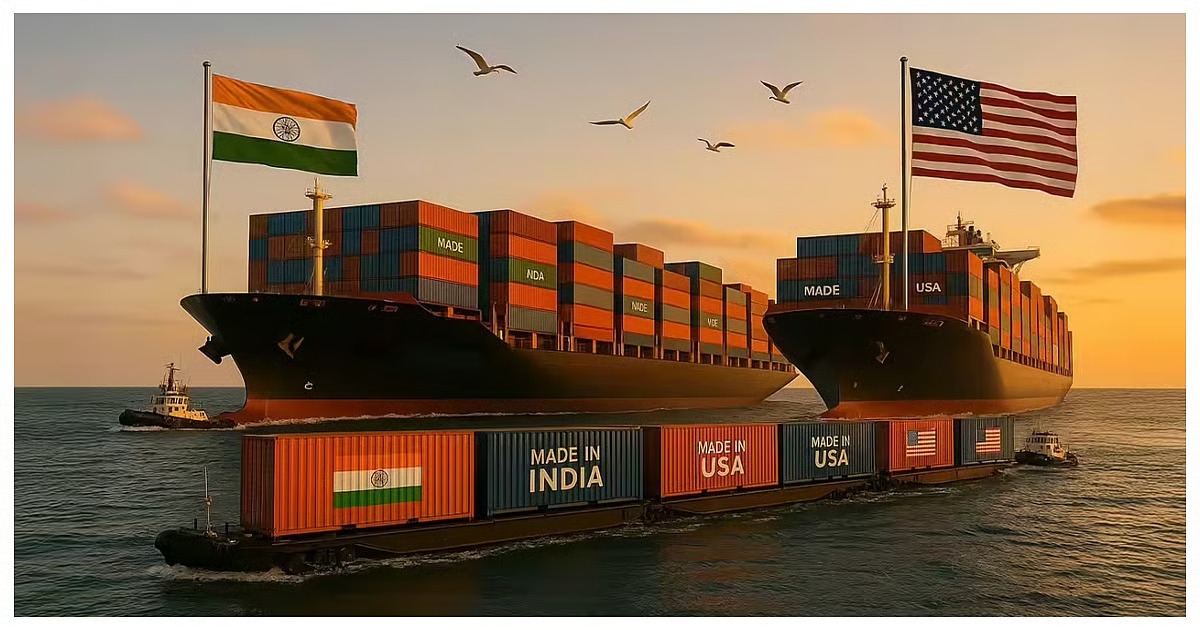
India's merchandise exports continue to grow steadily as the commerce ministry prepares to operationalize its trade deal with the United States. Minister Piyush Goyal stated that the pact will take effect once Washington guarantees a distinct tariff advantage for Indian goods over regional competitors.
India's merchandise exports continue to register steady expansion as the commerce ministry prepares to finalize bilateral pact terms with Washington once competitive tariff margins are established.
New Delhi's merchandise export sectors continue to demonstrate resilience with steady growth through August 2026, even as policymakers navigate complex international trade adjustments. Union Commerce and Industry Minister Piyush Goyal confirmed that India will formally announce the final details and operationalize its anticipated bilateral trade agreement with the United States as soon as Washington guarantees a clear, competitive tariff advantage for Indian goods over regional manufacturing competitors. Speaking on trade strategy and export performance, government officials emphasized that while order books across engineering, textiles, and technology remain active, the final execution of the framework depends on securing structural market-access advantages against competing economies in South and Southeast Asia.
Export Momentum and Trade Diplomacy
India’s broad-based merchandise shipments have maintained positive momentum into the second half of 2026, supported by robust demand for engineering goods, electronics, pharmaceuticals, and ready-made garments. However, lingering uncertainty surrounding global tariff adjustments has prompted domestic exporters to seek expedited clarity on bilateral terms.
According to trade ministry reviews and stakeholder consultations held in New Delhi, the government is actively engaging with apex export organizations and industry chambers to address supply-chain bottlenecks and market access concerns. Minister Goyal is scheduled to travel to the United States in late September to participate in the G20 Trade Ministerial meetings in Milwaukee and hold high-level bilateral discussions with United States Trade Representative (USTR) Jamieson Greer. These talks aim to resolve outstanding framework details and establish predictable pricing structures for cross-border commerce.
Economic Implications for Manufacturers and Investors
The ongoing dialogue holds major implications for domestic manufacturers, international investors, and corporate supply chains. A finalized agreement anchored by competitive tariff tiers would eliminate pricing volatility, providing much-needed margin visibility for Indian exporters shipping to the lucrative North American market.
For global corporations utilizing India as a primary manufacturing hub, predictable trade frameworks accelerate long-term capital allocation and capacity expansion decisions. Conversely, delays in finalizing tariff structures have led some overseas buyers to adopt cautious, short-term procurement strategies, making the upcoming ministerial engagements critical for unlocking pent-up export volumes.
Official Sources Section
Policy statements, export trajectory updates, and trade negotiation schedules are based on official announcements and briefings from the Ministry of Commerce and Industry, Government of India, along with bilateral updates tracked by the Office of the United States Trade Representative (USTR) and international reporting from Reuters.
Quote Section
"According to officials and trade ministry statements, the bilateral trade agreement will be formally implemented once the United States ensures a definitive competitive tariff advantage for Indian exporters over regional manufacturing peers."
Why It Matters
Stable trade agreements and predictable tariff frameworks dictate export profitability and manufacturing growth. For Indian businesses, securing a competitive tariff edge in the United States protects market share against regional rivals, boosting foreign exchange inflows and safeguarding industrial employment.
Key Facts at a Glance
Export Performance: India's goods exports continue on a steady growth trajectory through August 2026.
Trade Pact Status: Implementation of the India-US trade framework awaits a confirmed competitive tariff advantage over regional competitors.
Upcoming Engagements: Commerce Minister Piyush Goyal is scheduled to meet USTR Jamieson Greer during the G20 Trade Ministerial in late September.
Key Sectors Involved: Engineering goods, pharmaceuticals, textiles, electronics, and agricultural products.
Frequently Asked Questions
What is the current status of the India-US trade agreement?
While the broad framework has been negotiated, implementation awaits formal confirmation that Indian exports will secure a clear tariff advantage over competing economies.
Why is a competitive tariff advantage important for India?
It ensures price competitiveness for Indian goods against products from Southeast Asian and neighboring manufacturing nations entering the US market.
How are India's goods exports performing currently?
Merchandise exports continue to post steady growth across key sectors like engineering, electronics, and pharmaceuticals.
When are further high-level trade talks expected?
Bilateral negotiations are set to advance during the upcoming G20 Trade Ministerial and official meetings in the United States.
Source: Ministry of Commerce and Industry, Government of India, Office of the United States Trade Representative (USTR), Reuters