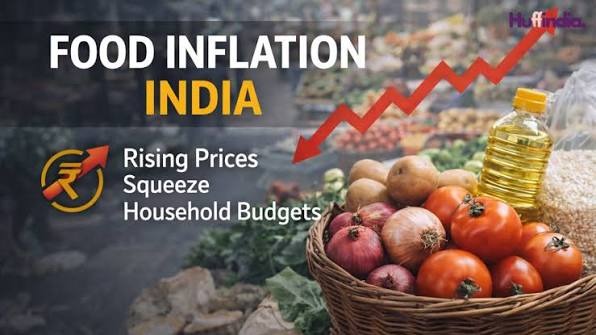
Rising food inflation, reaching 4.78% in May 2026, is fundamentally shifting Indian consumer spending in FY26. Households are prioritizing essentials, reconsidering pack sizes, and tightening budgets. While businesses are focusing on affordability and volume-led growth, the RBI has raised inflation projections to 5.1% for FY27, citing ongoing global and climate-related uncertainties.
Households are recalibrating budgets and prioritizing essential spending as rising food prices force a shift in consumption behavior.
NEW DELHI — As India navigates the fiscal year 2026, rising food inflation has emerged as a primary driver of household decision-making, compelling families to fundamentally alter their purchasing habits. Data from the Ministry of Statistics and Programme Implementation (MoSPI) indicates that retail inflation reached a 16-month high of 3.93% in May 2026, largely propelled by a 4.78% surge in the Consumer Food Price Index (CFPI).
The impact of these price pressures is rippling across the economy, influencing how citizens manage their monthly budgets and how major consumer goods companies, such as Nestle India, forecast their demand. For the average consumer, this means a rigorous re-evaluation of pack sizes, brand loyalty, and overall category priorities.
Shifting Consumption Trends
In the ongoing fiscal year, the "push-pull" dynamic between macroeconomic stability and uneven household sentiment has defined market momentum. According to industry leaders, consumers are increasingly sensitive to affordability, leading to a split in demand patterns. While urban markets have shown relative resilience, rural areas remain highly sensitive to monsoon outcomes and farm income stability.
"Food inflation shaped household choices in ways that went far beyond price," said Manish Tiwary, Chairman and Managing Director of Nestle India, during the company's recent Annual General Meeting. He noted that families are now reconsidering how they allocate funds for daily necessities, leading to more disciplined and deliberate shopping behavior.
Drivers of Price Volatility
The rise in food inflation is not isolated; it is being influenced by several interconnected factors:
Geopolitical Churn: Ongoing conflicts in West Asia have impacted freight and logistics costs, contributing to higher input prices for packaged food manufacturers.
Monsoon Uncertainty: A delayed monsoon, exacerbated by climate variables like El Nino, has created anxiety regarding future crop yields, particularly for kitchen staples.
Input Costs: Higher prices for fuel, fertilizers, and packaging materials have necessitated difficult pricing decisions for businesses, which ultimately impact the consumer's wallet.
Impact on Business and Households
The current environment is forcing a change in business strategy. Companies are increasingly focusing on "consumer centricity," reinvesting in brand penetration, and leveraging digital tools to optimize operations. For households, the practical implication is a tactical move toward value-based purchasing. Many families are opting for smaller pack sizes or delaying discretionary spending to ensure that essential food items remain within their reach.
The Reserve Bank of India (RBI) has taken note of these trends, with the central bank’s latest survey showing that household inflation expectations jumped 60 basis points to 7.8% in May. Consequently, the RBI has revised its inflation forecast for FY27 upwards to 5.1%, signaling a cautious approach to the coming quarters.
Key Facts at a Glance
Inflation Surge: The Consumer Food Price Index (CFPI) reached 4.78% in May 2026, up from 4.2% in the previous month.
Headline Metric: Retail inflation hit a 16-month high of 3.93% in May 2026.
Staple Volatility: Tomato prices saw a significant monthly increase of 48.4%, while cereal prices moved into positive territory for the first time this year.
RBI Forecast: The central bank has raised its inflation projection for FY27 to 5.1% in response to evolving market conditions.
FAQ
Why is food inflation impacting my household budget so much?
Food items constitute nearly 40% of the total Consumer Price Index (CPI) basket in India. Even small fluctuations in staple prices—such as rice, tomatoes, or fuel-related transport costs—significantly affect the overall cost of living.
Are businesses lowering prices to help?
Many companies, including major FMCG players, are trying to maintain affordability by optimizing operations and managing supply chains. However, some have left the door open for price adjustments if commodity and input costs continue to rise due to global volatility.
Is there relief expected for the remainder of FY26?
Economists are closely watching the monsoon season. A normal rainfall pattern is considered essential for stabilizing food prices in the second half of the fiscal year.
Source: Ministry of Statistics and Programme Implementation (MoSPI), Reserve Bank of India (RBI), Nestle India