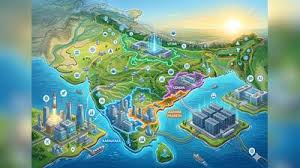
India’s states have entered a high-stakes race to dominate the artificial intelligence sector, catalyzed by $250 billion in national tech commitments. While Bengaluru leverages its 58% share of venture funding, states like Odisha are pioneering dedicated AI policies and sovereign compute parks to decentralize digital infrastructure across the subcontinent.
BENGALURU — A high-stakes economic rivalry is escalating across India's provincial capitals as state governments shift from traditional IT outsourcing models to comprehensive artificial intelligence architectures. Following the conclusion of the IndiaAI Impact Summit 2026, which recorded an unprecedented $250 billion in global investment commitments for domestic tech infrastructure, states ranging from established hubs like Karnataka to emerging frontrunners like Odisha have entered a competitive legislative and fiscal race to capture the next generation of deep-tech capital.
The subcontinental race marks a structural shift in how local governments view industrial development. Rather than competing purely on cheap real estate or standard tax holidays, states are now racing to build "compute surplus" environments, localized sovereign language datasets, and specialized regulatory sandboxes to attract top-tier artificial intelligence engineering talent and hyper-scale data centers.
The Established Moat: Bengaluru’s Venture Capital Dominance
As the traditional silicon capital of South Asia, Bengaluru is using its massive concentration of late-stage capital and institutional depth to defend its market share. According to data featured in the Economic Survey, Karnataka attracts 58% of all national artificial intelligence startup funding and plays host to 39% of India’s active Generative AI enterprises.
The state's current strategy moves away from speculative pilot projects toward scaled corporate implementation. Bengaluru currently boasts an enterprise AI adoption rate of roughly 57%, the highest in the country, driven by its dense concentration of Global Capability Centers (GCCs) and domestic unicorns.
To maintain this edge, the Karnataka Digital Economy Mission (KDEM) has formed strategic cloud alliances, establishing advanced innovation sandboxes that allow tech entities to tap directly into the central IndiaAI Mission’s pool of 38,000 subsidized Graphics Processing Units (GPUs) at deeply discounted operational rates.
The Disruptor: Bhubaneswar’s Sovereign Data Play
Positioning itself as the primary challenger to legacy tech clusters, the state of Odisha has introduced a highly aggressive counter-strategy. Operating via the freshly enacted Odisha AI Policy, the state became the first in the country to formalize a dedicated, statewide administrative roadmap. Rather than chasing purely private venture capital, Bhubaneswar is positioning artificial intelligence as a core public good to drive its targeted $500 billion economy by 2036.
At the center of Odisha’s play is an official memorandum of understanding signed with foundational model developer Sarvam AI to build a massive sovereign AI park in the state. The initiative capitalizes on Odisha's historical status as an industrial energy-surplus zone, transforming power availability into digital processing muscle.
Linguistic Localization: Odisha's technical development teams are building low-resource Odia language datasets to power localized models for micro, small, and medium enterprises (MSMEs).
Grassroots Integration: In the tribal district of Rayagada, frontline health workers are already utilizing AI-enabled kits to track high-risk pregnancies, proving the structural usability of these frameworks at the point of care.
Educational Pipelines: The state has mandated AI and data literacy education across 35% of its school network, with a target to hit 90% coverage by 2036.
Multi-State Escalation and the National Blueprint
The high-stakes battle is not restricted to a binary contest between the south and the east. A dozen Indian states have concurrently rolled out specialized policy mechanisms designed to integrate with the Union Government’s Rs 10,371-crore IndiaAI Mission.
Uttar Pradesh is currently executing its massive "AI City" project across a 100-acre zone in Lucknow, featuring state-of-the-art robotics labs and green data center components. Meanwhile, Maharashtra has deployed the nation's first dedicated Agri-AI Policy to insulate rural crop cycles from climate anomalies.
The economic implications for private enterprises and domestic markets are profound. The Union Budget introduced a long-term tax holiday for data center and cloud infrastructure investments, further accelerating regional competition. For enterprise tech vendors, this cross-provincial rivalry has driven down the cost of foundational development tools. Shared public libraries like AIKosh now offer over 7,500 datasets and 273 open models, significantly lowering the barrier to entry for early-stage software engineers across non-metro regions.
Official Sources Section
Policy parameters, funding metrics, and regional operational roadmaps are gathered directly from public documentation issued via the Ministry of Electronics and Information Technology and the official executive briefs of the Press Information Bureau. Localized metrics regarding startup density and state industrial subsidies are derived from the Karnataka Digital Economy Mission archives and the Government of Odisha IndiaAI Summit Portal.
Quote Section
"According to officials managing the central compute infrastructure allocation, the democratization of hardware resources means that geographic location is no longer a limiting factor for tech ecosystems, sparking an aggressive race among individual states to offer the most attractive local datasets and public utility frameworks."
Why It Matters
The decentralization of technology development away from a single dominant city like Bengaluru means that high-paying engineering jobs, infrastructure spending, and real estate development are being distributed across tier-2 and tier-3 urban centers. For enterprises, this competition drastically reduces the cost of compute power and localized data processing. For citizens, it ensures that public services—from automated healthcare diagnostics to regional language educational tools—are tailored to specific socio-cultural realities rather than generic Western contexts.
Key Facts at a Glance
Investment Boom: The IndiaAI Impact Summit 2026 secured approximately $250 billion in global investment commitments for localized AI infrastructure and data platforms.
Funding Magnet: Karnataka continues to lead private funding metrics, capturing 58% of all national AI startup capital and hosting 39% of India's GenAI enterprises.
Policy Pioneer: Odisha became the first Indian state to launch a comprehensive, standalone AI Policy, setting up dedicated technology development cells under the OCAC.
Sovereign Infrastructure: Odisha has partnered with Sarvam AI to establish a sovereign AI park, transforming its energy-surplus capacity into localized compute power.
National Expansion: Major projects like Lucknow's 100-acre AI City and Maharashtra's Agri-AI framework demonstrate a nationwide expansion of deep-tech policies.
FAQ Section
Q1: How are states like Odisha competing with established tech hubs like Bengaluru?
While Bengaluru relies on its dense venture capital ecosystem and deep engineering talent pool, emerging states like Odisha are competing by offering heavily subsidized green energy for data centers, direct capital subsidies, and creating specialized regional language datasets that larger global firms overlook.
Q2: What is the role of the central government's IndiaAI Mission in this state race?
The central IndiaAI Mission serves as the foundational supplier of infrastructure. It provides a shared pool of over 38,000 GPUs at subsidized rates (around ₹65/hour) and maintains platforms like AIKosh, which states plug into to power their local applications.
Q3: Will this high-stakes race benefit smaller businesses and startups outside major cities?
Yes. Because policies emphasize lowering entry barriers, open datasets, and cheap compute access, a startup based in Bhubaneswar or Lucknow can access the exact same institutional-grade processing power as a firm operating out of Silicon Valley or Bengaluru.
Source: Press Information Bureau (PIB) Delhi, Ministry of Electronics and Information Technology (MeitY), Government of Odisha Electronics & IT Department