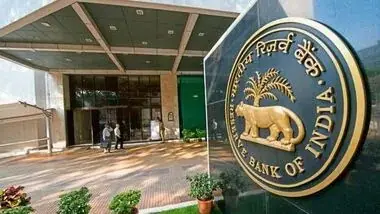
The Reserve Bank of India finalized its 2036 bond sale, applying a 67.95% partial allotment on 29 bids. Out of 382 bids totaling 737.26 billion rupees, the RBI accepted 177 bids worth 339.42 billion rupees, demonstrating steady institutional liquidity and firm central bank control over sovereign yield curves.
MUMBAI — The Reserve Bank of India (RBI) announced the results of its federal government securities auction on Friday, confirming a partial allotment of 67.95% on 29 competitive bids received for its 2036 bond issuance. This strategic move highlights the central bank's continuing effort to balance the central government's market borrowing program with strict domestic yield management, matching broader efforts to regulate sovereign yields following the recent holding of the repo rate at 5.25%.
High Demand Meets Strict Yield Control
The debt sale drew substantial market participation from institutional buyers, highlighting solid domestic demand for long-duration sovereign paper. According to the data released by the central bank, the RBI accepted 177 bids worth 339.42 billion rupees out of a total of 382 competitive and non-competitive bids worth 737.26 billion rupees.
The significant gap between the total bids received and the final accepted amount demonstrates a high level of bid-cover ratio, signaling that commercial banks, insurance funds, and primary dealers maintain high liquidity for sovereign debt. By enforcing a partial allotment of 67.95% on 29 bids at the cut-off mark, the RBI restricted overly aggressive bidding that could disrupt pricing stability across the long end of the sovereign yield curve.
Market Dynamics and Institutional Impact
This sovereign bond auction coincided with major policy shifts in India's financial sector. On June 5, 2026, the central government issued a landmark ordinance exempting foreign institutional investors (FIIs) from capital gains taxes on government securities (G-Secs). This policy change is expected to lower overall yields by 15 to 30 basis points due to expected foreign capital inflows.
For domestic treasury managers, the partial allotment underscores the RBI’s firm stance against accepting higher yield demands from institutional investors. The banking sector, which holds substantial portfolios of dated government securities, relies on these regular auctions to meet statutory liquidity ratio (SLR) mandates while managing duration risk.
Official Sources Section
The transaction details and allotment statistics were formally documented and released by the central bank through its official communication platform. All quantitative metrics regarding bid counts, tender volumes, and allotment percentages are based on the definitive statistical reports provided directly by the debt management department of the sovereign issuer.
Quote Section
"According to officials, the auction parameters reflect the central bank's objective to ensure the smooth execution of the government's borrowing calendar without causing sudden volatility in long-term borrowing costs or giving in to high yield demands from market participants."
Why It Matters
The management of government bond auctions directly affects capital markets and consumer financing rates. By enforcing a strict cut-off and choosing partial allotment rather than fully over-allocating, the RBI prevents long-term sovereign benchmarks from spiking. Because commercial lending rates, corporate bond issuances, and home loans are benchmarked against these sovereign yields, the central bank’s firm auction control directly helps maintain predictable borrowing costs for businesses and retail consumers nationwide.
Key Facts at a Glance
Allotment Threshold: A partial allotment of 67.95% was applied to 29 specific competitive bids.
Subscription Breakdown: Total bids received reached 737.26 billion rupees across 382 separate applications.
Accepted Capital: The central bank accepted 177 bids, absorbing 339.42 billion rupees into the 2036 bond.
Sovereign Context: The auction took place amid broader debt reforms, including an FII tax exemption ordinance on G-Secs.
FAQ Section
What is a partial allotment in a government bond auction?
A partial allotment occurs when the central bank decides to accept only a specific percentage of the total amount requested by bidders at the chosen cut-off price, ensuring the total issuance matches target limits without driving up yields.
Why does the RBI reject or partially allot sovereign bond bids?
The RBI limits allocations if the yields demanded by commercial participants are higher than what the central bank considers sustainable for the government's long-term interest expense.
Who are the primary participants in these debt auctions?
These wholesale auctions are dominated by institutional entities, including scheduled commercial banks, insurance firms, provident funds, mutual funds, and RBI-authorized Primary Dealers.
How does the 2036 bond auction affect retail bank customers?
Sovereign bond yields establish the baseline for the entire economy's interest rate architecture. Controlled bond yields prevent upward pressure on commercial deposit and retail lending rates.
Source: Reserve Bank of India Official Communications, Ministry of Finance Debt Management Division