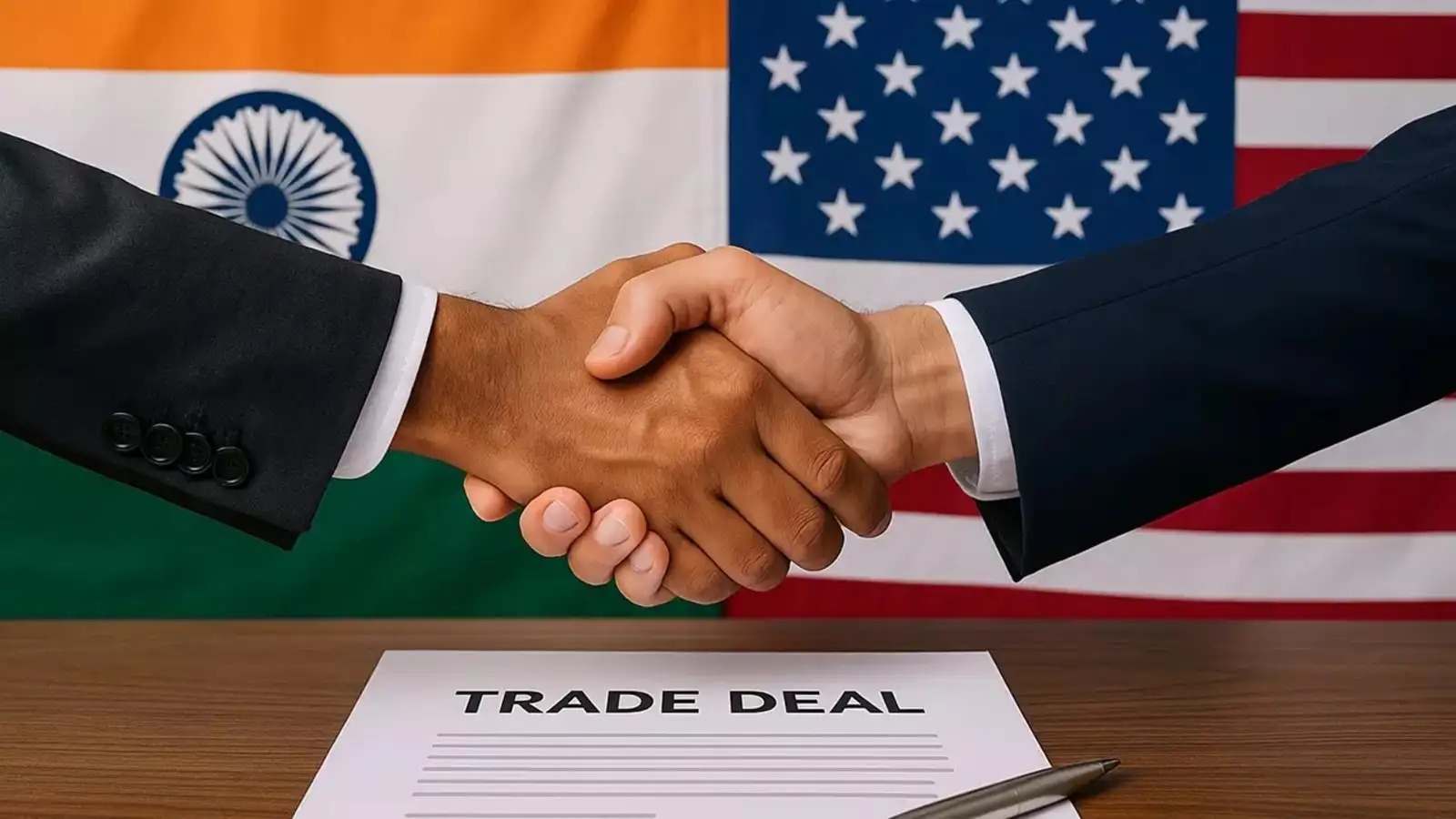
India and the United States have moved closer to sealing an interim trade agreement after a high-level delegation from the Office of the United States Trade Representative (USTR) concluded four days of intensive negotiations in New Delhi on Thursday. The Ministry of External Affairs (MEA) and the Ministry of Commerce confirmed that the talks were constructive, marking significant progress toward a framework designed to expand market access and strengthen bilateral economic ties. The latest round of discussions, held between June 1 and June 4, 2026, focused on finalizing the remaining technical elements of the first tranche of a broader Bilateral Trade Agreement (BTA). With most substantive issues reportedly settled, negotiators are now refining the final legal phrasing of the pact.
Progress on the Trade Framework
Both nations have maintained a steady pace in their engagement throughout the fiscal year. Commerce and Industry Minister Piyush Goyal recently noted that discussions had reached a stage where negotiators were focusing on "commas and full stops," indicating that the bulk of the policy framework is already in place. US Ambassador to India Sergio Gor expressed similar optimism earlier this week, stating that the agreement was "99% there," with the final percentage dedicated to resolving minor technical and implementation timelines.
The proposed interim deal is expected to address several key pillars of the US-India economic partnership, including:
Trade in Goods: Efforts to eliminate or reduce tariffs on industrial and agricultural products.
Non-Tariff Barriers: Addressing long-standing concerns regarding medical devices, ICT goods, and market access procedures.
Economic Security: Cooperation on supply chain resilience and data center technology.
Navigating Parallel Challenges
While the trade pact negotiations remain on a positive trajectory, both countries are simultaneously navigating complex global trade challenges. The USTR is currently reviewing a separate proposal under Section 301 of the US Trade Act of 1974, which considers additional tariffs on imports from 60 economies, including India, based on concerns over forced labor and industrial overcapacity.
Indian officials have emphasized that discussions on these proposed tariffs are moving in parallel with the bilateral trade pact talks. New Delhi remains engaged with the US administration to protect its trade interests while ensuring the final agreement provides a stable environment for businesses. US President Donald Trump recently signaled his confidence in the process, praising Prime Minister Narendra Modi as a "good friend" and expressing his expectation that a strong, mutually beneficial agreement will be reached soon.
Official Sources Section
Information regarding the trade negotiations is based on statements from the Ministry of External Affairs (MEA) and the Ministry of Commerce and Industry. Technical frameworks and historical context were sourced from the White House joint statements and official Press Information Bureau (PIB) releases.
Quote Section
"According to officials, the latest round of discussions was both constructive and positive, with both sides reaffirming their commitment to move forward and finalize the agreement. Organizers stated that the focus remains on ensuring the deal serves as a historic milestone in the partnership, demonstrating a common commitment to reciprocal and balanced trade."
Why It Matters
The finalization of this interim trade deal is vital for the $140 billion bilateral trade relationship. For businesses, the agreement promises to reduce regulatory friction and provide clearer market access in sectors ranging from agriculture to high-tech manufacturing. By establishing a formalized framework, both nations aim to hedge against global economic volatility and solidify their role as key strategic partners in the Indo-Pacific region.
Key Facts at a Glance
Progress Status: Negotiators have finalized most legal text elements, focusing now on final implementation details.
Negotiation Timeline: The current framework has been under development for approximately 15 months.
Bilateral Scope: The agreement covers industrial goods, agricultural products, and ICT services.
Parallel Tracks: India continues to engage with the US on separate Section 301 tariff reviews while pushing for the BTA.
FAQ Section
What is the goal of the current India-US trade talks?
The primary goal is to finalize an interim trade agreement that provides reciprocal market access and sets the stage for a more comprehensive Bilateral Trade Agreement (BTA).
When will the trade deal be officially signed?
While officials have expressed optimism that the deal is "99% there," the formal signing depends on the resolution of remaining technical and legal details, with both sides working to conclude the process as soon as possible.
How does the Section 301 tariff review affect these talks?
The tariff review is a separate process; however, India is actively negotiating with the US to ensure that its exports retain their competitive tariff advantages even as these broader investigations proceed.
Source: Ministry of External Affairs, Ministry of Commerce and Industry, The White House, Press Information Bureau.