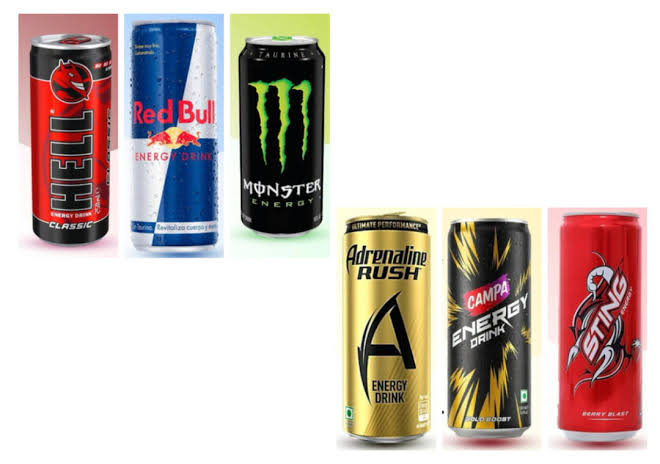
The FSSAI has served notices to six major beverage brands, including Red Bull and Monster, for using unauthorized "energy drink" labels and making misleading functional health claims. The regulator states these terms lack official status, requiring brands to justify their marketing or risk further enforcement under the Food Safety Act.
NEW DELHI — The Food Safety and Standards Authority of India (FSSAI) has issued formal notices to six major beverage manufacturers for alleged misbranding and the use of misleading claims. The action, announced Wednesday, July 1, 2026, involves several of the market's most prominent products, including Red Bull, Monster Energy, PepsiCo's Adrenaline Rush, and Reliance Consumer Products' Campa Energy Drink Gold Boost, among others.
The crackdown follows rising concerns regarding how these companies classify and promote their products. The regulator asserts that there is no officially notified category for "energy drinks" under Indian food safety laws, making the use of such terminology on branding and packaging a potential violation of consumer protection standards.
Regulatory Scrutiny on Product Labeling
According to the FSSAI, the core of the issue lies in the discrepancy between how these beverages are marketed and how they are classified under the Food Safety and Standards (FSS) Regulations. The regulator emphasized that the "Food Category System" used in its regulations is intended strictly for administrative classification and should not be used as a tool for product naming or commercial labeling.
"The FSSAI has not notified any specific standard for products classified as 'energy drinks' or similar beverages," the regulator noted in its public advisory. By marketing products as "energy drinks," firms are allegedly misleading consumers regarding the true nature and composition of the beverages.
Objections to Functional and Therapeutic Claims
Beyond the use of the term "energy drink," the FSSAI has taken a firm stance against the functional and therapeutic claims frequently featured on these products. The regulator identified specific marketing phrases such as "vitalises body and mind," "enhancing focus," "boost energy levels," and "aid in general weakness" as impermissible under the Food Safety and Standards Act, 2006.
The regulator stated that such claims imply health or medicinal benefits that have not been substantiated or permitted for standard food products. The move signals a broader effort by the FSSAI to curb aggressive advertising tactics that may influence consumers into perceiving these beverages as health-enhancing or therapeutic agents.
Impact on Industry and Consumers
The notice requires the affected companies to justify their branding strategies and provide documentation to support their product claims. Failure to comply with these directives could lead to further enforcement actions, including the withdrawal of products from the market.
For consumers, this development is a significant step toward greater transparency in the fast-moving consumer goods (FMCG) sector. For investors, the scrutiny of these high-growth beverage brands—which rely heavily on their "energy" branding—creates a climate of regulatory uncertainty that may necessitate a restructuring of marketing campaigns and labeling.
Key Facts at a Glance
Affected Brands: Red Bull, Monster Energy, PepsiCo’s Adrenaline Rush, Sting, Hell Energy, and Reliance’s Campa Energy Drink Gold Boost.
Primary Violation: Use of the unauthorized "energy drink" descriptor on packaging and digital platforms.
Prohibited Claims: Use of terms like "boosts energy," "improves focus," or "vitalises mind and body."
Regulatory Basis: The Food Safety and Standards Act, 2006, and related labeling/advertising regulations.
Compliance Requirement: Companies must justify their branding and label claims to the regulator to avoid further enforcement.
Frequently Asked Questions (FAQ)
Why is "energy drink" considered misleading by the FSSAI?
The FSSAI states that because there is no official, notified category for "energy drinks" in its standards, using the term on labels misleads consumers about the product's classification and permitted functional benefits.
Are these drinks being banned?
No. The FSSAI has issued notices regarding misbranding and misleading claims. The companies are required to address these regulatory concerns to continue their current operations.
Can companies still make claims like "boosts energy" on their labels?
Under current FSSAI regulations, functional or therapeutic claims for food products must be substantiated and are restricted. The regulator has specifically flagged these types of claims as non-permissible.
What should consumers look for on labels?
Consumers are advised to check for mandatory warnings, such as "Not recommended for children, pregnant or lactating women," and to be cautious of marketing language that implies medicinal or health benefits not supported by the product's actual composition.
Source: Food Safety and Standards Authority of India (FSSAI), The Indian Express, Livemint, India Today