Aam Aadmi Party leader Arvind Kejriwal has announced a protest march to the Prime Minister's residence on August 4 to submit public petitions demanding that the government offer consumers a choice between pure petrol and E20 fuel, adjust retail pricing tiers, and address vehicle compatibility concerns.
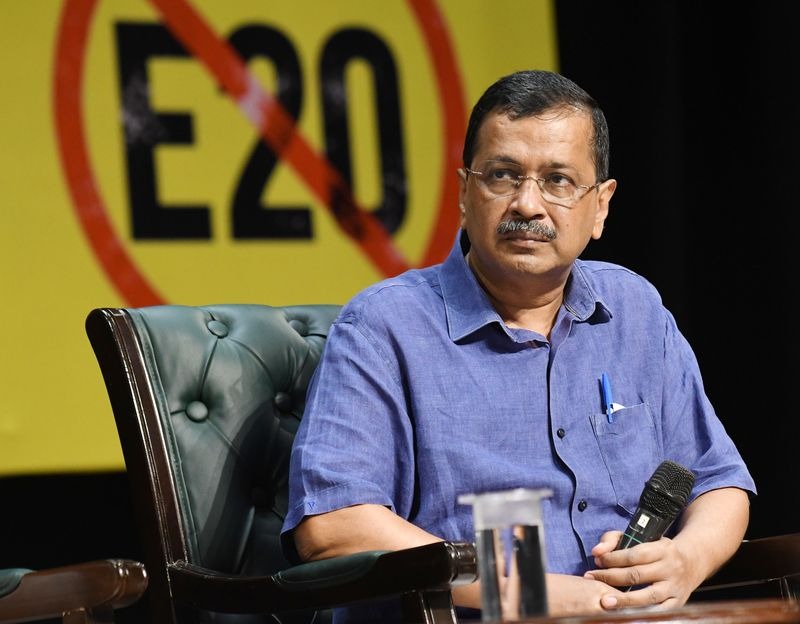
Aam Aadmi Party national convenor Arvind Kejriwal announces a march to Prime Minister Narendra Modi's residence on August 4 to demand consumer fuel choices.
NEW DELHI — Aam Aadmi Party (AAP) national convenor Arvind Kejriwal announced plans to lead a protest march to Prime Minister Narendra Modi’s official residence on Lok Kalyan Marg on Tuesday, August 4, 2026. The mobilization aims to submit public petitions opposing the mandatory nationwide rollout of E20 petrol—fuel blended with 20 per cent ethanol.
Speaking at a national town hall meeting at the Constitution Club of India on Saturday, August 1, 2026, Kejriwal stated that he would personally lead a delegation of 100 volunteers at noon to hand over printed compilations of an online petition signed by over 200,000 citizens. The political escalation highlights rising public and political friction over the socio-economic impacts of India's accelerated clean-energy fuel transition.
Demands for Consumer Choice and Price Restructuring
During the town hall assembly, Kejriwal outlined three principal demands addressed to the Union government regarding the E20 petrol framework. First, he insisted that retail fuel outlets must provide consumers with a clear choice between pure petrol and the E20 ethanol blend. Second, he argued that E20 fuel should carry a lower retail price point compared to pure petrol to account for decreased mileage efficiency and potential engine wear. Third, he called for baseline pure petrol rates to be reduced below 84 rupees per liter to alleviate broader household inflationary pressures.
The AAP leader also challenged the central administration to publicly release the empirical reports and safety studies it relies on to assert that E20 fuel causes no long-term damage to automobile engines. Voicing concerns shared by vehicle owners and agricultural specialists at the event, Kejriwal alleged that increased ethanol production could strain soil and water resources while driving up import dependencies.
Government Stance and Broader Industry Context
The Union government's Ethanol Blended Petrol (EBP) programme achieved its 20 per cent blending target in July 2025, five years ahead of its original 2030 schedule. Union Petroleum and Natural Gas Minister Hardeep Singh Puri has consistently dismissed public concerns regarding engine corrosion and reduced mileage as unfounded, emphasizing that the green transition is vital for curbing crude oil import bills and cutting national carbon emissions.
Political opponents have also pushed back against the opposition's campaign. Delhi Bharatiya Janata Party (BJP) representatives dismissed the allegations, challenging critics to produce verifiable evidence of widespread vehicle engine failures directly tied to E20 consumption. Despite the official reassurances, transport analysts note that consumer hesitation persists, keeping fuel pricing and engine compatibility at the forefront of national policy debates.
Official Sources Section
Quote Section
"According to official statements and town hall addresses by AAP convenor Arvind Kejriwal, the upcoming march aims to present citizen petitions demanding dual fuel availability and lower pricing structures for ethanol-blended petrol."
Why It Matters
For automobile owners, everyday consumers, and the domestic transport sector, the ongoing debate over E20 petrol directly impacts vehicle maintenance, fuel economy, and household budgets. For policymakers and energy investors, the friction underscores the complex socioeconomic challenges involved in executing rapid green-energy transitions across emerging industrial economies.
Key Facts at a Glance
Protest March Date: Arvind Kejriwal is scheduled to lead a 100-member delegation to the Prime Minister's residence on August 4, 2026.
Citizen Petitions: The delegation will submit physical printouts of an online petition containing over 200,000 signatures opposing mandatory blending.
Core Demands: The AAP is pressing for mandatory dual availability of pure petrol and E20, alongside adjusted pricing tiers.
Policy Background: India achieved its 20 per cent ethanol blending target across petrol supplies in July 2025.
FAQ Section
What is the primary objective of Arvind Kejriwal's march on August 4?
The march aims to submit public petitions to the Prime Minister's residence demanding that the government make pure petrol an option alongside E20 at fuel pumps.
What are the main grievances raised against E20 petrol?
Critics and vehicle owners have raised concerns regarding lower fuel efficiency, potential engine component wear, and a lack of clear price differentials between pure and blended fuels.
How has the Union government responded to concerns over E20 fuel?
Union petroleum authorities have maintained that the E20 rollout is backed by scientific studies, dismissing claims of engine damage as rumors while emphasizing its role in reducing oil imports.
When did India officially roll out the E20 blending target?
India reached its target of 20 per cent ethanol blending across petrol supplies in July 2025, ahead of the original 2030 timeline.
Source: The Economic Times, The Hindu, ANI News