The global aerospace sector is rapidly expanding into the near-space stratospheric market through the use of advanced super pressure balloons. Offering localized connectivity, long-duration station-keeping, and high-resolution imaging at a fraction of satellite deployment costs, these innovative platforms are transforming communication, environmental research, and sub-orbital travel.
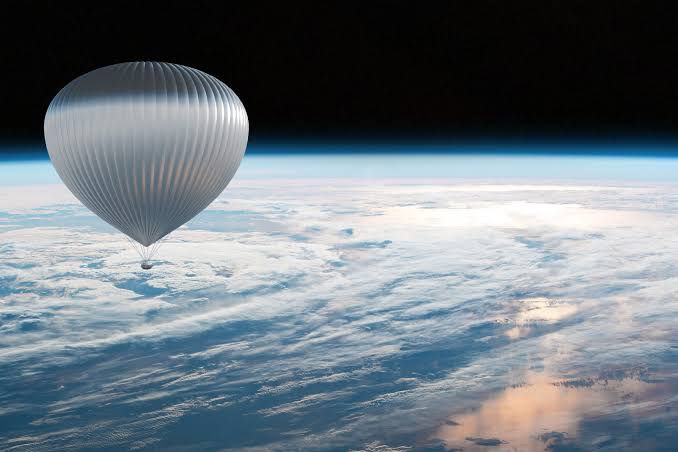
HYDERABAD — The global aerospace industry has initiated a significant infrastructure shift toward Earth's upper atmosphere, transforming the sub-orbital layer known as "near-space" into a highly competitive commercial corridor. Following a sequence of successful private stratospheric operations, including a bilateral partnership signed on Thursday, June 18, 2026, between Indian near-space startup Red Balloon Aerospace and Armenia's Bazoomq Space Research Laboratory, market analysts are re-evaluating the economics of regional observation. These specialized lighter-than-air platforms, operating in the stratosphere between 20 km and 40 km above sea level, are actively demonstrating their capacity to deliver high-resolution imaging and telecom relays at a small fraction of conventional low-Earth orbit (LEO) satellite deployment costs.
Super Pressure Balloon Innovations Disrupt the Market
The current surge in near-space development stems from critical structural breakthroughs in long-endurance envelope design. Traditionally, zero-pressure weather balloons were limited by daily thermal cycles, expanding in sunlight and losing gas during the night, which restricted operations to short-duration flights.
However, the deployment of advanced polymer nanocomposite materials has successfully commercialized "super pressure" balloon hulls. Because these envelopes are completely sealed and structurally rigid, they maintain constant internal gas volume and pressure regardless of ambient temperature swings, extending baseline flight durations from a few hours to several consecutive weeks.
A prominent example of this operational shift occurred during India's Mission SANA, where a private super pressure balloon platform named VISTA successfully carried commercial payloads to an altitude of 25 km over Vijayawada. Driven by artificial intelligence-based pressure management and real-time global navigation satellite system (GNSS) modules, the platform demonstrated precise altitude control. By rising or lowering to catch varying wind currents, the uncrewed vessel maintained persistent station-keeping over designated coordinates, eliminating the traditional drifting flaw of high-altitude systems.
Commercial Applications: Telecommunications to Tourism
The commercialization of the stratosphere is expanding rapidly across three distinct economic sectors:
1. High-Resolution Remote Sensing
Operating significantly closer to the Earth's surface than a standard satellite, a stratospheric platform can capture imagery with an exceptional resolution of 25 to 75 centimeters. According to commercial asset disclosures filed on the National Stock Exchange of India (NSE), this high-fidelity data is being integrated directly into industrial corridor mapping, state-wide disaster response systems, and persistent coastal surveillance frameworks.
2. Edge Computing and Rural Connectivity
Near-space vehicles are effectively operating as "floating cell towers." By integrating lightweight telecommunication transponders and edge computing hardware onto the payload gondolas, companies are extending cellular networks to remote tribal belts and maritime boundaries where building physical ground towers remains logitically impossible.
3. Stratospheric Tourism and Research Access
The broader market is experiencing a massive wave of capital consolidation. Following a series of international acquisitions, corporate entities like Eos X Space and World View Enterprises are advancing heavy human-rated capsules designed to carry passengers to an altitude of 30 km.
Concurrently, research labs are utilizing these platforms as affordable testbeds for spacebound hardware. By flying instruments in actual near-space environments—characterized by near-vacuum air pressures and temperatures below -60°C—engineers can validate satellite components before funding multi-million dollar rocket launches.
Impact on Investors, Businesses, and Travelers
The industrialization of the stratosphere directly influences several economic segments:
For Technology Investors: Venture capital is rotating into near-space infrastructure as a high-margin, capital-efficient alternative to traditional rocket and satellite constellations, bypassing crowded launch manifests.
For Logistics and Telecommunications Businesses: Enterprises can purchase targeted, short-term regional data coverage or temporary network relays during natural disasters without committing to multi-year satellite data contracts.
For High-End Travelers: The progress of pressurized luxury capsules introduces a smooth, non-G-force alternative to rocket-based space tourism, allowing passengers to view the Earth's curvature safely without specialized physical training.
Official Sources Section
The engineering parameters, market trends, and corporate tracking data detailed in this aerospace report are sourced from:
Mission SANA Flight Logs and Standing Metrics authorized by the National Space Promotion and Authorization Center and regional aviation registries.
Corporate Integration Filings published by Ondas Holdings and World View via the United States Securities and Exchange Commission (SEC).
Technical Memorandums of Understanding published jointly by Red Balloon Aerospace and the Bazoomq Space Research Laboratory.
Quote Section
"The stratospheric layer represents an uncrowded frontier between commercial air traffic and orbital space. By leveraging super pressure balloon systems that can be rapidly deployed, recovered, and upgraded, we are introducing a highly flexible tool that changes how governments and private enterprises approach persistent regional intelligence."
— According to aerospace industry officials analyzing recent sub-orbital launch data
Why It Matters
For the global satellite sector, near-space platforms introduce structural competition that lowers the cost of entry for regional remote sensing, forcing traditional providers to rethink their pricing models.
For environmental and climate researchers, the long-term presence of these balloons enables continuous vertical profiling of ozone, humidity, and greenhouse gas concentrations, providing highly accurate data to refine global climate models.
Key Facts at a Glance
Material Breakthrough: The adoption of advanced polymer nanocomposites allows super pressure balloons to maintain structural shape across severe day-to-night temperature changes.
Steerable Trajectories: Modern stratospheric platforms utilize automated AI systems to adjust their altitude, harnessing natural wind layers to achieve point-to-point navigation and loitering.
Cost Efficiency: Deploying a high-altitude balloon can be completed in a matter of weeks at a tiny fraction of the capital required to build and launch a traditional LEO satellite.
International Expansion: Bilateral ventures, such as the recent India-Armenia space technology agreements, are standardizing the use of near-space flights for commercial payload validation.
FAQ Section
1. What exactly is considered "near-space"?
Near-space refers to the region of Earth's atmosphere resting between the Armstrong limit (roughly 19 km above sea level, where humans cannot survive without a pressurized suit) and the Kármán line (100 km, the conventional boundary of outer space).
2. How do high-altitude balloons land safely without causing damage?
Upon completing a mission, the payload capsule separates from the balloon envelope under remote command. It deploys a guided, steerable parachute or parafoil system to execute a gentle, controlled descent back to a designated recovery zone on land or water.
3. Can these balloons withstand extreme weather and jet streams?
Yes. Stratospheric platforms fly well above tropospheric weather patterns, storm clouds, and conventional commercial jet streams. The air in the stratosphere is highly stable, which minimizes mechanical stress on the balloon structure.
Source: SEC Corporate Edgar Filing System, National Stock Exchange of India Disclosure Portal, and Orbital Today Aerospace Registry.