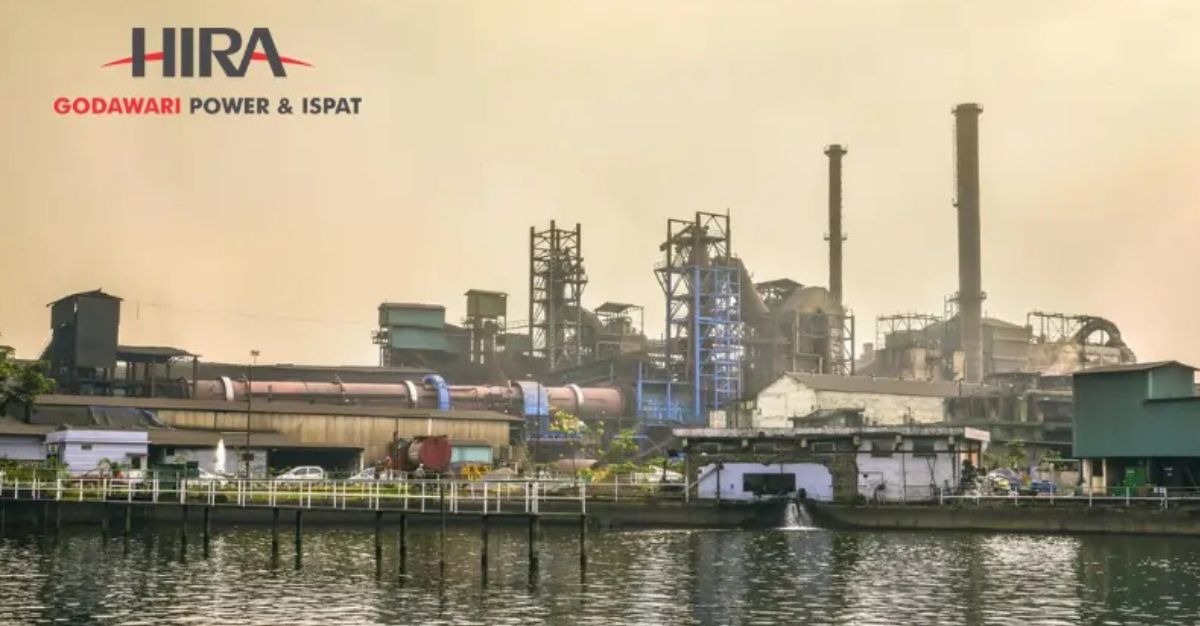
Godawari Power and Ispat Limited (GPIL) has commenced commercial operations at its new 6.91 MW waste heat recovery power plant in Raipur, Chhattisgarh. Approved by state pollution boards, the zero-fuel facility converts industrial flue gases into clean captive power, driving down production costs while advancing the company's green steel initiative.
RAIPUR, India — Indian mining and integrated steel manufacturer Godawari Power and Ispat Limited (GPIL) has officially commenced full commercial operations at its newly expanded 6.91 Megawatt (MW) waste heat recovery power plant. Located within the company’s flagship manufacturing complex at the Siltara Industrial Area in Raipur, Chhattisgarh, the facility successfully transitioned from trial testing to active grid synchronization.
The operational launch represents a major step forward for the company’s ₹75 crore decarbonization roadmap. By capturing and converting thermal exhaust that would otherwise escape into the atmosphere, the plant generates clean electricity without requiring additional fossil fuel consumption.
Technical Integration and Manufacturing Footprint
The newly operationalized 6.91 MW power unit is designed to maximize resource efficiency across GPIL's integrated industrial ecosystem. The plant utilizes advanced boilers to trap the high-temperature flue gases emitted from the company's existing Pellet Plant and Ferro Alloys Division.
By routing this captured heat through high-efficiency steam turbines, the system generates clean, reliable captive power. This output is instantly diverted back into the company's downstream steel-melting shops and wire-drawing mills. This internal loop minimizes the facility's reliance on the state electricity grid and significantly lowers overall production costs per tonne.
Financial Resilience and Decarbonization Targets
The commissioning of the waste heat recovery system comes on the heels of a highly successful financial year for Godawari Power and Ispat. The company reported steady consolidated revenue scaling, alongside a strong 26.6% year-on-year increase in net profits for recent quarters.
Financed entirely through internal cash accruals, this energy project adds to GPIL's existing captive power generation capacity. This expansion gives the Raipur facility a distinct competitive edge amidst volatile global coal and energy markets.
Direct Market Impact on Investors and Consumers
The successful rollout carries clear practical benefits for a wide range of industry stakeholders:
For Institutional Investors: The captive energy expansion protects consolidated EBITDA margins from unpredictable fluctuations in open-market electricity tariffs.
For Environmental Regulations: Generating green energy domestically positions GPIL favorably under emerging international trade standards, such as Europe’s Carbon Border Adjustment Mechanism (CBAM) reporting rules.
For Local Infrastructure: By meeting its own power needs internally, GPIL reduces the overall strain on Chhattisgarh's public power grid, leaving more electricity available for regional public consumption.
Official Sources Section
According to official regulatory filings submitted to the National Stock Exchange of India (NSE) under the ticker GPIL, the company secured formal Consent to Operate (CTO) from the Chhattisgarh Environment Conservation Board. This regulatory clearance validated that the equipment met all state safety, structural, and anti-pollution mandates prior to full commercial activation.
Corporate Governance and Executive Quotes
In an official address to shareholders regarding the company's long-term sustainability goals, B.L. Agarwal, Chairman and Managing Director of Godawari Power and Ispat Limited, highlighted the business value of green technologies:
"Our commitment to sustainable growth remains unwavering. A ₹75 crore decarbonization capex, progress on waste heat recovery, and the adoption of AI-driven smart systems reflect our resolve to lead the transition to green steelmaking. These initiatives are expected to reduce emissions by over 2.5 lakh tonnes of $CO_2$ annually, and generate green power without additional fuel consumption."
Why It Matters
The launch of the Raipur waste heat facility highlights a broader structural shift within heavy manufacturing, where environmental sustainability directly drives cost-efficiency. In energy-intensive sectors like steel and iron production, power accounts for a massive portion of total operational overheads. Capturing waste heat allows industrial companies to transform an operational liability into a highly productive asset, setting a clear example for low-carbon manufacturing across developing markets.
Key Facts at a Glance
Power Capacity: 6.91 MW of clean captive power successfully added to the grid.
Project Location: Siltara Industrial Area, Raipur, Chhattisgarh.
Energy Source: Industrial flue gases captured from existing pellet and ferroalloys operations.
Environmental Impact: Forms part of a green initiative designed to cut emission footprints by 250,000 tonnes of $CO_2$ annually.
Regulatory Clearance: Granted full operational consent by the Chhattisgarh Environment Conservation Board.
FAQ Section
Q: What is a waste heat recovery power plant?
A: It is an energy recycling system that captures hot exhaust gases from existing manufacturing processes and uses that thermal energy to drive steam turbines, generating clean electricity without burning extra fuel.
Q: Where is this new Godawari Power and Ispat facility located?
A: The plant is built inside the company’s main integrated steel production hub situated in the Siltara Industrial Area in Raipur, Chhattisgarh.
Q: How does this project impact the company's overall production expenses?
A: By producing its own electricity internally from recycled heat, the company significantly reduces its dependence on commercial power from the state grid, permanently lowering its long-term manufacturing costs.
Q: Was this green expansion funded using corporate debt?
A: No. Backed by solid quarterly net profits, the company funded this sustainable energy asset primarily through internal cash reserves and operational cash flows.
Sources: