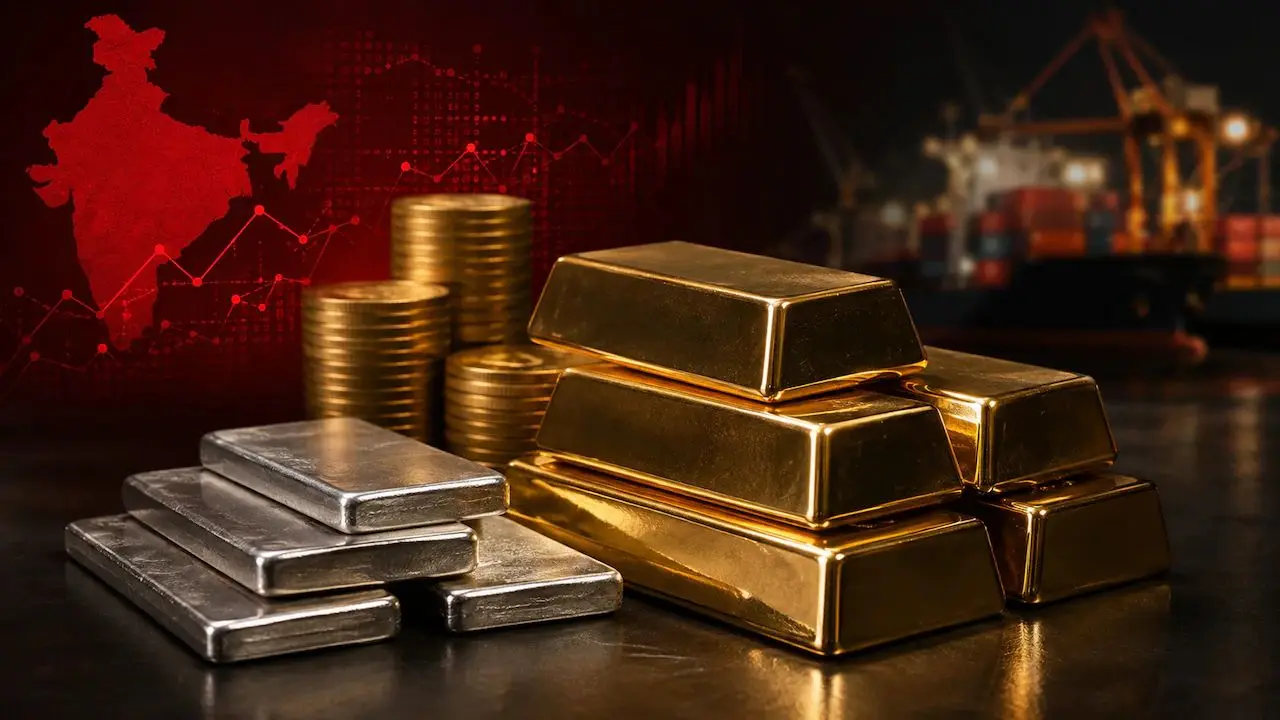
The gold rate today has surged past ₹1.52 lakh per 10 grams for 24-carat purity, while silver jumped by ₹2,500 per kilogram. Driven by international geopolitical tensions, central bank purchases, and upcoming domestic festive demand, this record-breaking rally significantly impacts retail consumers and strategic institutional investors nationwide.
NEW DELHI — On Monday, the Indian bullion market witnessed a significant rally as the gold rate today surged past the ₹1.52 lakh mark per 10 grams, marking a historic peak for retail buyers and institutional investors. Simultaneously, silver tracked this sharp upward trajectory, jumping by ₹2,500 per kilogram in a single trading session. This sudden escalation in precious metal rates across major metropolitan trading hubs like Delhi, Mumbai, and Chennai is driven by complex international economic cues, central bank reserves accumulation, and an anticipated surge in domestic demand. For citizens and businesses, this sharp price movement dictates immediate changes to investment strategies and physical purchasing plans.
Surge Across 24K and 22K Gold Categories
According to early morning trading data, checking the gold rate today has become a priority for retail consumers as the cost of 24-carat (24K) gold—representing 99.9% purity—crossed ₹1,52,450 per 10 grams in several major Indian cities. This represents a major psychological and financial threshold for the domestic market. Meanwhile, 22-carat (22K) gold, which is predominantly used for jewelry manufacturing and retail consumption due to its structural durability, saw its rates climb to approximately ₹1,39,750 per 10 grams.
For buyers tracking the gold rate today, market analysts note that the disparity between regional prices remains marginal, though local taxation, making charges, and state-specific levies continue to influence the final retail invoice. Bullion traders in urban centers reported a flurry of inquiries as retail investors attempted to gauge whether to lock in purchases immediately or wait for a potential market correction.
Silver Tracks a Sharp Upward Trajectory
While gold dominated market headlines, silver registered equally notable gains. Industrial and retail demand pushed silver prices up by ₹2,500 per kilogram. This sharp climb aligns with historical market behaviors, as silver frequently mirrors gold's bullion performance while also benefiting from its robust application in industrial sectors. Financial experts attribute its dual-purpose utility—particularly in green energy manufacturing, electronics, and electric vehicles—as a primary catalyst for silver's continued strength on the trading floor.
Economic Drivers and Market Context
The current price inflation affecting the gold rate today is rooted in a confluence of global macroeconomic factors. Primarily, ongoing geopolitical uncertainties have driven institutional investors toward traditional safe-haven assets. Additionally, sustained gold purchasing by global central banks aiming to diversify their foreign exchange reserves has tightened global supply dynamics.
Domestically, the timing aligns with India's traditional physical purchasing cycles. The approach of the post-monsoon festive calendar and the highly lucrative winter wedding season invariably injects steady liquidity into the physical gold market. Despite high spot prices, cultural affinity and the perception of gold as a secure generational asset ensure that baseline retail demand remains relatively inelastic.
Impact on Consumers and Retail Jewelers
For everyday consumers, this price hike translates to higher immediate costs for wedding preparations and festive gifting. Many retail buyers are expected to shift their purchasing patterns toward lighter-weight ornaments, 18-carat gold alternatives, or diamond-studded hybrid jewelry to stay within pre-allocated household budgets. Furthermore, the shift towards digital gold and Sovereign Gold Bonds (SGBs) is gaining momentum among younger demographics who prioritize investment returns over physical possession.
For the retail jewelry sector, the soaring base price introduces a complex operational scenario. While inventory valuations have increased, the higher price point threatens to temporarily dampen immediate footfall in local showrooms. Consequently, jewelers anticipate that consumer recycling—exchanging old gold for new designs—will surge as buyers look to capitalize on the elevated valuation of their existing assets rather than deploying fresh capital.
Official Sources Section
Live trading metrics, regional price variations, and purity benchmarks were sourced according to official morning spot rates provided by the Indian Bullion and Jewellers Association (IBJA).
Institutional market analysis, macroeconomic factors, and commodity futures data were cross-referenced with filings from the Multi Commodity Exchange (MCX) and periodic economic reviews by the Ministry of Finance.
Quote Section
"According to market officials, the sudden spike in bullion prices is a direct result of strong international cues combined with a heightened domestic demand cycle. Investors are clearly hedging against global volatility, while domestic retail buyers are navigating higher costs ahead of the traditional wedding season."
Why It Matters
The rapid escalation in gold and silver prices directly impacts household budgets, investment portfolios, and the broader retail economy in India. For the middle-class consumer, it necessitates recalibrating budgets for weddings and cultural milestones. For institutional investors, the surge reaffirms the status of precious metals as a reliable hedge against currency depreciation and global inflation. Furthermore, sustained high prices dictate how policymakers evaluate import duties to balance the trade deficit while supporting the domestic jewelry manufacturing sector.
Key Facts at a Glance
Record Highs: 24-carat gold prices breached the ₹1,52,450 mark per 10 grams in major Indian cities.
Jewelry Standard Rates: 22-carat gold, heavily utilized for consumer ornaments, climbed to approximately ₹1,39,750 per 10 grams.
Silver Surge: Silver prices saw a steep single-day increase, jumping by ₹2,500 per kilogram driven by both industrial and retail demand.
Market Drivers: Geopolitical tensions, central bank purchases, and the upcoming Indian festive season are the primary catalysts for the price rally.
FAQ Section
What is the current gold rate today for 24K and 22K?
As of the latest market updates, 24K gold is trading over ₹1,52,450 per 10 grams, while 22K gold is priced at approximately ₹1,39,750 per 10 grams, before local taxes and making charges.
Why have gold and silver prices increased so suddenly?
The price surge is driven by a mix of international geopolitical uncertainties, heavy buying by global central banks, and rising domestic demand ahead of India's festive and wedding seasons.
How does the increase in silver prices compare to gold?
Silver often tracks gold's upward momentum but is also experiencing independent price support due to its extensive industrial applications, leading to a sharp ₹2,500 per kilogram jump.
Should I buy gold now or wait for prices to drop?
While market timing is subjective, financial advisors generally recommend long-term systemic investments, such as Gold ETFs or Sovereign Gold Bonds, rather than attempting to time short-term retail market peaks.
Source: Indian Bullion and Jewellers Association (IBJA), Multi Commodity Exchange (MCX), Ministry of Finance