Union Commerce Minister Piyush Goyal warned automakers over localisation at the SIAM convention in New Delhi, announcing that the government is deploying artificial intelligence to inspect import-export filings. Goyal demanded that vehicle manufacturers end exaggerated indigenisation claims, invest in domestic component manufacturing, or compensate through expanded vehicle exports.
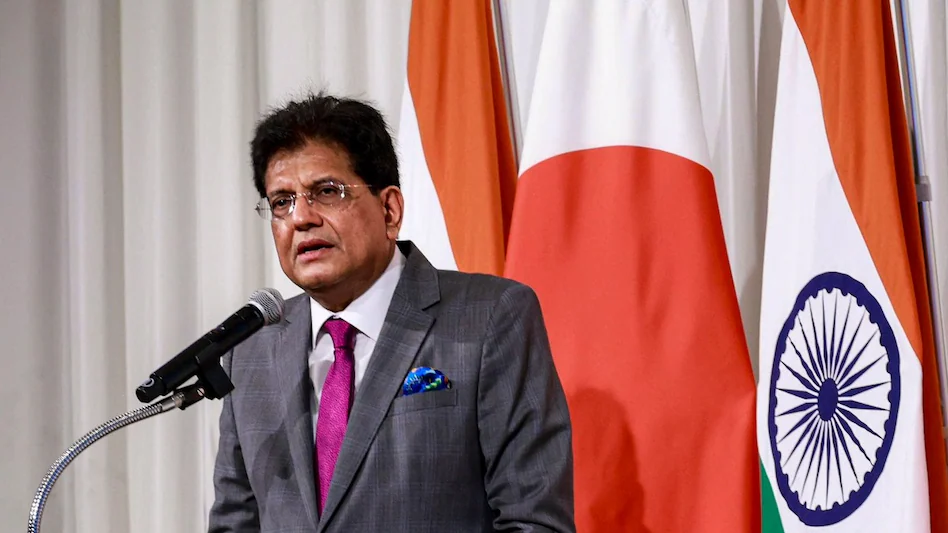
NEW DELHI — Union Minister of Commerce and Industry Piyush Goyal warned automakers over localisation on Thursday, revealing that the Indian government is using artificial intelligence and custom trade filings to cross-verify company-level indigenisation claims against actual import volumes. Speaking at the 64th Society of Indian Automobile Manufacturers (SIAM) Annual Convention in New Delhi, Goyal cautioned original equipment manufacturers (OEMs) against inflating local sourcing figures while remaining heavily dependent on imported components and knocked-down vehicle kits.
The warning carries immediate weight as India negotiates comprehensive free trade agreements with the European Union and the United Kingdom, while positioning itself as an alternative to global single-source manufacturing hubs. Goyal told industry executives that companies failing to manufacture parts domestically must offset trade deficits by accelerating outbound exports.
Government Scrutiny of Import-Export Records
Addressing domestic and global executives at the annual conclave, Goyal stated that federal authorities are conducting forensic reviews of company-wise trade balances by analyzing Import Export Code (IEC) filings coupled with algorithmic tracking.
The Department for Promotion of Industry and Internal Trade (DPIIT) and the Directorate General of Foreign Trade (DGFT) are reviewing supply chains to ensure vehicle platforms benefit from genuine domestic manufacturing rather than minimal assembly operations. Goyal referred to certain industry participants as "black sheep" who report high domestic value addition in public forums while sustaining significant import bills for critical sub-assemblies, electronic controllers, and high-tensile components.
Automakers unable to indigenise specialised components domestically were directed to compensate by expanding finished exports from Indian facilities, thereby preventing a drain on national foreign exchange reserves.
Focus on the 'Four Ms' of Mobility
The commerce minister outlined a broader industrial framework intended to anchor the country’s automotive future, categorised as the "four Ms of mobility":
Molecules: Securing supplies of critical minerals, rare earths, and permanent magnets via the Critical Mineral Mission, deep-sea exploration, and multilateral pacts such as the Pax Silica partnership with the United States.
Modules: Driving joint ventures and technological transfer to manufacture structural automotive modules and power electronics domestically rather than sourcing assembled packs.
Megawatts: Reducing national reliance on imported crude oil, liquefied petroleum gas (LPG), and liquefied natural gas (LNG) by adopting indigenous power sources, battery chemistries, and bio-fuels.
Markets: Leveraging global trade channels to double outbound automotive shipments, ensuring domestic plants produce to unified international quality specifications.
Goyal singled out passenger vehicle market leader Maruti Suzuki India for operational compliance, noting that the automaker accounted for 55 percent of India’s passenger vehicle exports and 97 percent of electric vehicle outbound shipments during the April–June quarter.
Impact on Industry, Consumers, and Investors
The direct warning issued by Piyush Goyal carries systemic operational consequences for the automotive value chain:
Automotive OEMs: Companies operating assembly plants dependent on imported completely knocked-down (CKD) or semi-knocked-down (SKD) kits face pressure to establish local tier-1 supplier bases. Automakers failing to meet indigenisation benchmarks risk heightened tariff scrutiny or exclusion from federal production-linked incentives (PLI).
Component Manufacturers: Domestic ancillary makers, casting firms, and wire harness suppliers stand to gain long-term purchase agreements as vehicle brands are forced to substitute imported assemblies with locally manufactured hardware.
Investors and Equity Markets: Analysts anticipate that capital expenditure requirements may rise across automotive OEMs as companies finance tooling and plant expansions to comply with government indigenisation standards.
Consumers: Increased localisation could protect long-term domestic vehicle prices from foreign currency fluctuations, although transitional capital expenditure may weigh on consumer pricing in the near term.
Official Sources
The statements and policy directives were delivered during the official proceedings of the automotive industry's apex annual gathering:
Official Quotes
Addressing the audience at the SIAM Annual Convention, Union Minister of Commerce and Industry Piyush Goyal stated:
"You may not realise it, but I'm watching surely the level of indigenisation. We have the data, we have AI, and we know exactly what is coming in under every IEC code. Some black sheep in the industry are claiming high localisation while still relying heavily on imports. If you cannot localise, you must compensate by boosting exports and making India your global production hub."
He added regarding national industrial standards:
"We cannot have different quality standards for vehicles sold in India and those shipped abroad. The world is shifting manufacturing towards competitive, capable destinations, and Indian industry must build scale to double our automotive exports every two years."
Why It Matters
The government's intervention marks a shift from passive incentive distribution to algorithmic enforcement of industrial policy. By tracking import declarations against manufacturing throughput, the Ministry of Commerce is closing loopholes that allowed global brands to market assembled foreign kits as domestically produced vehicles. For the Indian economy, forcing deeper supplier integration reduces trade deficits in mechanical components and microelectronics, protecting domestic industry against international supply chain disruptions.
Key Facts at a Glance
Event: 64th Annual Convention of the Society of Indian Automobile Manufacturers (SIAM) in New Delhi.
Regulatory Mechanism: Algorithmic verification matching company Import Export Code (IEC) records against reported indigenisation metrics.
Policy Mandate: Automotive OEMs must expand domestic sourcing or offset component imports by significantly increasing vehicle export volumes.
Strategic Target: Securing the "four Ms" of automotive resilience: molecules, modules, megawatts, and markets.
Frequently Asked Questions
Why did Piyush Goyal warn automakers over localisation?
The commerce minister warned automakers over localisation because trade monitoring identified companies presenting low-value domestic assembly as comprehensive indigenisation, while continuing to import high-value automotive components.
How is the government monitoring automaker imports and exports?
The Ministry of Commerce and Industry uses artificial intelligence models to inspect enterprise-level Import Export Code (IEC) records, tracking raw component intake directly against production figures.
What alternative did the government propose for companies unable to localise?
Automakers that face technological or supply constraints in localising specific components must compensate by substantially increasing their finished vehicle and component exports from Indian production lines.
Which automaker was cited as a positive benchmark for exports?
Maruti Suzuki India was recognized for shipping vehicles to over 120 destinations, accounting for 55 percent of India’s passenger car exports and 97 percent of outbound electric vehicle consignments in the first quarter of the financial year.
Source: Official ministerial address published via the Ministry of Commerce and Industry and public convention statements documented by the Society of Indian Automobile Manufacturers (SIAM).