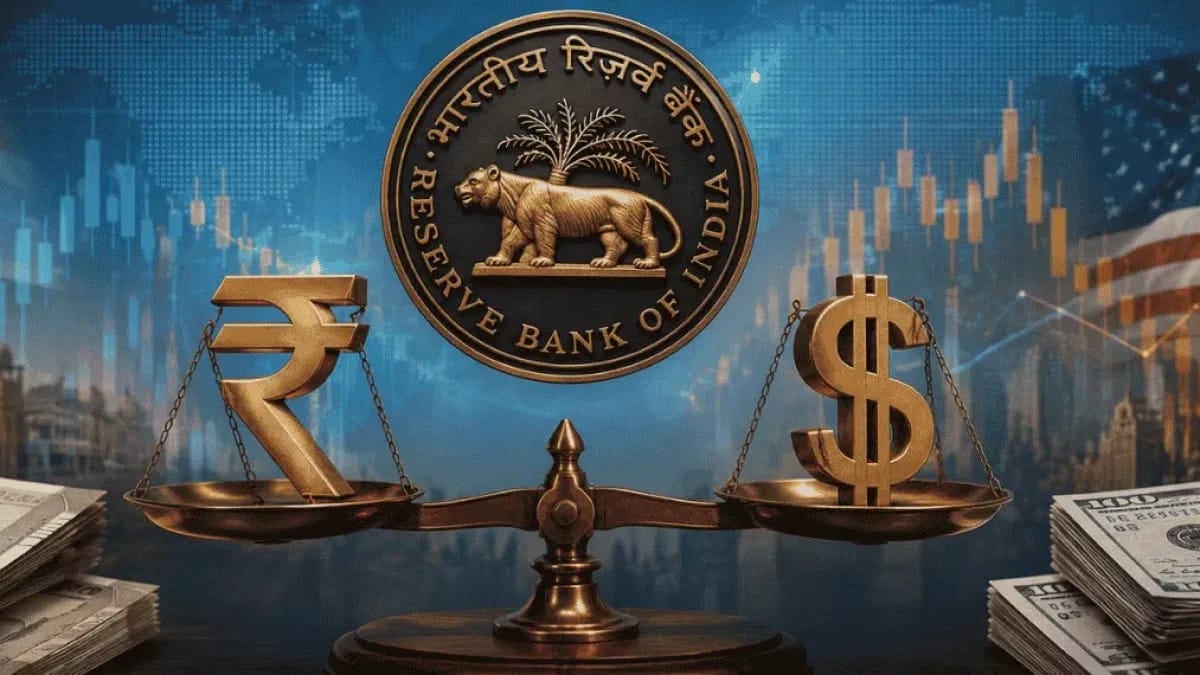
The Reserve Bank of India reportedly sold dollars near market open on September 4, 2026, shielding the domestic currency from oil-driven pressures. Consequently, the Indian rupee opened nearly flat at 94.46 per U.S. dollar, backed by robust foreign exchange reserves.
MUMBAI — The Reserve Bank of India stepped in to sell U.S. dollars near the opening of the trading session on September 4, 2026, aiming to protect the local currency from depreciation pressures triggered by rising global oil prices. According to currency market participants, the Indian rupee (INR=IN) opened almost flat at 94.46 per U.S. dollar, resilient against broader emerging market headwinds. The central bank's timely intervention underlines its ongoing strategy to smooth excessive volatility as geopolitical tensions and energy market fluctuations weigh on regional currencies.
Foreign Exchange Dynamics and Market Response
The central bank's proactive spot market intervention builds on substantial external buffers, including record foreign exchange reserves that recently surpassed $729 billion following significant non-resident deposit inflows. Energy import costs remain a primary vulnerability for the domestic economy, making prompt regulatory action essential whenever crude prices spike due to Middle East developments or supply uncertainties. Traders noted that matching dollar demand from oil refiners kept the local unit anchored near the 94.46 threshold during early trading hours.
Broader Economic and Trade Implications
For domestic businesses, importers, and corporate treasuries, the stability of the rupee provides vital predictability amidst volatile global commodity markets. Consistent central bank management helps mitigate imported inflation risks, shielding retail consumers from sharp surges in fuel and energy retail pricing. Meanwhile, institutional investors monitor these exchange rate interventions closely to gauge foreign exchange liquidity and short-term debt servicing costs across domestic capital markets.
Official Sources Section
Market data, intervention observations, and currency valuation metrics are referenced from operational reports provided by the Reserve Bank of India and interbank foreign exchange trading desks in Mumbai. Official guidelines on reserve management and external sector stability are supervised in accordance with disclosures from the Securities and Exchange Board of India and central bank communiques.
Quote Section
According to officials, the central bank maintains active surveillance over domestic foreign exchange markets to curb disorderly movements. Organizers stated that adequate reserve buffers will be deployed strategically to ensure orderly market liquidity and macroeconomic stability.
Why It Matters
Maintaining currency stability is vital for controlling imported inflation and preserving investor confidence in domestic financial assets. For corporate entities engaged in international trade, predictable exchange rate movements simplify hedging strategies and cost projections.
Key Facts at a Glance
The Indian rupee opened nearly flat at 94.46 per U.S. dollar on September 4, 2026.
The Reserve Bank of India reportedly intervened via dollar sales near market open to counter oil-driven depreciation.
India's foreign exchange reserves stand at a record high of over $729 billion.
Sustained central bank intervention helps buffer the domestic economy against external commodity shocks.
FAQ Section
What was the opening exchange rate for the Indian rupee on September 4, 2026?
The Indian rupee opened almost flat at 94.46 per U.S. dollar.
Why did the central bank intervene in the foreign exchange market?
The Reserve Bank of India stepped in to shield the local currency from oil-driven depreciation pressures.
How do higher oil prices impact the Indian rupee?
Because India relies heavily on energy imports, rising crude prices increase dollar demand from refiners, placing downward pressure on the rupee.
Where can official monetary and forex statistics be tracked?
Official data is published through regular updates by the Reserve Bank of India.
Source: Reserve Bank of India, Securities and Exchange Board of India, Interbank Foreign Exchange Market Desks