Nearly ten days after catastrophic glacial floods struck Nepal, emergency crews successfully rescued one person alive from a hydropower tunnel, with a second extraction underway. Backed by international specialists, rescue workers continue targeting underground air pockets, providing a rare boost to ongoing operations amid a death toll exceeding 1,100.
KATHMANDU, Nepal — In a dramatic breakthrough nearly ten days after devastating flash floods tore through the Himalayas, search-and-rescue teams successfully pulled one person alive from a blocked hydropower project tunnel in Nepal, with a second survivor currently being brought out. The rare rescue offers a glimmer of hope amidst one of the worst climate disasters to hit the region, which has left over 1,100 people dead and thousands missing. Lawmakers confirmed the ongoing extraction operations on Thursday, marking a critical milestone in the race against time to locate hundreds of workers trapped underground.
Tunnel Extraction Operations and Joint Efforts
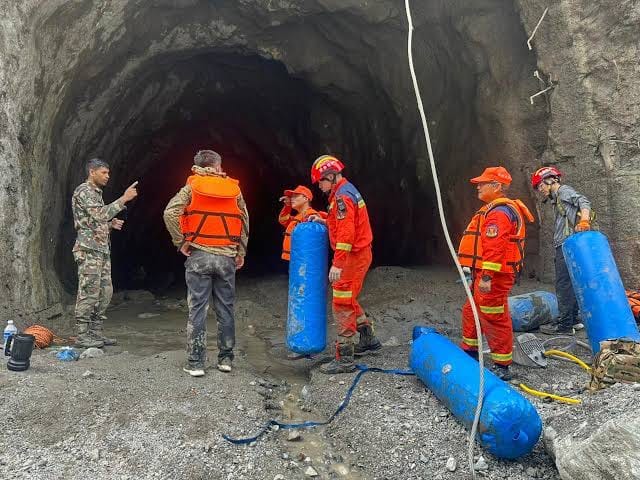
According to local authorities and emergency response coordinators, the survival of the trapped individuals is largely attributed to air pockets, food, and water supplies stored within isolated chambers inside the underground hydropower infrastructure. Specialized search-and-rescue teams—comprising the Nepalese Army, international experts, and foreign contingents including specialists from India—have spent days utilizing heavy machinery, cameras, and oxygen-supplying pipes to probe blocked tunnels in the mountainous Rasuwa and Nuwakot districts.
The multi-agency task force intensified operations following reports that sealed air pockets might be sustaining trapped workers. Rescuers navigated thick layers of mud, silt, and massive debris to reach the chamber where the survivors were located. Medical teams stationed outside the tunnel entrance are prepared to administer immediate trauma care and oxygen stabilization as soon as the individuals are brought to the surface.
Background on the Himalayan Flash Floods
The disaster struck late last month following catastrophic flooding triggered by a glacial collapse near Nepal's border with China. The sudden wall of water and debris swept away towns, bridges, and multiple hydropower installations, cutting off entire valleys and overwhelming local emergency response capacities.
The catastrophic impact has severely affected local infrastructure, displacing thousands of families and leaving over 900 workers unaccounted for across various subterranean hydropower construction and generation sites. While initial search efforts focused on surface recovery, attention swiftly shifted to underground tunnels as intelligence suggested compartments within the facilities could shelter survivors.
Impact on Communities and Regional Infrastructure
The prolonged crisis has placed immense strain on survivors, local businesses, and government resources. Displaced residents in mountain communities face severe psychological distress and infrastructural isolation, with primary transport routes heavily damaged. Authorities continue to grapple with logistical hurdles in delivering food, clean water, and medical supplies via aerial and cleared ground routes, while forensic teams conduct mass identifications for victims recovered elsewhere.
Official Sources Section
Information regarding the ongoing rescue operations, survivor extractions, and casualty metrics is based on official briefings from the Nepalese Parliament, the National Disaster Risk Reduction and Management Authority (NDRRMA), the Nepal Army, and statements compiled by international news agencies including Reuters and the Associated Press.
Quote Section
"Our priority remains clear: To continue our search and rescue operations, find those who are still missing and continue supporting everyone affected," Prime Minister Balendra Shah stated during an address to parliament.
Why It Matters
The survival and extraction of workers nearly ten days post-disaster validate the persistence of multi-nation rescue strategies focused on subterranean air pockets. This development recalibrates search parameters for remaining trapped personnel, proving that isolated underground chambers can sustain human life well beyond initial standard survival windows during extreme weather events.
Key Facts at a Glance
Survival Milestone: One person was pulled alive from a hydropower tunnel nine days after the floods, with a second extraction underway.
Disaster Scale: The glacial-triggered flash floods have resulted in over 1,100 confirmed fatalities and thousands of missing persons.
Rescue Coordination: Joint operations involve the Nepalese Army alongside specialized foreign rescue squads, including technical teams from India.
Subterranean Focus: Efforts concentrate heavily on hydropower tunnels where sealed chambers and trapped air supplies offer viable survival zones.
FAQ Section
How long were the survivors trapped inside the tunnel?
The individuals survived inside the underground chamber for approximately nine days following the initial flash floods.
Why are rescue operations concentrated on hydropower tunnels?
Authorities believe that specific sections of the tunnel infrastructure feature sealed structural chambers equipped with air, water, and food provisions, providing feasible pockets for human survival.
What is the status of other missing workers?
While search-and-rescue teams continue combing multiple hydropower sites, officials note that the overall hope of finding additional survivors is diminishing as time elapses.
Who is leading the rescue operations in Nepal?
Operations are spearheaded by the Nepal Army and national disaster management authorities, backed by specialized international rescue experts and medical teams.
Source: Reuters, Associated Press, National Disaster Risk Reduction and Management Authority (NDRRMA), The Kathmandu Post