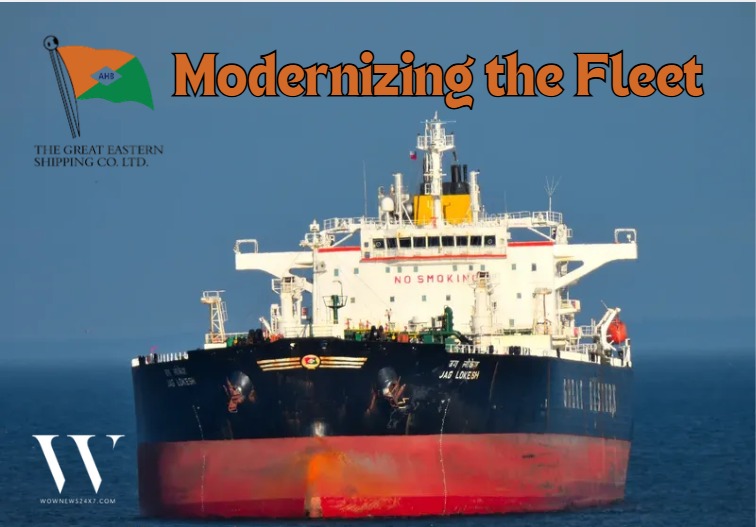
Great Eastern Shipping Company has contracted to sell its 2009-built LR2 tanker, "Jag Lokesh," with delivery scheduled for Q2 FY27. Simultaneously, the firm is acquiring a 2015-built LR2 product tanker to modernize its fleet. The move maintains the company's fleet at 40 vessels while optimizing efficiency and operational capacity.
The sale of the 2009-built vessel and a simultaneous acquisition reflect the company's strategic focus on fleet optimization and operational efficiency.
MUMBAI — The Great Eastern Shipping Company Limited (GE Shipping) has contracted to sell its 2009-built Long Range 2 (LR2) tanker, "Jag Lokesh," to an unaffiliated third party. The transaction, announced by the company on July 7, 2026, involves the divestment of the 105,900 dwt vessel, with delivery to the new buyer scheduled for the second quarter of the financial year 2027.
The move is part of an ongoing fleet modernization strategy for India's largest private-sector shipping firm. In a parallel development, the company has contracted to acquire a secondhand 2015-built LR2 product tanker, which is also expected to join the fleet within the same quarter.
Strategic Fleet Optimization
GE Shipping’s decision to divest the older Jag Lokesh tanker while simultaneously acquiring a younger, more efficient LR2 product tanker underscores a commitment to maintaining a modern, high-performance fleet. By replacing a 17-year-old vessel with a 2015-built unit, the firm aims to improve its overall fuel efficiency and reduce maintenance-related downtime, aligning with broader industry standards for environmental compliance and operational reliability.
According to regulatory filings submitted to the Bombay Stock Exchange (BSE) and the National Stock Exchange (NSE), the company’s current owned fleet stands at 40 vessels. This portfolio comprises 25 tankers—including crude, product, and LPG carriers—and 15 dry bulk carriers, representing an aggregate capacity of 3.24 million dwt.
Operational Stability and Market Position
Despite the divestment, GE Shipping continues to maintain near-100% capacity utilization across its fleet. The company, which specializes in both shipping and offshore oil drilling services, has leveraged its robust internal accruals to finance its recent vessel acquisitions, ensuring that the fleet expansion remains self-funded.
Market analysts note that such asset-cycling strategies—selling older assets to fund newer ones—are essential for maintaining competitiveness in the volatile shipping sector. By cycling out assets like Jag Lokesh, the company can mitigate the rising costs associated with operating aging maritime infrastructure while simultaneously preparing for future market demand.
Why It Matters
For investors and stakeholders, this transaction serves as an indicator of GE Shipping’s disciplined capital allocation. The simultaneous sale and purchase model allows the company to refresh its fleet age profile without a net reduction in tonnage capacity. This operational agility is critical for maintaining high performance in a global shipping landscape that is increasingly sensitive to vessel age, fuel efficiency, and regulatory compliance.
Key Facts at a Glance
Asset Divested: 2009-built LR2 tanker "Jag Lokesh" (approx. 105,900 dwt).
Asset Acquired: 2015-built secondhand LR2 product tanker.
Transaction Timeline: Both the sale delivery and the acquisition completion are expected in Q2 FY27.
Fleet Status: GE Shipping maintains a fleet of 40 vessels with a total capacity of 3.24 million dwt.
Utilization: The company reports capacity utilization nearing 100%.
FAQ
Why is GE Shipping selling the Jag Lokesh tanker?
The sale is part of a strategic fleet modernization plan to replace older vessels with newer, more efficient models, helping the company reduce maintenance costs and maintain fleet performance.
When will the sale be finalized?
The vessel "Jag Lokesh" is scheduled to be delivered to the buyer during the second quarter of the financial year 2027 (Q2 FY27).
How is the new vessel acquisition being financed?
The company utilizes its internal accruals to finance the acquisition of secondhand vessels, ensuring capital discipline and avoiding additional debt burdens.
Official Sources