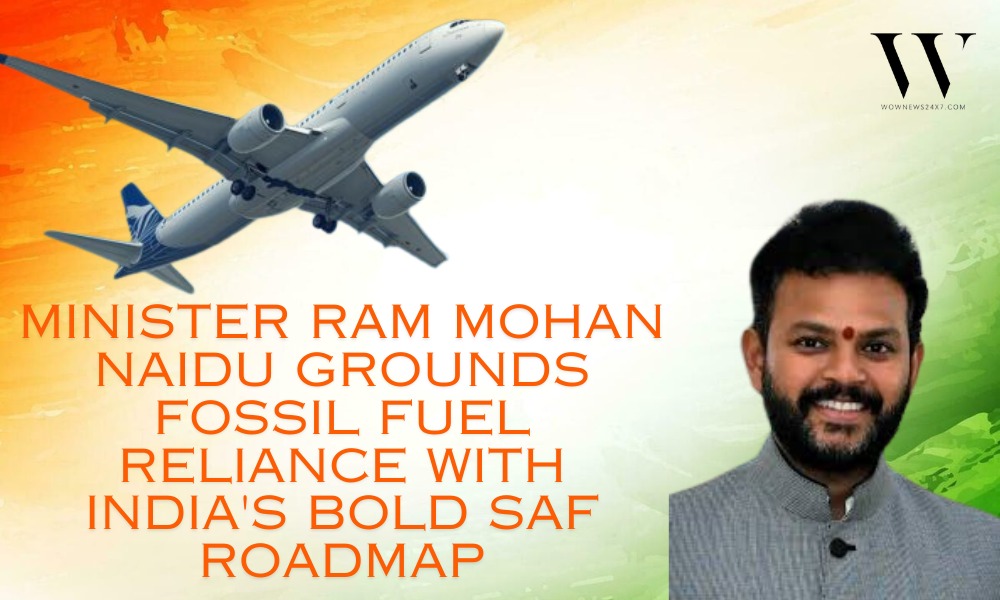
Union Civil Aviation Minister Ram Mohan Naidu reviewed India's preparedness for Sustainable Aviation Fuel adoption and CORSIA compliance. The high-level meeting focused on accelerating domestic production timelines, establishing traceability registries, and meeting global decarbonization targets to secure a competitive, sustainable future for India's aviation sector.
NEW DELHI — Union Civil Aviation Minister Ram Mohan Naidu led a comprehensive high-level stakeholder review in New Delhi regarding India's operational readiness for the adoption of Sustainable Aviation Fuel (SAF) and the implementation of the Carbon Offsetting and Reduction Scheme for International Aviation (CORSIA). The review comes as international aviation standards shift toward mandatory carbon reduction frameworks, positioning environmental compliance as a critical operational milestone for domestic and international carriers operating within Indian airspace.
The strategic evaluation brings together key regulatory bodies, oil marketing companies, and airline operators to streamline production frameworks ahead of upcoming global mandates. With international aviation transitioning toward strict emissions caps, the government’s proactive assessment aims to align India's expanding aviation sector with long-term global decarbonization targets while securing domestic supply chains.
Evaluating Production Timelines and Blending Roadmaps
According to official releases from the Ministry of Civil Aviation, the high-level meeting focused heavily on reviewing ongoing Sustainable Aviation Fuel production projects managed by domestic oil marketing companies. Officials analyzed the commissioning timelines of upcoming production facilities to guarantee adequate fuel availability and satisfy anticipated blending mandates.
Discussions also centered on establishing a national SAF Registry featuring end-to-end traceability, alongside a transparent carbon accounting, monitoring, and reporting mechanism compliant with International Civil Aviation Organization (ICAO) standards. Stakeholders from the Directorate General of Civil Aviation (DGCA) and the Airports Authority of India (AAI) collaborated to finalize certification processes and supply chain logistics required for commercial scale-up.
Inter-Ministerial Coordination and Policy Framework
The transition toward green aviation involves a coordinated, whole-of-government approach. Representatives from the Ministry of Petroleum and Natural Gas, the Ministry of Environment, Forest and Climate Change, the Bureau of Indian Standards (BIS), and the Bureau of Energy Efficiency (BEE) participated in the strategic deliberations.
Industry experts note that formulating a clear national SAF policy is vital for reducing reliance on fossil-based jet fuel. By integrating agricultural feedstock value chains—including municipal solid waste and agricultural residues—into the production cycle, the policy framework intends to create secondary economic opportunities for local farmers and rural suppliers.
Impact on Airlines, Investors, and the Aviation Sector
For commercial airlines and aviation operators, compliance with CORSIA and upcoming SAF blending mandates introduces both operational adjustments and long-term sustainability benefits. Carriers will need to adapt reporting systems to track carbon offsets accurately while securing reliable, cost-effective green fuel allocations.
For investors and industry stakeholders, the structured roadmap provides regulatory certainty. Clear timelines regarding mandatory blending benchmarks enable energy firms and airline boards to plan capital expenditures effectively, fostering a predictable environment for green technology investments within India's aviation market.
Official Sources Section
Information concerning the strategic review, policy targets, and institutional participation is derived from official announcements and statements published by the Ministry of Civil Aviation and the Press Information Bureau (PIB).
"According to officials, India is committed to building a robust and globally competitive Sustainable Aviation Fuel ecosystem that supports the growth of our aviation sector while contributing meaningfully to global decarbonisation efforts."
Why It Matters
The structured preparation for Sustainable Aviation Fuel and CORSIA implementation marks a foundational shift for India's transport infrastructure. Establishing domestic production capabilities safeguards airlines against global supply volatility, ensures compliance with international environmental treaties, and accelerates the broader transition toward sustainable commercial transit.
Key Facts at a Glance
Event: High-level review on Sustainable Aviation Fuel (SAF) and CORSIA preparedness
Presiding Authority: Union Civil Aviation Minister Ram Mohan Naidu
Core Objective: Evaluating production timelines, blending roadmaps, and ICAO carbon compliance frameworks
Key Participants: Ministry of Civil Aviation, Ministry of Petroleum and Natural Gas, DGCA, AAI, and Oil Marketing Companies
Frequently Asked Questions
What was the primary focus of the high-level meeting chaired by Ram Mohan Naidu?
The meeting focused on reviewing India's readiness for adopting Sustainable Aviation Fuel (SAF) and implementing the global CORSIA carbon offsetting framework.
Why is the implementation of SAF important for India?
SAF helps reduce carbon emissions from international aviation, ensures compliance with global environmental mandates, and creates domestic economic value chains involving agricultural feedstocks.
Which key agencies participated in the aviation review?
Senior officials from the Ministry of Civil Aviation, Ministry of Petroleum and Natural Gas, DGCA, AAI, and various oil marketing companies participated in the discussions.
When are the new international aviation carbon rules slated to expand?
Preparations are being expedited ahead of mandatory international compliance phases beginning January 1, 2027.
Source: Ministry of Civil Aviation, Press Information Bureau (PIB), Directorate General of Civil Aviation, Airports Authority of India