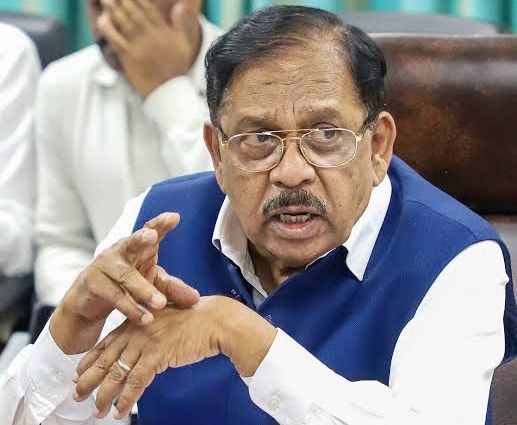
Karnataka Deputy Chief Minister G. Parameshwara questioned whether India’s 7.8% Q1 GDP growth is translating into jobs and higher incomes. Speaking in Bengaluru on September 4, 2026, he argued that headline figures must be matched by tangible improvements in household purchasing power, per-capita income, and secure employment.
Backed by official administrative statements, state leadership has urged the Centre to look beyond aggregate macroeconomic metrics and address core employment realities.
Challenging the federal narrative surrounding recent macroeconomic expansion, Karnataka Deputy Chief Minister G. Parameshwara publicly questioned whether India’s headline gross domestic product (GDP) growth is effectively translating into secure employment, higher wages, and greater economic security for ordinary citizens. Speaking in Bengaluru on Friday, September 4, 2026, Parameshwara emphasized that economic progress must be measured by improvements in the daily lives of citizens rather than aggregate statistical milestones.
The remarks follow the release of official data showing India's economy expanded by a faster-than-expected 7.8 percent during the April-June quarter of fiscal year 2026–27, a performance lauded by federal officials as a major achievement.
Evaluating Per-Capita Income, Base Year Revisions, and External Deficits
Analyzing the structural critique raised by state economic teams highlights broader debates surrounding national accounting methodologies and labor market absorption. According to official disclosures and policy statements from state administrative offices, key concerns include:
Per-Capita Comparisons: Highlighting international benchmarks, state evaluations pointed out that India's projected 2026 GDP per capita stands at approximately USD 2,813, trailing regional counterparts such as Bangladesh at USD 2,911.
Methodology and Base Year Scrutiny: Questions were raised regarding the recent administrative shift in India's GDP base year to 2022–23 alongside modifications in estimation techniques, suggesting that post-contraction low bases skew headline percentages.
External Vulnerabilities: Citing data from the Reserve Bank of India (RBI), officials noted a widening merchandise trade deficit reaching USD 86.1 billion in the first quarter, alongside an 8.1 billion dollar contraction in foreign exchange reserves on a balance-of-payments basis.
Employment Realities: The analysis stressed that millions of young graduates continue to face structural barriers in securing formal, qualifications-matched employment despite strong quarterly growth.
Why It Matters
The practical implications of the debate over inclusive growth affect urban workers, rural households, small-and-medium enterprises (MSMEs), and corporate investors navigating India's labor market. While aggregate GDP numbers indicate robust macroeconomic momentum, persistent anxieties regarding wage stagnation and job security directly influence consumer spending patterns. For state and federal policymakers alike, aligning high-level industrial production with employment-oriented growth remains a critical priority for long-term social stability.
Key Facts at a Glance
Q1 GDP Growth Rate: Recorded at 7.8 percent for the April-June quarter of fiscal 2026–27.
Per-Capita Projection: Estimated at roughly USD 2,813 for 2026.
Trade Deficit Metrics: Merchandise trade deficit stood at USD 86.1 billion during the opening quarter.
Core Demand: Shift focus toward labour-intensive manufacturing, MSME fortification, and real wage expansion.
FAQ Section
What prompted Karnataka Deputy CM G. Parameshwara to question national GDP figures?
His comments were a response to the Centre's celebration of India's 7.8 percent Q1 GDP growth, arguing that aggregate numbers fail to reflect ground-level job creation and income security.
How does India's per-capita income compare regionally according to these evaluations?
Citing IMF projections for 2026, state leaders noted India's per-capita GDP sits around USD 2,813, which remains lower than neighboring estimates such as Bangladesh at USD 2,911.
What specific economic vulnerabilities were highlighted alongside the growth data?
Officials pointed to a widening merchandise trade deficit of USD 86.1 billion and a contraction in foreign exchange reserves on a balance-of-payments basis during the first quarter.
Where can official economic reports and central banking data be accessed?
Comprehensive monetary statistics, trade deficits, and regulatory filings are published regularly on the Reserve Bank of India (RBI) Official Portal.
Source: ThePrint, Business AajKal, Reserve Bank of India (RBI), Government of Karnataka Portal