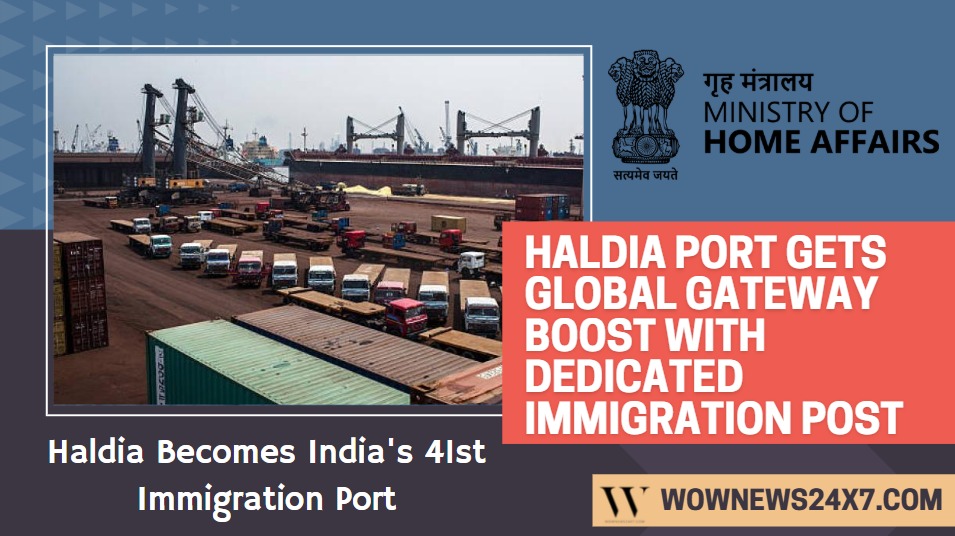
The Union Ministry of Home Affairs has designated the Haldia Dock Complex as India's 41st immigration checkpoint. This strategic upgrade streamlines maritime logistics, allowing direct visa and passport verification for foreign crew members at the port. The move reduces operational delays, enhances national security, and bolsters energy trade efficiency for eastern India.
HALDIA — The Union Ministry of Home Affairs (MHA) has officially notified the designation of the Haldia Dock Complex as an immigration post, making it the 41st such facility along India’s extensive coastline. This notification, issued on Monday, June 22, 2026, marks a significant infrastructure upgrade for the port, which has long served as a premier gateway for energy imports in eastern India.
The establishment of this immigration facility is expected to address long-standing logistical hurdles for international shipping. Previously, foreign crew members aboard vessels anchoring at Haldia were required to seek special permission through agents in Kolkata to land, often causing delays and operational inefficiencies. With this new designation, immigration officials will now be stationed directly at the port to verify passports and visas, facilitating smoother crew changes and shore leave.
Enhancing Maritime Connectivity and National Security
The Haldia Dock Complex, which commenced international operations in 1977, is one of India's largest ports for LPG imports and a vital node for energy supply to the eastern and northeastern regions. Officials at the Syama Prasad Mookerjee Port (SMPK), Kolkata, noted that the move would significantly enhance the port's attractiveness for foreign-flagged vessels, which frequently anchor at the complex.
Beyond trade facilitation, the Ministry’s decision is rooted in national security. According to recent government notifications, the immigration post will operate under the provisions of the Immigration Act, enabling centralized verification of identity documents for all foreign nationals entering the country through the port. This heightened regulatory oversight is intended to ensure robust security monitoring for the approximately 15 vessels that anchor at Haldia daily.
Why It Matters
For the shipping and logistics sector, this development reduces the "red tape" previously associated with crew management at Haldia. By eliminating the need for intermediary permissions from Kolkata, the new immigration post is set to save time and reduce costs for shipping lines. Furthermore, the move is anticipated to promote ancillary economic activities, including potential cruise tourism and increased international maritime traffic, aligning with broader governmental efforts to modernize eastern India’s trade infrastructure.
Key Facts at a Glance
New Status: Haldia Dock Complex is now the 41st designated seaport immigration checkpoint in India.
Operational Change: Foreign crew members can now undergo visa and passport verification directly at Haldia instead of routing through Kolkata.
Strategic Importance: Haldia is a premier hub for energy imports, particularly LPG, for eastern and northeastern India.
Regulatory Framework: The post operates under the provisions of the Immigration Act, managed by the Bureau of Immigration.
Daily Traffic: The port manages approximately 15 vessel arrivals daily, a significant portion of which are foreign-flagged.
FAQ Section
1. Why was an immigration post set up at Haldia?
The post was established to streamline international maritime operations, facilitate crew changes, and ensure robust security verification for foreign nationals arriving at the port.
2. How does this benefit shipping companies?
Previously, foreign crew members had to obtain permission through agents in Kolkata to land at Haldia. Now, they can process their entry directly at the port, saving time and simplifying logistics.
3. Is this part of a larger national initiative?
Yes, the Ministry of Home Affairs has been progressively adding immigration checkpoints across India's coastline to boost maritime connectivity. Haldia joins a list of 40 other designated seaports across the country.
4. Does this affect trade with neighboring countries?
While this move specifically targets maritime immigration, it complements India’s broader infrastructure push, including the development of integrated land ports on the Bangladesh border to enhance regional connectivity.
Source: The Hindu, Times of India, Anandabazar Patrika