The state of Haryana has officially launched its month-long Special Intensive Revision (SIR) voter verification drive starting June 15, 2026. The door-to-door physical enumeration campaign, run by localized officers, targets the complete purification of the state's 2.06 crore voter database, with the final corrected register scheduled for publication on September 22, 2026.
CHANDIGARH — The Election Commission of India has officially ordered the commencement of the Special Intensive Revision (SIR) of electoral rolls across Haryana starting Monday, June 15, 2026. This extensive administrative campaign aims to completely modernize and clean the state's voter database through comprehensive door-to-door field checks. Spearheaded by the state's election department, the initialization marks the first large-scale, house-to-house physical voter enumeration exercise conducted in Haryana in 24 years, updating records that have historically relied on summary revisions rather than physical canvas methods.
Door-to-Door Verification Framework Launched
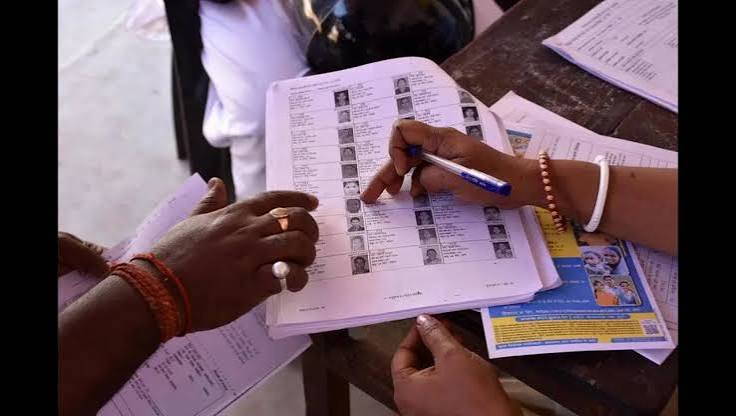
The field campaign dictates an intensive, structured timeline running from June 15 through July 14, 2026. During this operational block, a mobilized task force of Booth Level Officers (BLOs) will physically visit every single household across Haryana's various residential sectors. The core objective remains the strict physical collection of newly distributed, signed enumeration forms to verify active residency, identify non-registered eligible youths, and systematically scrub out dead, duplicate, or permanently shifted entries.
To prevent unnecessary voter exclusion, the election office has mandated strict guidelines for field workers. Officers must execute a minimum of three independent follow-up attempts to establish direct contact if a household is found locked during initial working hours. In persistent absence cases, the designated officer is instructed to securely place the official enumeration form beneath the doorway alongside a formal notice containing their registered mobile number, enabling residents to establish direct contact to complete the protocol.
Data Mapping and Stringent Exclusion Clauses
A critical cornerstone of the 2026 campaign involves mapping active entries against historical data. Prior to this launch, the state election machinery completed approximately 64.7% of its data mapping work. In scenarios where automated validation fails via internal digital databases, residents are legally required to establish their active eligibility by presenting physical or digital proof from a curated list of 11 acceptable identity frameworks.
The regulatory parameters explicitly underscore that any individual whose completed and signed enumeration forms are not gathered by field agents or submitted via verified portals will be excluded from the subsequent draft roll. However, administration officials have clarified that a resident's absolute inability to trace family lineage records back to the historic 2002 baseline will not serve as automatic grounds for exclusion, provided contemporary valid citizenship documentation is made available.
Key Milestone Timeline for SIR 2026
The administrative execution of the database overhaul follows a highly structured regulatory pipeline:
| Phase | Operational Milestone | Calendar Deadlines |
| Phase 1 | Door-to-Door Enumeration & Form Collection | June 15 – July 14, 2026 |
| Phase 2 | Formal Publication of the Draft Electoral Roll | July 21, 2026 |
| Phase 3 | Filing Period for Public Claims and Objections | July 21 – August 20, 2026 |
| Phase 4 | Final Disposal of Objections by Authorities | By September 18, 2026 |
| Phase 5 | Publication of the Final Certified Electoral Roll | September 22, 2026 |
Civil Impact and Political Mobilization
The execution of the massive survey bears deep long-term implications for local governance, political parties, and everyday citizens. At present, Haryana records an active base of 20,655,929 registered voters, utilizing a network of 20,629 established polling stations. For everyday residents, active participation ensures their democratic voice remains intact ahead of upcoming legislative exercises, while youths turning 18 as of the July 1, 2026 reference date gain an open door to seamless immediate registration.
Recognizing the immense scale of the drive, regional political blocks have heavily mobilized their internal networks. Thousands of localized Booth Level Agents (BLA-2) have been officially authorized to assist citizens during verification rounds. Certified political agents are legally permitted to collect and hand over a maximum cap of 50 enumeration forms to their respective government officers daily, providing an additional layer of public outreach across rural and urban pockets.
Official Sources Section
The logistical schedules, structural mandates, and data points utilized in this report are sourced from official administrative channels:
Office of the Chief Electoral Officer, Haryana: Press statements and formal media briefings delivered at the State Headquarters.
Election Commission of India (ECI): Constitutional circulars and directives authorizing the Special Intensive Revision schedule.
District Election Authorities: Regional logistical updates regarding BLO deployments across assembly constituencies.
Official Statements and Quotes
"The Special Intensive Revision is a crucial exercise aimed at ensuring the accuracy, transparency, and inclusiveness of the electoral rolls. The pre-draft activities will involve extensive field-level verification and data collection to facilitate the preparation of error-free electoral rolls. Public participation is essential for maintaining the integrity of the electoral process."
— A. Sreenivas, Chief Electoral Officer (CEO), Haryana
"According to officials, dedicated constituency-level help desks and localized district call centers have been made operational alongside the centralized 1950 24x7 helpline to address immediate civic queries."
Why It Matters
The absolute purification of the voter register directly impacts the fairness of democratic representation. By physically cleansing the database of millions of entries, the state prevents fraudulent voting vectors and ensures future electoral infrastructure—such as polling staff allocations, security deployments, and electronic machinery distribution—is deployed with absolute geographical accuracy based on living populations.
Key Facts at a Glance
Historic Overhaul: This drive marks the first comprehensive, door-to-door intensive physical voter verification campaign in Haryana since 2002.
Mandatory Return: Voters must fill out, sign, and return the enumeration form to their local officer to avoid missing the upcoming draft roll.
Voter Base Scale: The drive covers an active electorate of more than 2.06 crore registered citizens spread across 20,629 designated polling stations.
Youth Eligibility: Any resident attaining the legal voting age of 18 on or before July 1, 2026, is highly encouraged to apply immediately using Form-6.
Strict Window: The door-to-door collection phase concludes on July 14, leading toward the final error-free list publication on September 22, 2026.
Frequently Asked Questions (FAQ)
What happens if I am not at home when the officer visits?
The officer will make at least three independent attempts to visit your household. If you are continuously unavailable, they will slip the required enumeration form under the door alongside a formal notice containing their name and contact number so you can coordinate collection. Alternatively, an adult family member present can sign and submit the form on your behalf.
What are the acceptable verification documents for this drive?
The Election Commission has authorized 11 distinct document categories. These include government-issued identity cards, official Pension Payment Orders (PPOs), passports, matriculation educational certificates, domicile certificates, valid land allotment records, and family registers maintained by state or local bodies.
Can I complete my voter enumeration verification online?
Yes. Citizens can access the official online infrastructure via the ECINet mobile application or through the official national Voters' Service Portal. Forms submitted digitally will subsequently undergo localized verification rounds by your designated area officer.
Source: Official circulars and media releases from the Chief Electoral Officer, Haryana and public notification announcements from the Election Commission of India.