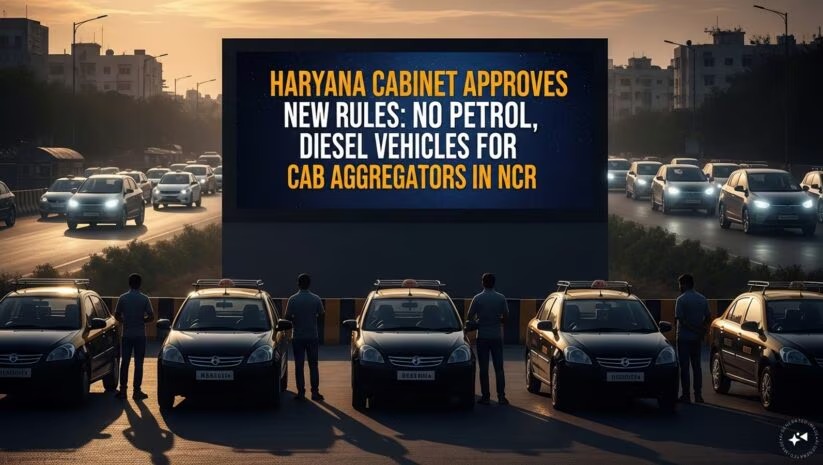
Haryana has cleared tough new rules that will bar cab aggregators from using petrol and diesel vehicles in the National Capital Region (NCR) portion of the state. The move is aimed at cutting vehicular emissions in one of India’s most polluted belts and accelerating the shift to electric mobility in app-based fleets.
The decision, approved by the state cabinet, means platforms like Ola, Uber and other aggregators will have to move towards electric vehicles and possibly CNG for operations in Haryana’s NCR districts over a defined transition period. It aligns with earlier directions from pollution-control authorities and court orders pushing NCR states to reduce fossil-fuel dependence in commercial transport.
New Rules For Aggregator Fleets
Under the updated policy, fresh petrol and diesel cabs are expected to be disallowed for registration on aggregator platforms in the NCR part of Haryana, with the focus shifting to EVs and cleaner alternatives. Existing vehicles will likely be given a phased transition timeline, during which aggregators will have to steadily increase the share of electric vehicles in their active fleets.
Air Quality And Climate At The Core
The state has framed the curbs as part of a broader clean air and climate agenda. NCR routinely records toxic air quality, with transport emissions a major contributor. By targeting high-mileage, commercially operated cabs first, the government hopes to achieve a disproportionate reduction in local pollution and oil consumption relative to the number of vehicles affected.
Implications For Drivers, Platforms And Riders
For drivers, the rules will mean fresh capital decisions on whether to shift to electric cars or exit aggregator work in the NCR. Platforms will have to support this change with EV-focused financing, leasing, and charging partnerships to avoid supply shocks. In the medium term, riders could see cleaner, quieter cabs become the norm, though tariffs may face upward pressure if EV costs are not offset by incentives and lower running expenses.
Clean Commute Rule Highlights
- Petrol and diesel cabs for aggregators barred in Haryana’s NCR under new rules
- Platforms will be pushed to build predominantly electric or cleaner-fuel fleets
- Policy framed as a measure to tackle NCR’s severe air pollution and emissions
- Drivers may have to transition to EVs over time, with financial and charging support becoming critical
- Move aligns Haryana with wider NCR and national EV, clean-air and climate commitments
Sources: State cabinet announcements and policy briefings on Haryana’s new cab aggregator rules; recent NCR clean air directives; media reports on the EV-focused transition for app-based fleets