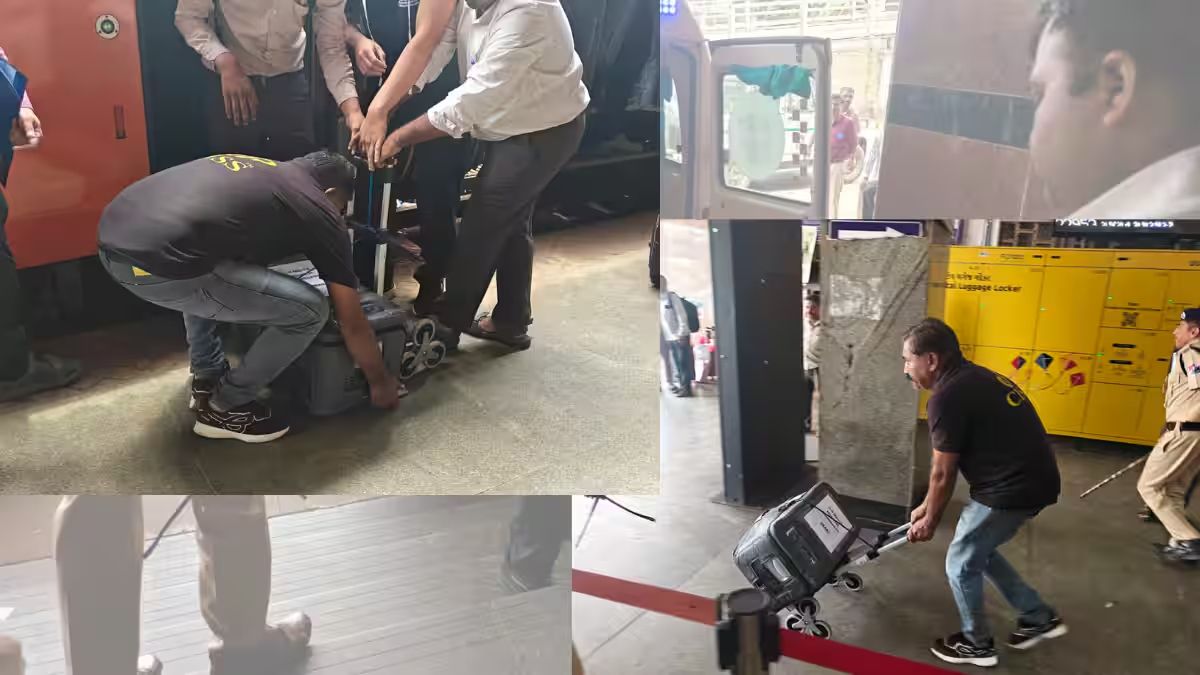
In a historic first for Indian Railways, a live donor heart was successfully transported aboard the Vande Bharat Express from Surat to Ahmedabad. Supported by a specialized green corridor managed by the RPF and Gujarat Police, the time-sensitive operation enabled doctors at the UN Mehta Institute to complete a life-saving transplant.
In a first-of-its-kind medical operation, Indian Railways rushed a live donor heart from Surat to Ahmedabad aboard the Vande Bharat Express.
In a landmark milestone for emergency medical logistics, Indian Railways successfully transported a live human heart aboard the Vande Bharat Express for the first time in the country. Executed on Friday, July 31, 2026, the high-stakes operation carried the vital organ 250 kilometres from Surat to Ahmedabad on Train No. 20901, the Mumbai Central–Gandhinagar Capital Vande Bharat Express. Designed to beat strict medical time constraints when conventional transit options face bottlenecks, the mission enabled multidisciplinary teams to deliver the organ directly to the UN Mehta Institute of Cardiology and Research Centre for a successful emergency transplant.
Precision Logistics and Green Corridor Coordination
Because human organs meant for transplantation possess a narrow viability window, the transit required flawless synchronization across multiple administrative bodies. Upon the train's arrival at Ahmedabad Railway Station, a dedicated green corridor was instantly activated from Platform No. 1 to the hospital.
Key elements ensuring the success of the historic mission included:
Inter-Agency Collaboration: Seamless cooperation linking the Railway Protection Force (RPF), Gujarat State Police, and hospital organ transplant coordinators.
Punctual Transit: Leveraging the high-speed scheduling and reliability of the Vande Bharat Express to cover the 250 km distance without schedule deviation.
Traffic-Free Ambulance Corridor: Continuous street monitoring by state police to clear traffic paths from the railway terminal directly to the operating theatre.
Immediate Surgical Execution: Surgeons at the UN Mehta Institute initiated the transplant procedure immediately upon the organ's arrival, securing a successful clinical outcome.
Impact on Medical Logistics and Emergency Healthcare
For patients awaiting critical organ donations, this successful deployment opens a vital new avenue for rapid medical transport across India. Healthcare administrators and railway planners note that utilizing high-speed rail networks can bypass highway congestion and weather-related air travel delays, offering a dependable framework for future organ-transplant logistics across major metropolitan corridors.
Why It Matters
Time is the single most critical factor in organ transplantation. By proving that high-speed passenger trains can be integrated into emergency medical protocols, this mission establishes a scalable, secure blueprint for transporting life-saving biological materials across distant cities efficiently.
Key Facts at a Glance
Historic Milestone: First instance of a live human heart transported via Indian Railways.
Route Covered: Transported from Surat to Ahmedabad (approx. 250 km).
Train Utilized: Train No. 20901, the Mumbai Central–Gandhinagar Capital Vande Bharat Express.
Receiving Facility: UN Mehta Institute of Cardiology and Research Centre, Ahmedabad.
FAQ Section
What makes this Vande Bharat transport mission historic?
It marks the first time in India that a live human donor heart was successfully transported across cities via the national railway network.
Which train and route were used for the organ transport?
The organ was carried on Train No. 20901 (Mumbai Central–Gandhinagar Capital Vande Bharat Express) from Surat to Ahmedabad.
How was the transit managed upon arrival in Ahmedabad?
A dedicated green corridor was established by the RPF and Gujarat State Police from Platform No. 1 to ensure zero traffic delays for the ambulance.
Where was the donor heart transplanted?
The heart was successfully transplanted into a critically ill patient at the UN Mehta Institute of Cardiology and Research Centre in Ahmedabad.
Source: Press Information Bureau (PIB), The New Indian Express, The Print, ETV Bharat