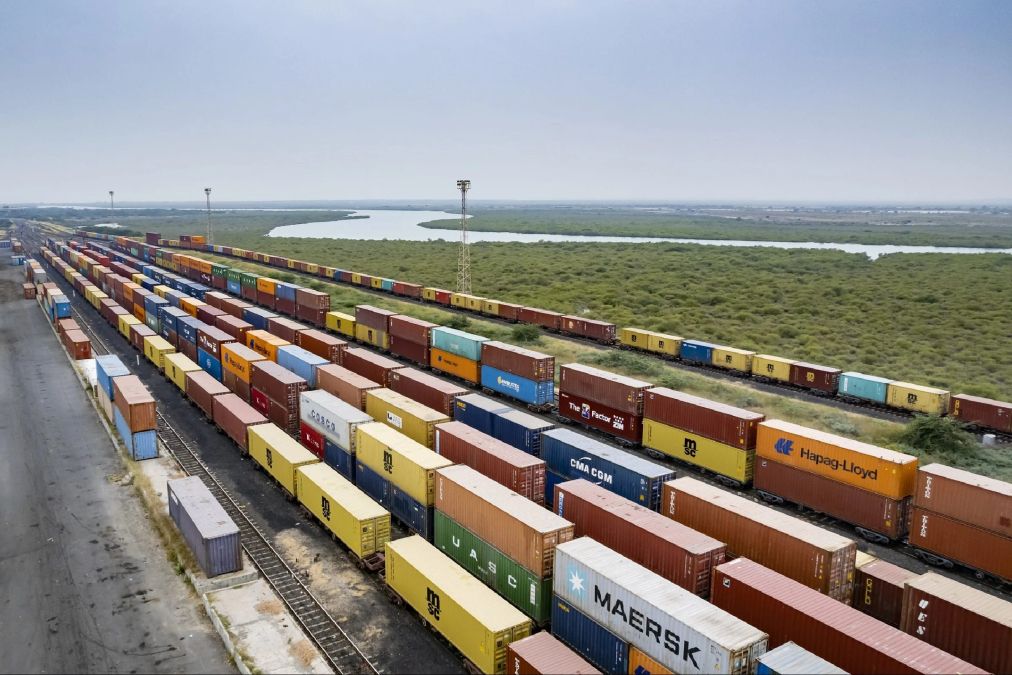
Indian Railways has cemented its position as the world's second-largest rail freight carrier, handling nearly 1.7 billion tonnes of cargo. Driven by extensive network electrification, dedicated freight corridors, and robust bulk commodity loading, the system continues to serve as a cost-efficient economic backbone for the nation.
Backed by official ministerial disclosures in New Delhi, the national transporter has consolidated its global standing by scaling bulk cargo handling and expanding electrified infrastructure.
Reaching New Milestones in Global Freight Logistics
The structural capacity of South Asia's primary transport network has achieved a major international benchmark. According to official performance reports and data released by the Ministry of Railways in August 2026, Indian Railways has firmly secured its position as the world's second-largest rail freight carrier, surpassing traditional carriers in the United States and Russia.
Operating across an extensive broad-gauge network spanning over 68,000 kilometers, the national transporter handled approximately 1.7 billion tonnes of freight during the fiscal term. This milestone reflects years of sustained capital expenditure, operational enhancements, and strategic structural reforms designed to modernize domestic logistics and reduce overall supply chain overheads.
The Role of Dedicated Corridors, Electrification, and Bulk Cargo
A primary driver behind this volume expansion is the systematic commissioning of the Eastern Dedicated Freight Corridor (EDFC) and the Western Dedicated Freight Corridor (WDFC). These dedicated, fully electrified routes have enabled high-speed, heavy-haul, and double-stack container train operations while decoupling freight traffic from congested passenger networks.
Furthermore, Indian Railways continues to function as the primary economic artery for essential bulk commodities. Ministry data indicates healthy year-on-year growth across core sectors:
Coal Loading: Maintained high momentum, with supplies to domestic thermal power plants increasing by 20% compared to previous periods.
Iron Ore and Minerals: Recorded a 22.2% surge in loading volume to support heavy manufacturing and infrastructure development.
Agricultural and Industrial Goods: Foodgrains, fertilizers, and general merchandise registered gains averaging between 11% and 12%.
With network electrification exceeding 99% across broad-gauge routes, the transporter has significantly curbed fossil fuel dependency while improving train turnaround times.
Why It Matters
The practical implications of this logistical expansion affect domestic manufacturers, agricultural producers, and commercial consumers across India. Because rail freight costs approximately 45% less than road transportation per tonne-kilometer—with a single freight train replacing upwards of 300 trucks—the network's efficiency directly lowers national logistics costs, curbs highway congestion, and supports broader carbon reduction goals.
Key Facts at a Glance
Global Ranking: Indian Railways stands as the world's second-largest rail freight carrier.
Annual Cargo Volume: Handled approximately 1.7 billion tonnes of freight.
Core Commodities: Coal accounts for nearly half of total traffic, alongside iron ore, cement, foodgrains, and fertilizers.
Infrastructure Drivers: Integration of the Eastern and Western Dedicated Freight Corridors (DFCs) alongside near-complete network electrification.
FAQ Section
How did Indian Railways achieve its ranking as the world's second-largest freight carrier?
The milestone was reached through aggressive infrastructure expansion, the operationalization of Dedicated Freight Corridors (DFCs), massive fleet additions, and near-total network electrification.
What commodities make up the majority of railway freight traffic?
Bulk materials form the backbone of the network, with coal representing nearly 50% of total cargo, supported heavily by iron ore, cement, foodgrains, and fertilizers.
How do rail freight costs compare to road transport in India?
Moving goods by rail is estimated to cost roughly 45% less than road transport on a per tonne-kilometer basis, offering substantial savings for industrial supply chains.
Where can citizens and industry stakeholders access official railway freight reports?
Detailed operational statistics and policy announcements are published regularly on the Ministry of Railways Portal via PIB.
Source: Press Information Bureau (PIB), Logistics Insider, Maritime Gateway