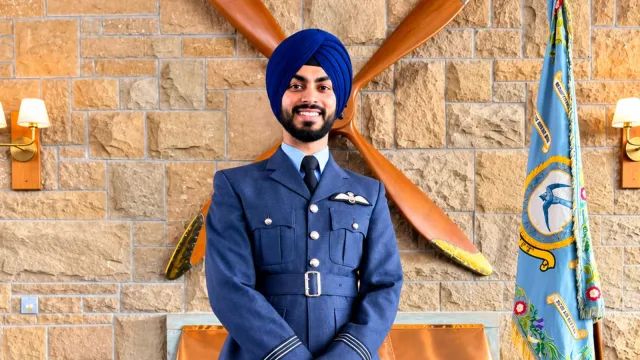
Britain has welcomed its first Sikh military fighter pilot since World War II, marking a historic milestone in armed forces diversity. Aiming to inspire future generations, the pilot's remarkable achievement bridges cultural representation with national defense excellence, drawing widespread commendation from defense authorities and community leaders across the United Kingdom.
Marking a historic milestone in armed forces diversity, a pioneering aviator takes to the skies, aiming to inspire future generations across the United Kingdom.
In a momentous development for military representation and aviation history, the United Kingdom armed forces have welcomed their first Sikh fighter pilot since the Second World War. Announced through official defense disclosures, this landmark achievement establishes a powerful precedent for inclusion within elite military ranks. Operating out of key tactical air stations, the pioneering aviator's ascension to the cockpit bridges decades of underrepresentation, marking a profound cultural and professional milestone for both the British military and the broader South Asian diaspora.
A Historic Milestone in Military Aviation
The journey to the fighter jet cockpit requires rigorous physical, technical, and psychological endurance. According to official service records released by the Ministry of Defence, candidates must undergo years of specialized flight training, combat simulation, and tactical evaluation before earning operational certification. Defense historians note that while Sikh servicemen played legendary roles as fighter and bomber pilots during World War II—most notably legendary figures such as Hardit Singh Malik—decades passed without a Sikh aviator securing a frontline fighter jet assignment in the modern era.
Key elements of this historic milestone include:
Rigorous Certification: Passing elite Royal Air Force (RAF) flight training benchmarks and high-G combat readiness assessments.
Cultural Representation: Seamlessly integrating traditional articles of faith, such as the Dastar (turban), with modern military flight gear and helmet specifications.
Inspirational Outreach: Participating in national recruitment initiatives aimed at encouraging youth from diverse multicultural backgrounds to pursue careers in defense.
Impact on Defense Recruitment, Youth, and Community Engagement
For aspiring aviators and minority communities across the United Kingdom, this historic appointment serves as tangible proof that traditional barriers within elite service branches are continuing to break down. Defense analysts emphasize that visible representation at the highest levels of military aviation enhances recruitment pipelines by demonstrating that merit and capability remain the ultimate arbiters of success. Furthermore, community leaders note that seeing a Sikh aviator in uniform fosters a deep sense of national belonging and pride among younger generations exploring public service careers.
Why It Matters
Milestones in national defense highlight the ongoing evolution of armed forces toward inclusive excellence. Recognizing diverse achievements strengthens public trust, broadens the talent pool for critical national security roles, and honors the historic contributions of multicultural veterans.
Key Facts at a Glance
Milestone: First Sikh fighter pilot in the British armed forces since World War II.
Governing Body: UK Ministry of Defence and Royal Air Force (RAF).
Primary Objective: Enhancing operational excellence while inspiring diverse recruitment pathways.
Historical Context: Builds upon the proud legacy of World War II Sikh servicemen in British aviation.
FAQ Section
Why is this military appointment considered historic for the UK?
This development marks the first time a Sikh aviator has secured a fighter pilot position in the British armed forces since World War II, re-establishing a vital historical link.
What training benchmarks are required for frontline fighter pilots?
Candidates must complete exhaustive flight school phases, advanced tactical jet training, and rigorous high-G physical conditioning managed by the Ministry of Defence.
How does the military accommodate traditional articles of faith?
The armed forces maintain comprehensive dress and appearance policies that safely accommodate items such as the turban while ensuring complete compatibility with standard safety and flight gear.
Where can readers verify official defense announcements and service updates?
Complete official press releases and recruitment guidelines are accessible via the UK Government Ministry of Defence Portal and the Royal Air Force Official Site.
Source: UK Government Ministry of Defence Portal, BBC News Defense Desk, Royal Air Force Official Site, Forces News Reports