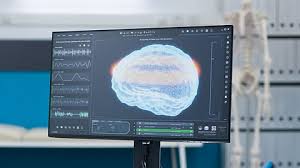
IIT Madras has launched the world’s first open-access, cellular-level 3D atlas of the human brainstem. Developed via advanced microscopy and computational pipelines, this 0.5-micron resolution digital repository maps vital neural pathways, offering global researchers unprecedented structural insights to advance treatments for neurodegenerative diseases and complex brain injuries.
CHENNAI, INDIA — The Indian Institute of Technology Madras (IIT Madras) on Friday announced the development of the world’s first cellular-level three-dimensional (3D) atlas of the human brainstem. Developed by the institute's Brain Centre, this high-resolution digital repository maps the human brainstem at an unprecedented microscopic scale. The project, completed in collaboration with international research institutions, aims to provide global scientists with a foundational tool to study neurodegenerative disorders, brain injuries, and complex neuromuscular conditions.
High-Resolution Mapping of Critical Brain Architecture
The newly unveiled digital atlas offers a visualization of the human brainstem at a resolution of 0.5 microns, allowing researchers to examine individual cells and nerve pathways. The brainstem acts as the central highway connecting the cerebrum with the spinal cord, controlling critical autonomic functions such as breathing, heart rate, blood pressure, and sleep cycles.
According to the project documentation released by the IIT Madras Brain Centre, previous structural maps lacked the cellular resolution necessary to pinpoint exact changes associated with aging and disease. The creation of this 3D atlas of human brainstem architecture fills a critical gap in medical literature by providing a standardized, healthy baseline of human anatomy.
Researchers utilized advanced computational pathology pipelines and high-throughput light-sheet microscopy to scan post-mortem brain tissue. The resulting datasets were then reconstructed into a seamless 3D digital model using proprietary image processing algorithms developed at the institute.
Technical Innovation and Collaborative Development
The development of the 3D atlas of human brainstem was led by an interdisciplinary team of neuroscientists, engineers, and data scientists at IIT Madras. The project received strategic funding and support from the Department of Biotechnology (DBT), Government of India, alongside philanthropic contributions from tech industry leaders.
To ensure anatomical accuracy, the IIT Madras team collaborated with global medical infrastructure partners, including the Human Brain Project in Europe and neuroanatomy experts from the Allen Institute for Brain Science in the United States.
The computational power required to process petabytes of imaging data was provisioned through the high-performance computing clusters at IIT Madras. The institute confirmed that the entire dataset will be hosted on an open-access platform, allowing researchers worldwide to download, analyze, and contribute to the digital repository.
Impact on Medicine, Biotechnology, and Clinical Research
The medical community expects the 3D atlas of human brainstem to significantly impact both clinical diagnostics and pharmaceutical development.
Neurologists and Neurosurgeons: The atlas provides a precise structural guide for planning complex surgical interventions in the brainstem region, minimizing the risk of damaging vital nerve tracts.
Pharmaceutical Researchers: Drug developers can utilize the localized cellular data to understand how specific compounds interact with targeted brainstem nuclei, accelerating the pipeline for treating diseases like Parkinson's, Alzheimer's, and Amyotrophic Lateral Sclerosis (ALS).
Medical Educators: The open-access digital tool transforms neuroanatomy training, replacing traditional 2D textbook diagrams with interactive, high-fidelity 3D models.
Official Sources Section
The details of the project were corroborated through official channels, including:
Quote Section
"According to officials at the IIT Madras Brain Centre, this repository marks a paradigm shift in how we study human brain anatomy. The computational framework developed for this 3D atlas of human brainstem can be scaled to map the entire human brain, paving the way for targeted therapeutic interventions that were previously impossible due to a lack of high-resolution structural data."
Why It Matters
The brainstem is notoriously difficult to image using standard live-patient technologies like MRI, which often cannot capture cellular-level degeneration. By providing a globally accessible, micro-level 3D map, IIT Madras equips international researchers with the structural baseline needed to decode how diseases alter neural pathways. This accelerates the timeline for discovering targeted treatments, ultimately improving long-term outcomes for patients suffering from chronic neurological deficits.
Key Facts at a Glance
Microscopic Precision: Features a cellular-level resolution of 0.5 microns, capturing individual neurons and glial cells.
Global Collaboration: Developed by IIT Madras in partnership with the Allen Institute for Brain Science and European neuroanatomy laboratories.
Open-Access Resource: The entire 3D data repository will be freely accessible to global researchers, clinicians, and students.
Clinical Relevance: Designed to aid research into Parkinson’s disease, sleep apnea, central cardiovascular disorders, and traumatic brain injuries.
FAQ Section
What is the 3D atlas of human brainstem?
It is a highly detailed, digital three-dimensional map of the human brainstem created at cellular-level resolution, allowing scientists to study its microscopic structure and neural connections.
How does this atlas differ from existing brain maps?
Traditional brain maps and MRI scans offer macro-level views. This atlas provides microscopic clarity at 0.5 microns, enabling the visualization of individual cells, which was previously unavailable for the human brainstem.
Who can access the dataset?
The database is hosted on an open-access portal managed by IIT Madras, making it freely available to scientists, medical professionals, and students worldwide for non-commercial research purposes.
Which diseases could this research help treat?
The atlas directly supports research into disorders rooted in the brainstem, including Parkinson's disease, Alzheimer's, ALS, multiple sclerosis, and various central respiratory disorders.
Source: IIT Madras Official Portal, Department of Biotechnology India.