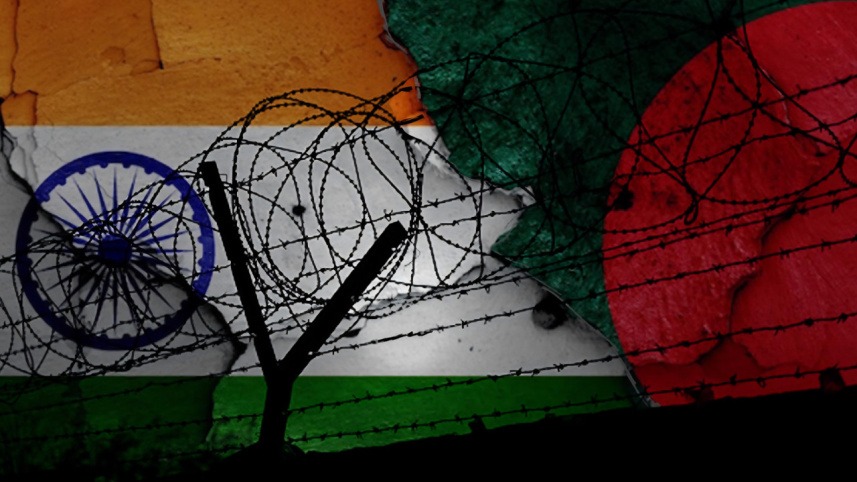
The complex "push-in" issue where border forces clash over the repatriation and origin of undocumented individuals intercepted at the boundary line is set to dominate upcoming security talks between India and Bangladesh. Both nations seek to establish clearer joint protocols to secure their shared 4,096-kilometer border and prevent trade disruptions.
NEW DELHI — The complex "push-in" issue is set to dominate high-level bilateral talks between India and Bangladesh as senior border security officials convene to address critical transit vulnerabilities. According to formal agendas prepared by the Ministry of External Affairs (MEA), delegations led by India's Border Security Force (BSF) and the Border Guard Bangladesh (BGB) are opening structured security negotiations. The discussions come at a time when local border configurations face intense pressure from uncoordinated migrant movements, making immediate diplomatic coordination essential to maintaining regional internal security and prevent localized friction between front-line border units.
Understanding the Mechanics of the Push-In Issue
The term "push-in" refers to a sensitive border-management scenario where one country’s security forces attempt to push individuals across an international boundary into a neighboring territory, claiming those individuals are undocumented migrants or citizens of the receiving nation. Along the 4,096-kilometer shared India-Bangladesh border, this dynamic has historically triggered localized operational gridlocks between the BSF and BGB.
According to regional security papers, a typical push-in standoff occurs when patrols intercept a group of individuals in the dead of night within the un-demarcated "no man's land" strips or unfenced riverine patches known as chars.
If one side asserts that the intercepted individuals are unauthorized residents being unlawfully pushed across the zero line, and the opposite border unit firmly denies their nationality claims and refuses entry, a tense operational standoff ensues. These standoffs can stall local border management for days, stranding individuals in the middle while field commanders exchange formal notes.
Technical Challenges Across Fenced and Riverine Corridors
To systematically reduce the frequency of undocumented crossings and associated push-in incidents, India has progressively executed large-scale infrastructure overhauls along its eastern borders. Data from the Ministry of Home Affairs indicates that approximately 80% of the land boundary has been successfully sealed with physical security fencing, floodlighting, and electronic thermal sensors.
However, completely securing the boundary remains highly problematic due to difficult terrain. The border traverses dense forests, agricultural fields that cut directly through local villages, and expansive riverine zones, particularly along the Brahmaputra and Ichamati rivers.
Fencing these shifting river channels is structurally impossible. Organized human-smuggling networks actively exploit these unfenced riverine gaps under low-visibility weather conditions, forcing both security agencies to expand their use of floating border outposts and electronic sonar tracking nodes to maintain real-time surveillance.
Societal Impact on Border Communities and Trade Security
The persistent friction over push-in incidents has a direct impact on the daily lives of citizens residing in remote border enclaves. Local farmers with land located past the physical fence line must pass through regulated BSF access gates daily. When local security alerts spike due to a suspected push-in or unauthorized crossing attempt, these gates are temporarily locked, disrupting daily agricultural operations and hurting local economic livelihoods.
For the business community, maintaining a stable border environment is vital for cross-border logistics. Bilateral trade volumes passing through major Land Ports, such as Petrapole-Benapole and Agartala-Akhaura, exceed several billion dollars annually.
Border security experts emphasize that prolonged standoffs or localized skirmishes between frontline border patrols over undocumented migration can lead to precautionary commercial shutdowns. These disruptions stall supply chains for essential textiles, manufacturing raw materials, and agricultural goods traveling between the two trading partners.
Official Sources Section
Bilateral agendas, boundary management figures, and framework priorities detailed in this report are compiled from official press releases and policy briefs published by the Ministry of External Affairs (MEA) and the Ministry of Home Affairs (MHA). Additional operational insights regarding joint border patrol coordinates were cross-verified using official coordination data released by the Border Security Force (BSF).
Quote Section
"The issue of undocumented migration and subsequent push-in allegations remains a recurring institutional challenge that requires deep, structured dialogue through Joint Working Groups," noted senior diplomatic researchers at the Manohar Parrikar Institute for Defence Studies and Analyses during a review of India's neighborhood security relations. "Maintaining absolute transparency between the BSF and BGB is the only viable mechanism to prevent localized standoffs from disrupting broader economic cooperation."
Why It Matters
Resolving the push-in issue is essential to preventing sudden, localized security standoffs from affecting broader trade and diplomatic relations. By establishing clear joint protocols to verify nationalities and handle unauthorized border crossers, both nations can safeguard human rights, secure vital trade corridors, and maintain stable security coordination along their shared border.
Key Facts at a Glance
Bilateral Focus: The sensitive "push-in" issue is a primary agenda item for the upcoming security talks between India and Bangladesh.
Border Scale: The two neighboring countries share a massive 4,096-kilometer international boundary, the longest land border for India.
Infrastructure Status: Approximately 80% of the land boundary has been secured with physical fencing, while riverine zones remain open.
Core Dispute: Standoffs occur when frontline border patrols disagree on the nationality and origin of individuals caught in zero-man zones.
Economic Stake: Keeping the border stable is critical to protecting billions of dollars in commercial trade moving through key integrated land ports.
FAQ Section
What does "push-in" mean in the context of India-Bangladesh border talks?
A push-in refers to a situation where one country's border security forces attempt to move undocumented individuals across an international boundary line into the neighboring country's territory, claiming they are citizens of that nation. This often leads to standoffs if the receiving border guards deny those claims and block entry.
Why is it difficult to completely fence the India-Bangladesh border?
While most of the land border is fenced, complete closure is hindered by complex geography. The boundary cuts through vast riverine sections, marshy wetlands, shifting sandbars (chars), and dense jungle, where building and maintaining permanent physical fencing is structurally unfeasible.
How do these border standoffs affect international trade?
Prolonged security friction or standoffs can lead to temporary, precautionary closures of key integrated land ports like Petrapole. These suspensions disrupt the flow of commercial trucks, delaying shipments of essential manufacturing materials and consumer goods.
What mechanism exists to resolve these border disputes?
The two nations utilize a multi-layered coordination framework. This includes institutionalized Director General-level talks between the BSF and BGB, Coordinated Border Management Plans (CBMP), and regular flag meetings between local sector commanders to resolve field standoffs quickly.
Source: Official bilateral briefing documentation released by the Ministry of External Affairs (MEA); border infrastructure tracking reports compiled by the Ministry of Home Affairs (MHA).