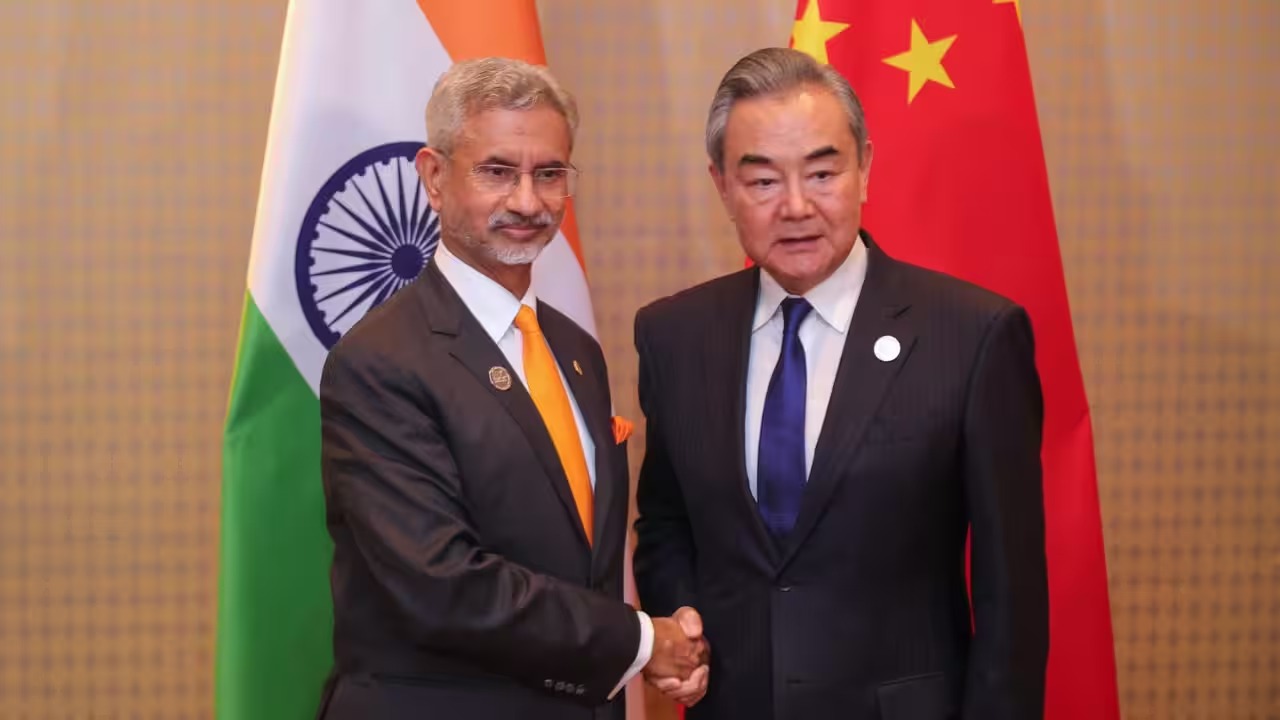
India’s External Affairs Minister S. Jaishankar met Chinese Foreign Minister Wang Yi in Manila during the ASEAN Foreign Ministers' gathering. Jaishankar emphasized the need for bilateral mechanisms aligned with mutual priorities, raised concerns over supply chain predictability, and urged fair market access to address trade deficits.
MANILA, Philippines — External Affairs Minister S. Jaishankar met with Chinese Foreign Minister Wang Yi on Wednesday, July 22, 2026, on the sidelines of the ASEAN Foreign Ministers’ gathering in Manila.
During the high-level diplomatic meeting, India urged China to establish structured dialogue mechanisms aligned with mutual priorities while raising explicit concerns regarding global supply chain predictability, trade imbalances, and market access for Indian goods.
Strategic Focus on Supply Chain Predictability and Trade Deficits
During the discussions, India highlighted the necessity of ensuring stable and transparent supply chains, particularly across critical industrial inputs, active pharmaceutical ingredients (APIs), and technological components.
Jaishankar noted that a sustainable bilateral relationship requires addressing major economic distortions, specifically India’s wide trade deficit with China. India called for fair market access for domestic IT services, pharmaceuticals, and agricultural products.
Rebalancing Institutional Mechanisms and Border Peace
The meeting also reviewed progress on institutional platforms and working groups established to manage bilateral ties and border stability along the Line of Actual Control (LAC).
India reiterated that positive momentum in broader economic and diplomatic ties remains tied to maintaining peace and tranquility along border regions, stressing that bilateral engagements must proceed on the principles of mutual respect, mutual sensitivity, and mutual interest.
Official Sources Section
Diplomatic briefings and official bilateral statements were issued by the Ministry of External Affairs (MEA), India and published by the Ministry of Foreign Affairs of the People's Republic of China, alongside coverage from Press Trust of India (PTI) and Reuters.
Quote Section
"According to official statements issued by the Ministry of External Affairs, India communicated to China the need to agree on meetings of various mechanisms and platforms as per mutual priorities, while emphasizing that supply chain predictability and fair market access rank high among core bilateral dimensions."
Why It Matters
For Domestic Manufacturers: Addresses supply chain bottlenecks for essential raw materials, critical minerals, and industrial components.
For Indian Exporters: Seeks to remove non-tariff barriers for Indian pharmaceuticals, agriculture, and IT sectors entering Chinese markets.
For Regional Geopolitics: Reaffirms India's position that economic normalization depends on mutual strategic trust and border stability.
Key Facts at a Glance
Bilateral Dialogue: S. Jaishankar met Wang Yi during the ASEAN foreign ministers' gathering in Manila.
Supply Chain Warning: India highlighted concerns regarding supply chain reliability and industrial inputs.
Trade Balance Demand: India called for fair market access to reduce its persistent trade deficit with China.
Core Principles: India urged adherence to mutual respect, mutual sensitivity, and mutual interest.
Frequently Asked Questions (FAQ)
What were the primary issues raised by India during the meeting with Wang Yi?
India raised concerns regarding the predictability of global supply chains, the necessity for fair market access for Indian goods, and the importance of trade balance.
Where did the meeting between S. Jaishankar and Wang Yi take place?
The meeting took place on the sidelines of the ASEAN Foreign Ministers' Meeting held in Manila, Philippines.
What is India's official stance on normalizing ties with China?
India maintains that normalization of broader bilateral and economic relations depends on maintaining peace and stability along border areas based on mutual respect and sensitivity.
Source: Official press releases from the Ministry of External Affairs (MEA), India and the Ministry of Foreign Affairs of the People's Republic of China, with reporting archived by Press Trust of India (PTI) and Reuters.