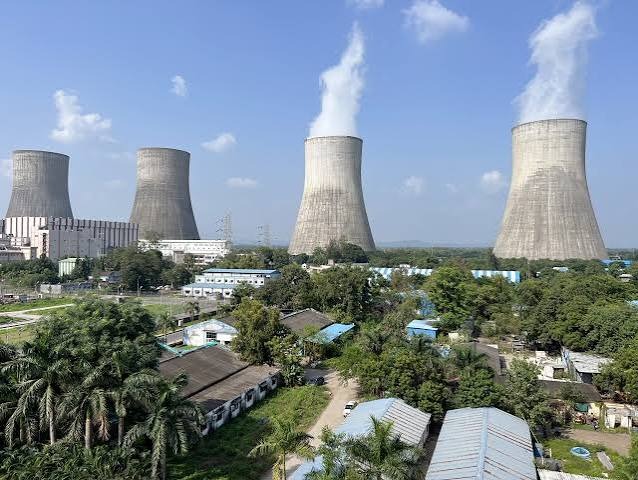
India's nuclear expansion program enters a critical phase as parliament advances statutory reforms to scale capacity to 100 GW by 2047. The legislation consolidates safety frameworks, grants statutory authority to regulators, and establishes a restructured liability framework to encourage private sector participation while preserving public safety oversight.
NEW DELHI — India’s civil atomic program is undergoing a structural transformation as the government advances comprehensive legislation to streamline civil liability laws, grant statutory independence to atomic regulators, and open the nuclear sector to private capital. The initiative—introduced by Minister of State Dr. Jitendra Singh in Parliament under the Sustainable Harnessing and Advancement of Nuclear Energy for Transforming India (SHANTI) framework—replaces six-decade-old legislative frameworks to support India’s targeted expansion from 8,180 MW to 100 GW of nuclear power by 2047. The policy drive represents a strategic shift designed to meet net-zero targets by 2070 and secure base-load energy amid rising domestic power demands.
Restructuring Civil Liability and Regulatory Governance
The core of the new statutory framework replaces the Atomic Energy Act of 1962 and the Civil Liability for Nuclear Damage Act (CLNDA) of 2010 with a single consolidated statute. Previous liability rules under Section 17(b) and Section 46 of CLNDA 2010—which exposed global and domestic technology suppliers to open-ended legal claims—had caused prolonged delays for major international reactor projects in Jaitapur and Kovvada.
| Policy Component | Previous Framework (1962 / 2010 Acts) | New Consolidated Framework |
| Market Access | State monopoly under NPCIL/DAE | Public-private partnerships & private plant ownership permitted |
| Operator Liability Cap | Flat ₹1,500 crore cap per incident | Tiered liability ranging from ₹100 crore to ₹3,000 crore |
| Supplier Recourse | Broad supplier exposure (Sec 17b / Sec 46) | Exclusive legal channeling aligned with CSC international standards |
| Regulatory Authority | AERB operated as an executive order body | Atomic Energy Regulatory Board receives statutory independence |
Under the revised structure, operator liability is tiered according to thermal power capacity. The legislation formally institutes the Atomic Energy Regulatory Board (AERB) as an independent statutory authority, removing it from executive oversight under the Department of Atomic Energy (DAE) to satisfy long-standing safety audit recommendations.
Private Capital Mobilization and Technology Integration
To support India’s nuclear expansion trajectory, the central government is permitting non-governmental entities to build, own, operate, and decommission commercial nuclear installations. High capital barriers and public sector constraints previously slowed capacity additions, leaving nuclear power at roughly 3% of India's total generation mix.
The strategic pivot enables commercial partnerships to deploy Bharat Small Reactors (BSRs) and develop proprietary Bharat Small Modular Reactors (BSMRs) for industrial co-generation and captive power applications. While indigenous 700 MWe Pressurised Heavy Water Reactors (PHWRs)—such as Kakrapar Units 3 and 4 in Gujarat—are already in commercial operation, small modular designs offer scalable alternatives for steel, cement, and chemical manufacturing hubs seeking decarbonization.
Official Sources Section
Policy updates, statutory draft provisions, and capacity projection figures cited in this report are based on official documentation issued by the Department of Atomic Energy, regulatory notifications from the Ministry of Science and Technology, parliamentary filings recorded by the Press Information Bureau, and technical roadmaps published by the Central Electricity Authority.
Quote Section
"According to officials, the legislative overhaul establishes a modern legal framework that balances India’s 100 GW nuclear expansion goal with strict safety oversight, statutory regulatory independence, and clear legal mechanisms for public protection."
Why It Matters
The reform of India’s civil atomic framework delivers concrete real-world impacts across primary economic sectors:
For Power Consumers & Businesses: Base-load nuclear generation provides long-term grid stability, insulating industrial manufacturing and domestic consumers from global fossil fuel supply shocks.
For Domestic & Foreign Investors: Removing legal ambiguities surrounding supplier liability opens new avenues for equipment manufacturing, engineering procurements, and project finance.
For Industrial Decarbonization: Small modular reactors allow heavy industries to transition captive generation away from thermal coal toward zero-emission nuclear heat and electricity.
For Citizens & Local Communities: Direct statutory backing for the AERB and the creation of specialized Claims Commissions ensure transparent safety standards and swift legal redress in emergency scenarios.
Key Facts at a Glance
Target Capacity: Scaling civil nuclear capacity from 8,180 MW to 100 GW by 2047.
Statutory Independence: Formally elevates the Atomic Energy Regulatory Board to an independent statutory authority.
Private Sector Entry: Permits private enterprises to manufacture, operate, and co-invest in nuclear power facilities.
Liability Realignment: Replaces flat caps with a graded ₹100 crore to ₹3,000 crore liability framework aligned with global conventions.
Frequently Asked Questions (FAQ)
What is the primary objective of India's nuclear expansion drive?
India's nuclear expansion policy aims to increase civil atomic generation capacity to 100 GW by 2047 to support industrial power demand, maintain grid stability, and achieve overall Net Zero carbon emissions by 2070.
How does the new law handle supplier liability?
The updated framework streamlines liability rules by channeling primary liability directly to reactor operators while establishing clear contractual rights of recourse, bringing Indian civil atomic law in line with international standards under the Convention on Supplementary Compensation (CSC).
Can private companies own and operate nuclear power plants in India?
Yes, revised statutory provisions allow private sector participation in building, owning, and operating commercial nuclear reactors, particularly Bharat Small Reactors and Small Modular Reactors (SMRs).
What authority will oversee nuclear safety?
Safety oversight is governed by the Atomic Energy Regulatory Board (AERB), which operates with independent statutory status and dedicated dispute resolution mechanisms under the new legislation.
Source: Official statements and reports published by the Department of Atomic Energy, the Press Information Bureau, the Ministry of Power, the Central Electricity Authority, and parliamentary documents from the Lok Sabha Secretariat.