The Indian government has formally challenged a proposed 12.5% U.S. tariff related to forced labour allegations, citing a lack of specific evidence and demanding a bilateral approach. Indian officials and industry bodies argue that the proposed duties would disrupt supply chains and unfairly penalize compliant businesses.
NEW DELHI — The Indian government has formally requested that the United States reconsider a proposed 12.5% tariff on Indian imports, rejecting allegations that it has failed to prohibit goods produced with forced labour. The pushback comes following a U.S. Trade Representative (USTR) investigation that grouped India among 54 economies facing potential levies due to concerns over forced labour and industrial capacity.
The trade dispute, rooted in Section 301 investigations launched in March 2026, has reached a critical stage following public hearings held this week. New Delhi maintains that the USTR’s approach is inconsistent, overly broad, and unsupported by the evidentiary standards required under the U.S. Trade Act of 1974.
Dispute Over Section 301 Methodology
During public hearings in Washington, D.C., officials from India’s Department of Commerce argued that the USTR failed to conduct country-specific assessments of laws and enforcement practices. Instead, the U.S. agency issued a blanket determination against 60 investigated economies.
Joint Secretary Brij Mohan Mishra, representing India, asserted that the absence of a singular, explicit "forced labour import prohibition" cannot be construed as an "unreasonable" trade practice under Section 301. India contends that it already possesses a robust constitutional and statutory framework designed to prevent forced labour, and that there is insufficient evidence to show how its current policies create an unfair comparative advantage for Indian exporters.
Industry Concerns and Supply Chain Impact
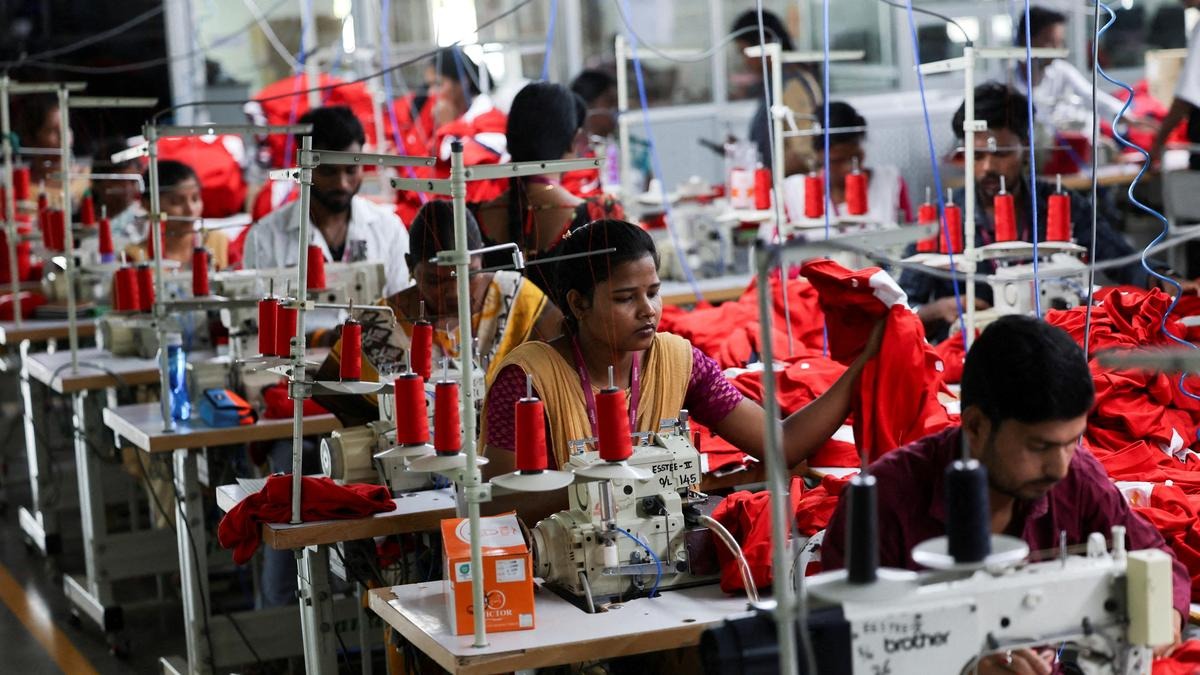
Beyond the diplomatic friction, Indian industry bodies—including the Confederation of Indian Industry (CII) and the Federation of Indian Chambers of Commerce & Industry (FICCI)—have warned that the proposed tariffs would disrupt resilient bilateral supply chains.
Industry representatives argue that the 12.5% levy would unnecessarily burden Indian exporters and increase costs for U.S. manufacturers, retailers, and consumers who rely on established, compliant sourcing relationships with Indian firms. Furthermore, Indian officials highlighted that the U.S. itself exempts over 1,600 critical items from similar scrutiny, a practice New Delhi claims undermines the U.S. policy rationale.
Official Sources
According to submissions made by the Indian Department of Commerce to the USTR on July 6, 2026, the government remains committed to the elimination of forced labour as a constitutional and international legal obligation.
"Organizers stated that trade issues should be resolved through the framework of India-U.S. bilateral trade negotiations rather than unilateral measures," the government indicated in its recent testimony. India has expressed a willingness to engage in constructive consultations to address any specific concerns held by Washington.
Why It Matters
The outcome of this investigation carries significant implications for the India-U.S. trade relationship. A 12.5% tariff would not only affect the profitability of compliant Indian firms but also risk escalating trade tensions between the two "natural partners." Businesses and investors are currently awaiting a final decision from the USTR, which is expected to review stakeholder testimony before finalizing its stance.
Key Facts at a Glance
Proposed Tariff: The U.S. has proposed a 12.5% tariff on Indian imports, following a Section 301 investigation into forced labour.
Government Stance: India rejects the allegations, arguing that the USTR lacks evidence linking Indian exports to forced labour.
Negotiation Path: New Delhi is calling for bilateral dialogue instead of the unilateral imposition of tariffs.
Broader Investigation: The probe initially covered 60 economies, with 54 currently facing the proposed 12.5% duty.
FAQ
Why is the U.S. investigating Indian imports?
The U.S. launched a Section 301 investigation to examine whether various economies, including India, have failed to effectively prohibit the importation of goods produced with forced labour.
What is India’s official response?
India has requested a review of the proposal, citing a lack of country-specific evidence and arguing that its existing legal framework is sufficient to prevent forced labour.
Are these tariffs final?
No, the 12.5% tariff remains a proposal. The USTR is currently reviewing submissions from public hearings held in July 2026 before making a final determination.
Where can I find more information?
Official submissions and trade updates can be monitored through the Office of the United States Trade Representative and the Ministry of Commerce and Industry (India).
Source: Ministry of Commerce and Industry (India), Office of the United States Trade Representative, Business Standard, The Hindu