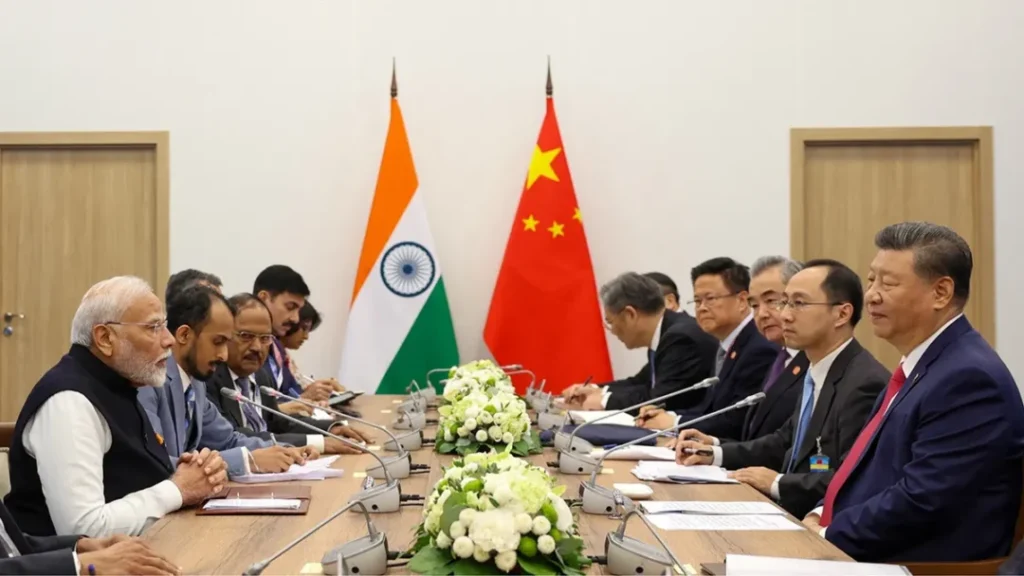
India and China held detailed diplomatic discussions focusing on boundary delimitation, border management mechanisms, and trans-border cooperation. Both foreign ministries underlined that maintaining peace and tranquility along frontier areas is essential for the overall development of bilateral relations, paving the way for gradual stability and economic engagement.
NEW DELHI — Representatives from India and China held detailed diplomatic exchanges on boundary delimitation, border management mechanisms, and trans-border cooperation during their latest round of high-level talks. According to official disclosures from the Ministry of External Affairs in New Delhi, both nations underlined that maintaining peace and tranquility along disputed frontier areas remains essential for the overall development of bilateral relations. The bilateral engagement reflects ongoing efforts by both Asian powers to stabilize frontier zones through established diplomatic and military communication channels.
The bilateral discussions come as both New Delhi and Beijing work to consolidate stability along the Line of Actual Control (LAC) following recent disengagement understandings. By addressing boundary delimitation alongside practical border management mechanisms, diplomatic teams are seeking to construct a sustainable framework that prevents field-level frictions from disrupting broader geopolitical and economic engagement.
Detailed Exchanges on Border Delimitation and Management
During the sessions, delegation leaders conducted comprehensive reviews of frontier security frameworks and evaluated progress under the Working Mechanism for Consultation and Coordination on India-China Border Affairs (WMCC). Officials examined protocols governing patrol movements, confidence-building measures, and joint mechanisms designed to manage point-of-friction areas along the boundary.
The discussions also focused on enhancing trans-border cooperation, including hydrological data sharing for trans-border rivers, facilitating traditional border trade, and organizing regional diplomatic exchanges. Delegations from both countries reaffirmed their commitment to maintaining regular contact through both diplomatic desks and military commander-level channels to ensure operational predictability on the ground.
Contextual Background and Strategic Alignment
Bilateral relations between India and China have been shaped by the 3,488-kilometer boundary dispute spanning the Western, Middle, and Eastern sectors. While bilateral agreements signed in 1993, 1996, and 2013 provided foundational parameters for maintaining peace along the LAC, operational standoffs since 2020 necessitated sustained diplomatic intervention to restore status quo conditions.
Official statements from Indian diplomats reiterate that normalization across trade, civil aviation, and investment flows remains contingent upon sustained stability along border sectors. The emphasis on boundary delimitation marks a structured approach toward clarifying perceptions of the LAC while establishing reliable protocols to prevent sudden military standoffs.
Official Sources Section
Official information regarding the bilateral negotiations was released through formal press communications issued by the Ministry of External Affairs (MEA) in New Delhi and corroborated by statements from the Ministry of Foreign Affairs of the People's Republic of China.
According to regulatory updates and diplomatic briefings, both governments agreed to maintain momentum in institutional dialogues and prepare for upcoming high-level bilateral summits.
Official Statement and Quotes
"According to officials from the Ministry of External Affairs, the two sides held detailed exchanges on boundary delimitation, border management mechanism building, and trans-border cooperation. Both delegations underlined that maintaining peace and tranquility in the border areas is essential for the overall development of two-way relations."
Diplomatic representatives further noted that both governments intend to build upon recent understandings reached at international summits to ensure field-level stability along all sectors of the border.
Why It Matters: Strategic and Economic Implications
The progress reported during these border management exchanges carries significant practical implications across geopolitical, commercial, and civilian spheres:
Regional Security: Clearer boundary delimitation protocols reduce the likelihood of accidental military face-offs along remote frontier sectors.
Bilateral Trade and Business: Stabilizing the border environment creates conditions for reviving bilateral commercial interactions, civil aviation links, and cross-border investment flows.
Border Communities: Enhancing trans-border cooperation supports the reopening of traditional border trade passes and facilitates pilgrimage corridors.
Diplomatic Relations: Establishing a predictable frontier regime enables both nations to engage more constructively on regional and global multilateral forums.
Key Facts at a Glance
Core Focus: India and China conducted detailed exchanges on boundary delimitation and border management.
Primary Condition: Both sides underlined that peace and tranquility along the border are essential for overall bilateral growth.
Cooperation Scope: Discussions covered trans-border river data sharing, trade routes, and military-diplomatic coordination.
Key Mechanisms: Consultations were guided by the Working Mechanism for Consultation and Coordination (WMCC) framework.
Frequently Asked Questions (FAQ)
What were the main topics discussed during the India-China border talks?
The discussions centered on boundary delimitation, building effective border management mechanisms, trans-border cooperation, and maintaining peace along the Line of Actual Control.
Why is maintaining peace along the border critical for India-China ties?
Both governments maintain that border peace and tranquility form the foundational prerequisite for restoring broader diplomatic, commercial, and cultural interactions.
Where can citizens and analysts access official releases on these talks?
Official press releases and statements are published on the official portal of the Ministry of External Affairs (MEA) and foreign ministry updates.
Source: Official press statements and diplomatic briefings released by the Ministry of External Affairs (MEA), official communiqués from the Ministry of Foreign Affairs of the People's Republic of China, and government disclosures archived on the Ministry of Information and Broadcasting Portal.