Prime Minister Modi held pivotal meetings at the G7 Summit in France, where EU President von der Leyen announced that the India-EU Free Trade Agreement will be signed by the end of 2026. Modi also met German Chancellor Merz, cementing enhanced defense production roadmaps and a new transit visa waiver.
EVIAN-LES-BAINS, France — In a series of high-stakes diplomatic breakthroughs on the sidelines of the G7 Summit, India and the European Union have formally targeted the end of 2026 to execute their highly anticipated Free Trade Agreement (FTA). The aggressive timeline marks the final stage for what officials have termed the "mother of all trade deals."
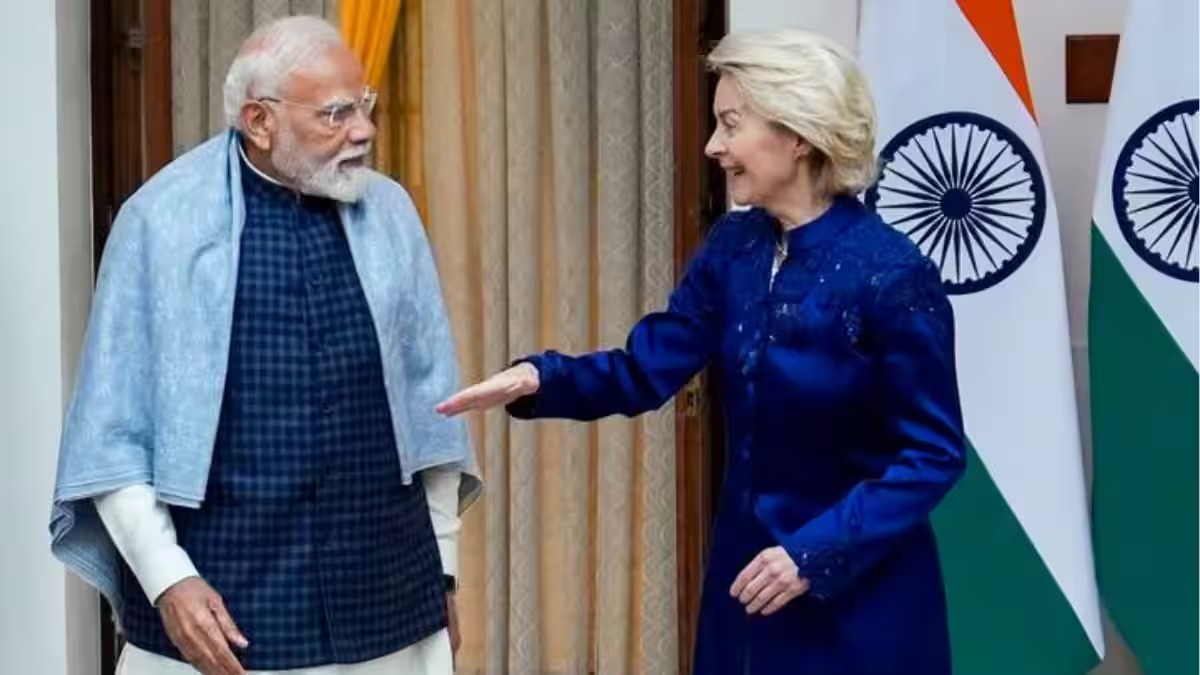
The decision was solidified during a trilateral meeting on Wednesday, June 17, 2026, between Indian Prime Minister Narendra Modi, European Commission President Ursula von der Leyen, and European Council President António Costa in the French commune of Évian. This legislative push follows the successful conclusion of baseline structural negotiations earlier this year in New Delhi. Concurrently, Prime Minister Modi held a pivotal bilateral forum with German Chancellor Friedrich Merz, formalizing massive breakthroughs across military logistics, trade access, and regional defense industrial integration.
Accelerating the 'Mother of All Deals' Across Two Billion Consumers
The upcoming India-EU Free Trade Agreement is structured to establish a massive, open market encompassing nearly two billion people and over a quarter of the global economy. By systematically removing legacy tariff barriers, the deal aims to streamline the movement of goods, services, and digital trade networks across multiple borders.
Following the high-level exchange in Évian, European Commission President von der Leyen confirmed that the trading blocs are moving rapidly to fulfill their institutional commitments. Alongside the primary trade document, technical working groups have been directed to fast-track negotiations on a standalone Investment Protection Agreement. The leaders also pledged to pool physical resources to advance the India-Middle East-Europe Economic Corridor (IMEC). The mega-infrastructure network is increasingly viewed by Western planners as a crucial strategy to diversify global supply chains and protect trade lanes against volatile geopolitical interventions in East Asia and West Asia.
Expanding the India-Germany Strategic Defense Matrix
Directly following the EU leadership forum, Prime Minister Modi met with German Chancellor Friedrich Merz to review economic and industrial parameters. As Germany and India commemorate the 75th anniversary of formal diplomatic relations in 2026, the two leaders expressed satisfaction with the swift operationalization of new security layers.
The discussions highlighted the rapid execution of the bilateral Defense Industrial Cooperation Roadmap. Originally signed during Defence Minister Rajnath Singh’s official visit to Berlin in April, the framework enables long-term technology transfers, joint weapons development, and the co-production of military hardware between German defense companies and Indian manufacturing centers.
Chancellor Merz confirmed that Berlin has implemented strict interior measures to facilitate the rapid export clearance of advanced military components to India. Furthermore, the leaders welcomed the official implementation of a strategic transit visa waiver for Indian citizens. This mechanism permits Indian nationals to pass through German airport hubs seamlessly, cutting down costs and administrative lag times for corporate travelers.
Official Sources Section
The international metrics, diplomatic timelines, and bilateral summaries reviewed in this report are compiled directly from authorized press declarations issued by the Ministry of External Affairs (MEA) of India, the official media briefings of the European Commission, and statutory diplomatic updates maintained via the Press Information Bureau (PIB) of Delhi.
Executive and Diplomatic Statements
Detailing the rapid execution of the trade pact, European Commission President Ursula von der Leyen utilized social channels to outline the economic trajectory:
"Since we have concluded the mother of all trade deals, we have been moving fast to deliver on our commitments. We will sign the Free Trade Agreement by the end of the year and accelerate work on an investment agreement."
Commenting on the expanding partnership with Germany, official administrative channels within the Prime Minister's Office noted:
"According to officials, the meeting served as an important follow-up to Chancellor Merz's landmark state visit to India in January. Reaffirming our shared democratic values, the two leaders expressed deep satisfaction with our defense industrial collaboration and welcomed the upcoming 8th India-Germany Inter-Governmental Consultations scheduled later this year in Germany."
Why It Matters
The rapid finalization of the India-EU FTA holds deep practical implications for industrial business operators, global consumers, and technology investors. By removing high import tariffs on key sectors including automotive parts, electronics, textiles, and agricultural goods the agreement drops overall transaction costs across major supply lines. For consumers, this translates to improved availability and more competitive pricing for high-end European products within domestic markets. For the defense industry, Germany's commitment to speed up export clearances allows Indian manufacturers to acquire sensitive technical components quickly, accelerating domestic modernization while reducing Reliance on restricted third-party networks.
Key Facts at a Glance
Definitive Deadline Set: India and the EU have committed to signing the comprehensive Free Trade Agreement by December 2026.
Infrastructure Corridor: Joint teams have resolved to accelerate the development of the India-Middle East-Europe Economic Corridor (IMEC).
Travel Relaxations Enacted: Germany has officially operationalized a transit visa waiver for Indian travelers passing through its transport hubs.
Defense Procurement Expansion: Berlin has guaranteed expedited licensing clearances for military hardware shipped to Indian security forces.
Frequently Asked Questions
Q1: What types of trade are covered under the upcoming India-EU FTA?
A: The "mother of all deals" is a comprehensive economic arrangement that systematically covers standard physical merchandise, international service industries, and modern digital trade compliance boundaries.
Q2: How does the new German transit visa waiver assist Indian travelers?
A: Prior to this policy change, Indian citizens frequently required explicit short-stay transit documentation simply to catch connecting flights at German airports. The operationalized waiver eliminates this bureaucratic requirement, allowing passengers to move through international transit zones smoothly.
Q3: What is the main objective of the India-Germany Defense Industrial Cooperation Roadmap?
A: The roadmap sets up institutional channels to transition the relationship from standard buyer-seller transactions into an integrated partnership focused on the co-development and co-production of military technology inside India.
Source: Official trilateral meeting statements published by the Ministry of External Affairs (MEA), diplomatic policy briefings provided by the European Commission, and operational G7 summit records archived via the Press Information Bureau (PIB).