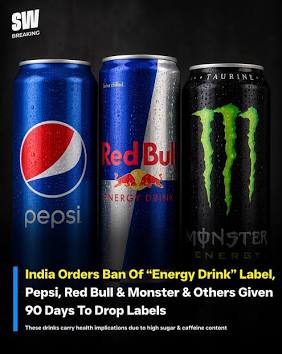
Summary: India’s food safety regulator FSSAI has rejected industry requests for a one-year extension, maintaining a strict 90-day deadline for beverage manufacturers like PepsiCo, Red Bull, Monster, and Reliance to drop "energy drink" labels. The move aims to eliminate misleading functional health claims on caffeinated beverages.
NEW DELHI — The Food Safety and Standards Authority of India (FSSAI) will not extend its 90-day deadline for major beverage manufacturers—including PepsiCo, Red Bull, Monster Energy, and Reliance Consumer Products—to drop "energy drink" descriptors from their product packaging, according to government sources. Industry representatives had requested a one-year extension, citing millions of pre-printed cans and bottles currently in stock that could face destruction or supply chain disruption. The regulator's firm stance forces global and domestic beverage companies operating in India's 13,000-crore rupee market to rapidly adjust product labels or risk compliance action.
Industry Appeal for Extension Rejected
Beverage industry executives and trade groups, including the Indian Beverage Association (IBA), held discussions with top food safety officials to advocate for a transition period of up to one year. Manufacturers pointed out that existing inventories of printed aluminum cans, PET bottles, and secondary packaging materials represent significant financial investment.
However, government sources confirmed that the regulator rejected the request, maintaining that the 90-day compliance window provides sufficient time to transition manufacturing lines. The regulator noted that claims such as "vitalises body and mind" or "boosts energy levels" are not recognized under current food category standards and could mislead consumers regarding health and therapeutic benefits.
Disruption Across Supply Chains and Retail
The enforcement of the deadline has already impacted distribution networks across major commercial markets. Distributors in multiple states have reportedly hesitated to accept product inventory bearing legacy "energy drink" labeling due to concerns over regulatory scrutiny from state food safety inspectors.
In response to the directive, PepsiCo India began rolling out modified packaging for its Sting brand, removing the word "energy" ahead of the compliance deadline. Other major market participants, such as Red Bull, Monster Beverage, Hell Energy, and Reliance Consumer Products (marketing Campa Energy), have sought regulatory relief while evaluating packaging adjustments.
Regulatory Scope and Product Standard Classification
The regulatory action stems from formal notices issued by FSSAI on July 1, highlighting that Indian food safety regulations do not recognize "energy drink" as an approved product category or standardized descriptor. Under the Food Safety and Standards (Food Products Standards and Food Additives) Regulations, caffeinated beverages are governed by specific chemical standards regarding caffeine limits, sugar content, and labeling disclosures.
FSSAI officials emphasized that while caffeinated beverages meeting prescribed parameters remain legal for sale, using marketing terms that imply functional or therapeutic benefits violates labeling rules under the Food Safety and Standards Act of 2006.
Implications for Businesses, Investors, and Consumers
For multinational and domestic beverage firms, the strict adherence to the 90-day timeline creates immediate operational and financial adjustments. Companies face potential inventory write-downs for pre-printed packaging materials, alongside costs associated with re-designing point-of-sale marketing materials and global sponsorship branding.
For retail consumers, the regulatory enforcement aims to ensure clearer product labeling without functional claims. Shoppers will observe updated packaging across retail shelves as manufacturers replace traditional descriptors with compliant caffeinated beverage labels.
Official Sources Section
According to official notices and releases from the Food Safety and Standards Authority of India (FSSAI) under the Ministry of Health and Family Welfare, notices were issued to six primary beverage manufacturers regarding misleading claims and non-standardized product categorization. Official disclosures confirm that the 90-day compliance timeline initiated in July remains the binding regulatory standard for all affected market entities.
Quote Section
"According to officials, functional or therapeutic claims on caffeinated beverages are not permissible under current food safety laws, and companies were provided a 90-day compliance period to ensure accurate consumer labeling," government sources stated.
Why It Matters
The enforcement highlights India's tightening regulatory oversight on fast-moving consumer goods (FMCG) and nutritional claims. By mandating accurate product classifications, the regulator seeks to prevent misbranding in high-growth beverage segments, establishing strict precedent for health and wellness marketing across the domestic consumer market.
Key Facts at a Glance
Strict Timeline: FSSAI maintained its 90-day deadline for beverage firms to remove "energy drink" labels.
Affected Brands: Key brands include Red Bull, PepsiCo's Sting, Monster Energy, Reliance's Campa Energy, and Hell Energy.
Industry Appeal: Manufacturers requested a one-year extension citing extensive stock of printed cans and bottles.
Regulatory Stance: FSSAI ruled that "energy drink" is not a recognized category and functional claims violate labeling rules.
Frequently Asked Questions
Why is FSSAI banning the term "energy drink"?
FSSAI stated that "energy drink" is not a recognized food category under Indian regulations and that claims like "vitalizes body and mind" can mislead consumers.
Which companies are affected by the FSSAI order?
The order affects major beverage companies selling caffeinated drinks in India, including PepsiCo, Red Bull, Monster Beverage, Reliance Consumer Products, and Hell Energy.
Did the regulator grant an extension to beverage manufacturers?
No, government sources confirmed that FSSAI rejected industry requests for a one-year extension, keeping the 90-day compliance window intact.
How are companies responding to the directive?
PepsiCo has begun manufacturing and distributing new Sting packaging without the "energy" descriptor, while other producers are updating labels while seeking compliance clarity.
Will caffeinated drinks still be sold in India?
Yes, the products will remain available for sale, but they must be labeled as caffeinated beverages without using "energy drink" branding or health-related claims.
Source: Food Safety and Standards Authority of India (FSSAI) Official Notices, Ministry of Health and Family Welfare Disclosures, Indian Beverage Association (IBA) Industry Statements.