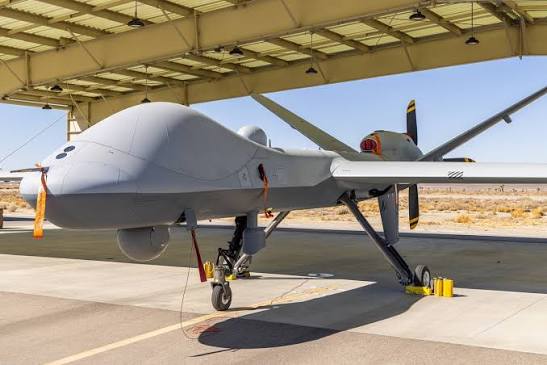
The Government of India has formalized contracts with General Atomics Aeronautical Systems to procure MQ-9B remotely piloted aircraft systems, including 15 SeaGuardians for the Indian Navy. Backed by an in-country MRO hub, the agreement significantly expands long-range intelligence, reconnaissance, and maritime domain monitoring across the Indian Ocean.
NEW DELHI — The Government of India has signed a landmark procurement and logistics contract with United States-based defense manufacturer General Atomics Aeronautical Systems to acquire advanced remotely piloted aircraft systems for the Indian Navy and armed forces. Finalized through government-to-government mechanisms and corporate agreements in New Delhi, the bilateral pact provides long-endurance maritime reconnaissance platforms, specialized mission suites, and dedicated maintenance, repair, and overhaul (MRO) support. The development marks a critical step in modernizing India’s maritime domain awareness across the Indian Ocean Region amid evolving regional security dynamics.
Contract Parameters and Aircraft Allocation
Under the finalized defense framework, the procurement contract covers the acquisition of MQ-9B High-Altitude Long-Endurance (HALE) remotely piloted aircraft systems manufactured by General Atomics Aeronautical Systems.
Maritime Allocation: The Indian Navy will receive 15 MQ-9B SeaGuardian aircraft systems configured for persistent maritime surveillance, anti-submarine warfare tracking, and over-the-horizon reconnaissance.
Tri-Services Distribution: An additional 16 SkyGuardian variants are allocated equally between the Indian Army and the Indian Air Force (eight units each) to monitor high-altitude land frontiers.
Logistics and Performance Support: A complementary commercial contract signed with General Atomics Global India provides performance-based logistics, engineering backing, and depot-level maintenance integration.
The aircraft systems will operate from strategic naval and air stations, including INS Rajali in Tamil Nadu and forward operating bases in Gujarat, creating overlapping surveillance coverage across the Bay of Bengal and the Arabian Sea.
Strategic Capabilities and Technical Overview
The induction of MQ-9B General Atomics aircraft systems introduces advanced multi-mission capabilities to naval operations. Operating at altitudes exceeding 40,000 feet, the aircraft provide continuous flight endurance of over 30 hours in all weather conditions.
The maritime SeaGuardian configuration integrates 360-degree surface search radars, automatic identification system (AIS) transponders, electro-optical/infrared (EO/IR) sensor suites, and internal payload bays capable of deploying sonobuoys for subsurface submarine detection. The integration of satellite communication links enables persistent, real-time intelligence feeds directly to naval task groups, command centers, and allied maritime patrol aircraft such as the Boeing P-8I Neptune fleet.
Defense planners note that prior operational experience—gained through long-term leases of MQ-9A platforms operating from naval bases—demonstrated significant operational savings and extended surveillance reach across critical sea lines of communication.
Domestic MRO Hub and Industrial Cooperation
A key component of the bilateral arrangement between the Indian Ministry of Defence and General Atomics Aeronautical Systems is the establishment of an in-country Maintenance, Repair, and Overhaul (MRO) facility.
Setting up a localized MRO hub ensures high operational availability and reduces turnaround times for critical components, scheduled overhauls, and avionics servicing. Furthermore, General Atomics has initiated partnerships with Indian industrial enterprises, including engineering groups and specialized software firms, to localize system components, data analytics tools, and structural sub-assemblies.
This localized supply chain alignment supports India's broader defense indigenization policies, fostering domestic aerospace engineering capabilities while facilitating seamless technology transfer for unmanned flight control architectures.
Geopolitical and Economic Impact
The formalization of the General Atomics aircraft systems contract carries substantial strategic and economic implications:
Indo-Pacific Maritime Security: Expanded autonomous coverage allows the Indian Navy to maintain continuous monitoring of vital international shipping corridors, countering piracy, illegal fishing, and uncoordinated naval incursions.
Interoperability with Quad Partners: Operating standardized MQ-9B platforms improves operational synchronization and intelligence-sharing protocols with navies of the United States, Japan, and Australia.
Aerospace Skill Development: Domestic MRO operations will generate high-skilled technical employment and support tier-II and tier-III precision component suppliers across India's private defense manufacturing corridors.
Official Sources
According to official procurement notifications released by the Ministry of Defence (MoD) and verified announcements from General Atomics Aeronautical Systems (GA-ASI), the acquisition contracts were finalized following formal approvals from the Cabinet Committee on Security (CCS) and the Defence Acquisition Council. Bilateral export approvals were executed in coordination with the [suspicious link removed] and the US Defense Security Cooperation Agency.
Official Statements
"According to defense officials and procurement documentation released in New Delhi, the contract with General Atomics Aeronautical Systems secures high-altitude, long-endurance unmanned capabilities for the Indian Armed Forces, alongside dedicated domestic maintenance infrastructure to support long-term operational readiness across the maritime theater."
Why It Matters
Securing modern remotely piloted General Atomics aircraft systems addresses critical endurance limitations in maritime patrol coverage. By deploying high-altitude unmanned platforms for round-the-clock monitoring, the Indian Navy frees up crewed maritime patrol aircraft and surface warships for higher-end operational duties. For regional trade security, continuous surveillance deters maritime threats and protects energy transit corridors throughout the wider Indian Ocean.
Key Facts at a Glance
Lead Entities: Ministry of Defence (India) and General Atomics Aeronautical Systems (USA).
Platform Type: MQ-9B SeaGuardian / SkyGuardian Remotely Piloted Aircraft Systems.
Navy Quota: 15 MQ-9B SeaGuardian maritime surveillance variants.
Operational Endurance: Over 30 hours of continuous flight at altitudes above 40,000 feet.
Infrastructure Offset: Dedicated in-country MRO and logistics depot established in India.
Frequently Asked Questions
What systems are covered under the agreement with General Atomics?
The agreement covers the procurement and logistics lifecycle of MQ-9B Remotely Piloted Aircraft Systems, including 15 SeaGuardian variants dedicated to the Indian Navy and 16 SkyGuardian variants for the Army and Air Force.
How will the Indian Navy deploy the new aircraft systems?
The Navy will deploy the SeaGuardians for wide-area maritime surveillance, naval task group protection, anti-submarine tracking, and real-time border monitoring across coastal and deep-sea sectors.
Will the aircraft systems be serviced in India?
Yes. A dedicated Performance-Based Logistics and Maintenance, Repair, and Overhaul (MRO) hub is being established domestically to service components and systems locally.
What is the flight endurance of the MQ-9B platform?
The platform can remain airborne for more than 30 hours, operating at altitudes higher than 40,000 feet to provide persistent intelligence and reconnaissance coverage.
Source: Official releases from the Ministry of Defence, corporate announcements by General Atomics Aeronautical Systems, and US Defense Security Cooperation Agency.