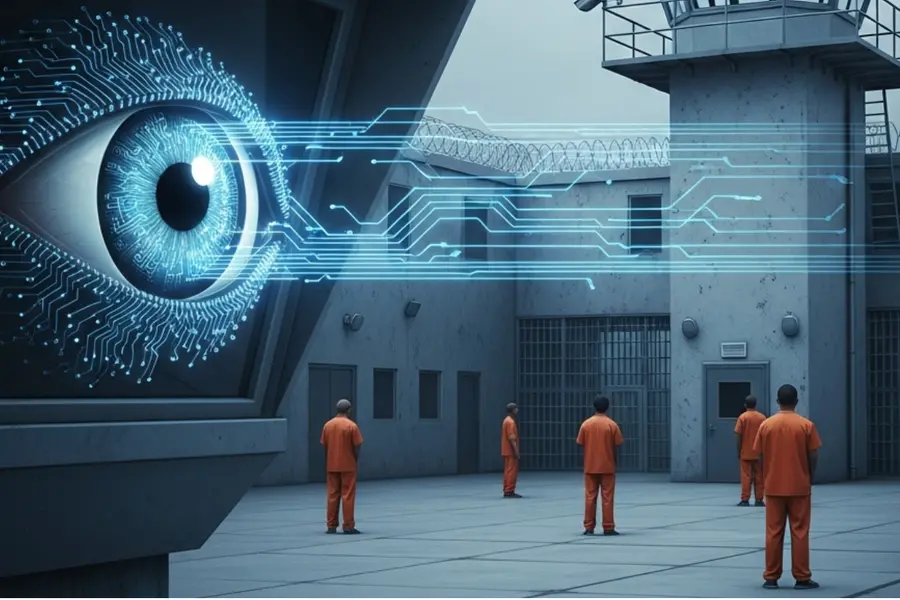
Kerala has launched PRISM, an AI-powered smart surveillance system developed with Keltron at Thiruvananthapuram Central Jail. The technology automates perimeter security, detects contraband smuggling, and tracks inmate activity in real time, accompanied by new administrative reforms abolishing VIP dietary privileges to enforce institutional transparency and standard rehabilitation standards.
THIRUVANANTHAPURAM — The Kerala Prisons and Correctional Services department has officially commissioned an artificial intelligence-driven monitoring platform, designated PRISM (Prison Real-time Intelligent Surveillance & Monitoring), at the Central Jail in Thiruvananthapuram. Inaugurated on Sunday by state officials, the deployment represents a major technological upgrade to Indian correctional administration, using computer-vision analytics to detect security breaches, prevent contraband trafficking, and track perimeter anomalies in real time. The initiative comes alongside administrative reforms designed to eliminate VIP dietary privileges and standardize inmate rehabilitation protocols across state correctional facilities.
High-Tech Architecture and Keltron Collaboration
Developed in technical partnership with the state-owned electronics enterprise Kerala State Electronics Development Corporation Limited (Keltron), the PRISM smart surveillance system integrates high-resolution optical hardware with deep-learning analytical software.
The surveillance grid deploys specialized cameras throughout high-security cell blocks, internal circulation corridors, administrative compounds, and exterior perimeter fencing. The automated system processes video streams locally to detect anomalous behavioral patterns, track unauthorized gatherings, identify perimeter wall breaches, and alert command-center personnel to potential escape attempts without relying on manual monitoring.
According to technical specifications released by Keltron engineers, the visual processing engine is programmed to counter contraband ingress—including the throwing of narcotics, mobile handsets, and unauthorized communication equipment over exterior prison walls. When suspicious trajectories or unauthorized perimeter loitering are detected, the system triggers automated acoustic and visual alarms at the central control console.
Elimination of VIP Culture and Dietary Overhaul
Alongside the installation of the smart surveillance system, the state home department has implemented sweeping administrative and operational reforms inside the Thiruvananthapuram correctional facility.
Key among these measures is the abolition of preferential treatment and informal "VIP culture" concerning meals and living arrangements. Historically, correctional audits across various Indian states have uncovered instances where influential inmates obtained unauthorized dietary concessions, customized catering, or prohibited electronic appliances through informal channels.
Under the revised operational manual, all incarcerated individuals receive standardized nutritional meals prepared according to institutional guidelines. Automated perimeter security and camera coverage in kitchen and pantry areas ensure that food preparation and distribution adhere strictly to regulatory standards, eliminating unauthorized supply chains.
State-Wide Security Context and Correctional Modernization
The activation of the smart surveillance system at Thiruvananthapuram Central Jail marks the first phase of a broader modernization program aimed at upgrading security across high-security prisons in Kerala.
Indian correctional institutions have faced persistent challenges regarding prison overcrowding, staff shortages, and illicit smuggling networks operating across exterior boundary walls. By replacing passive closed-circuit television (CCTV) cameras with automated neural-network monitoring, the correctional department reduces human error and establishes an immutable, time-stamped digital record of internal prison movements.
State home department officials confirmed that data analytics generated by the PRISM platform will assist in evaluating inmate conduct, monitoring staff protocol compliance, and preventing custodial confrontations before they escalate. Following a 90-day operational review at the Poojappura facility, the system is slated for expansion to central correctional hubs in Viyyur (Thrissur) and Kannur.
Impact on Public Safety and Prison Administration
The transition toward automated surveillance infrastructure carries significant operational benefits for legal, public safety, and human rights stakeholders:
Contraband Suppression: Real-time aerial and perimeter analytics prevent narcotics, weapons, and SIM cards from entering prison premises.
Enhanced Transparency: Continuous digital logging ensures strict accountability for both prison staff and inmates, reducing custodial violations.
Uniform Treatment: Eliminating discretionary food and accommodation privileges aligns prison operations with statutory equality norms under the Model Prisons Act.
Staff Optimization: Automated alerts allow wardens and security personnel to focus on high-risk intervention rather than passive video monitoring.
Official Sources
According to official project announcements released by the Kerala Prisons and Correctional Services Department and technical briefs published by Keltron, the PRISM system was successfully integrated following joint field testing. Legislative and policy oversight is administered under the Government of Kerala Home Department and the national correctional reform guidelines issued by the Ministry of Home Affairs (MHA).
Official Statements
"According to state home department officials and prison administrators, the deployment of the PRISM AI-enabled platform ensures round-the-clock perimeter monitoring and eliminates unauthorized activities, transforming correctional facilities into transparent institutions focused on lawful reform and rehabilitation rather than recidivism."
Why It Matters
Implementing an automated smart surveillance system in central prisons addresses persistent vulnerabilities in physical security and institutional oversight. For citizens and law enforcement, curbing illegal communication and drug networks inside correctional facilities prevents organized crime syndicates from operating from within prison walls. For the judicial system, automated monitoring ensures standardized living conditions and strengthens statutory human rights safeguards.
Key Facts at a Glance
Facility: Central Jail, Poojappura, Thiruvananthapuram, Kerala.
System Name: PRISM (Prison Real-time Intelligent Surveillance & Monitoring).
Technology Partner: Kerala State Electronics Development Corporation Limited (Keltron).
Core Capabilities: AI-powered anomaly detection, contraband tracking, escape attempt prevention, and perimeter monitoring.
Administrative Reform: Complete elimination of VIP food privileges and introduction of standardized dietary rules.
Frequently Asked Questions
What is the PRISM system installed at Thiruvananthapuram Central Jail?
PRISM (Prison Real-time Intelligent Surveillance & Monitoring) is an artificial intelligence-driven monitoring platform designed to analyze live video feeds for unauthorized movements, perimeter breaches, and contraband smuggling.
Who developed the prison surveillance technology?
The system was developed and implemented by state-owned electronics enterprise Keltron in coordination with the Kerala Prisons and Correctional Services department.
How does the system prevent contraband from entering the prison?
The smart surveillance system uses computer-vision algorithms along exterior walls to identify objects thrown over fences and track suspicious movements around prison boundaries in real time.
What dietary changes were introduced alongside the technological upgrade?
The government abolished discretionary VIP food arrangements, establishing a uniform, standardized dietary system for all inmates.
Source: Official releases from the Kerala Prisons and Correctional Services Department, technical bulletins from Keltron, notifications from the Government of Kerala Home Department, and national standards from the Ministry of Home Affairs.