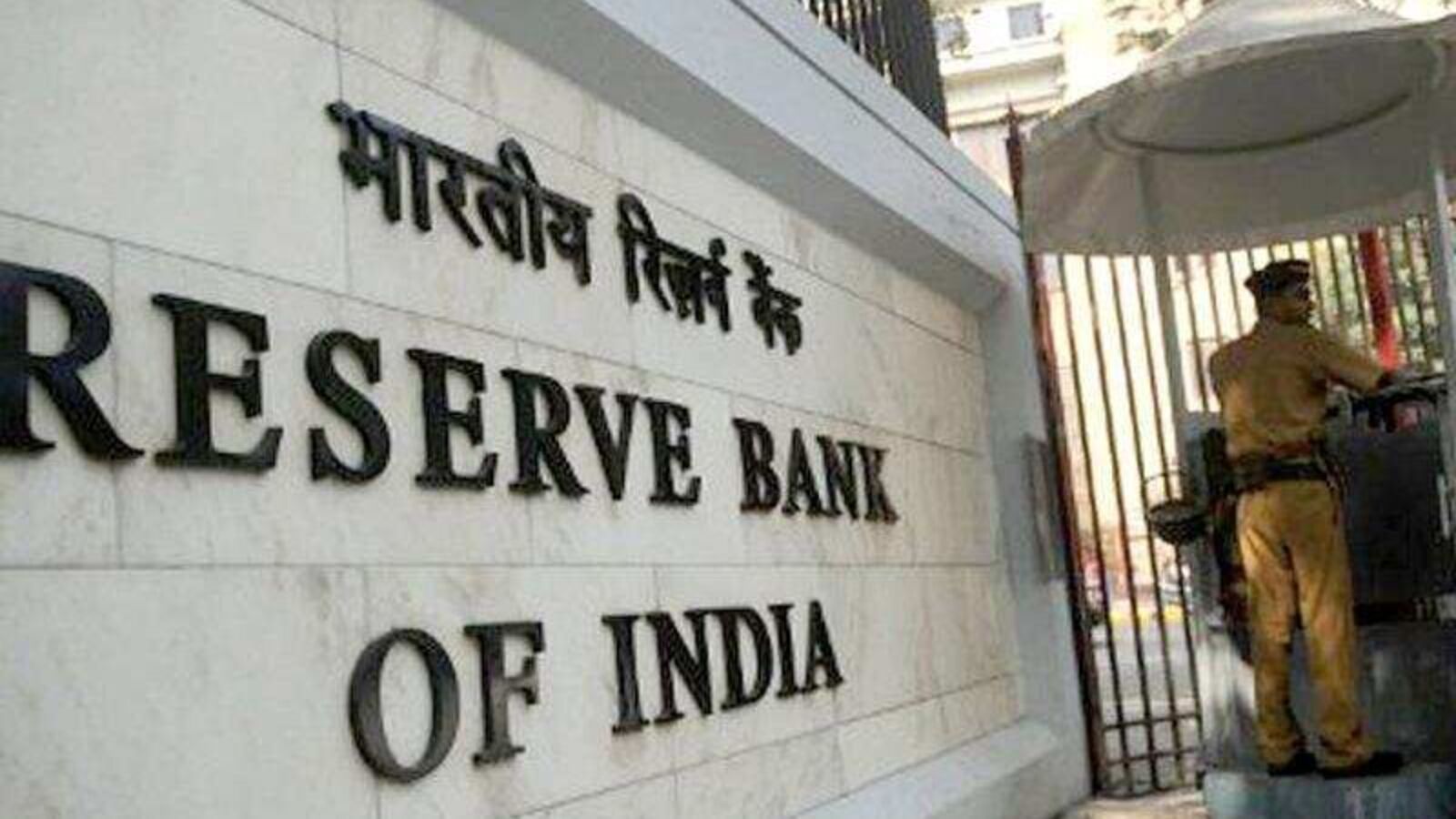
The Reserve Bank of India executed a ₹30,000 crore sovereign debt switch auction, buying back short-term bonds maturing between 2027 and 2030. In exchange, the RBI issued ₹30,383 crore in long-term debt extending to 2060. The strategic operation reduces immediate government refinancing risks and stabilizes the domestic yield curve.
MUMBAI — The Reserve Bank of India (RBI) conducted a major sovereign debt management operation on Monday, executing an RBI switch auction that successfully bought back short-term government securities worth ₹30,000 crore (300 billion rupees) and issued longer-duration bonds valued at ₹30,383 crore (303.83 billion rupees). Executed through the central bank's e-Kuber electronic trading platform in Mumbai, the transaction enables the Government of India to postpone impending redemption obligations scheduled between 2027 and 2030 by exchanging them for destination securities maturing up to the year 2060. This development is crucial today as it mitigates immediate refinancing risks, ensuring that the government's massive annual borrowing program does not artificially inflate short-term borrowing costs or drain systemic liquidity from the domestic banking sector.
Mechanics of the Government Securities Switch
The RBI switch auction is a standard institutional mechanism utilized by the central bank to manage the sovereign debt profile. Under this framework, the government repurchases existing short-term bonds—referred to as "source securities"—that are nearing maturity. In exchange, institutional investors such as commercial banks, insurance companies, and primary dealers are issued "destination securities" with extended maturity horizons.
According to the Reserve Bank of India's debt management framework, a switch operation does not inject new cash into the exchequer nor does it increase the government's overall gross fiscal borrowing. Instead, it functions purely as a duration-extension exercise, converting near-term cash flow pressures into deferred long-term liabilities. The recent auction saw the government issue ₹30,383 crore in fresh destination bonds to cover the ₹30,000 crore buyback of near-term source bonds, adjusting for the respective cut-off yields and premium valuations of the traded instruments.
Detailed Bond Conversion Allocations and Yields
The transaction involved the conversion of several high-value, near-term bonds into longer-dated sovereign debt across various yield spectrums. According to official trading data published by the RBI, the primary conversions executed during the RBI switch auction included:
2029 to 2035/2039 Extensions: The 7.26% 2029 bond was switched to the 6.64% 2035 debt at a cut-off yield of 6.7401%. Simultaneously, the 7.10% 2029 bond was converted into two different destination securities: the 7.62% 2039 debt at a 6.8405% cut-off yield, and the 7.50% 2034 debt at a 6.7206% cut-off yield. Furthermore, the 6.45% 2029 bond was rolled into the 7.10% 2034 debt at a 6.6217% yield.
2028 and 2030 Consolidations: The 7.37% 2028 bond was switched to 7.10% 2034 debt at a 6.7183% yield, while the 7.06% 2028 note transitioned to the 6.83% 2039 debt at a 6.9396% yield. The 7.17% 2028 bond moved to the 6.64% 2035 debt at 6.7538%. Additionally, the 7.88% 2030 bond was exchanged for 6.67% 2035 debt at a cut-off yield of 6.7339%.
Ultra-Long Term Extension: In the most significant duration extension of the session, the 8.76% 2027 bond was switched to ultra-long 7.19% 2060 debt at a cut-off yield of 7.4434%.
Fiscal Strategy and Debt Management Impact
According to the Ministry of Finance, proactive debt management operations are essential for maintaining macroeconomic stability. By utilizing an RBI switch auction, the government strategically reduces the cluster of bond maturities scheduled for the upcoming financial years (FY27 through FY30). Easing this "redemption wall" ensures that when the government goes to the market to raise fresh capital for infrastructure and welfare expenditures, it does not have to simultaneously borrow heavy amounts simply to repay old debts.
For institutional investors, the RBI switch auction provides a structured opportunity to realign their investment portfolios. Banks and provident funds utilize these auctions to acquire long-term, high-yielding sovereign bonds that match their long-term liability profiles, thereby satisfying statutory liquidity ratio (SLR) requirements without resorting to volatile secondary market trading.
Impact on Consumers and Market Borrowing Costs
While sovereign debt auctions operate at the institutional level, their ripple effects impact standard retail consumers and corporate businesses. By smoothing out the maturity profile, the central bank prevents sudden spikes in sovereign bond yields. Since government bond yields serve as the benchmark for pricing corporate loans, home mortgages, and retail credit, a stable sovereign yield curve directly translates into more predictable and manageable interest rates for individual borrowers and enterprise expansions.
Official Sources Section
The execution and yield data of the government securities switch were formally notified by the Reserve Bank of India (RBI) through its debt management operations division. The broader borrowing framework is mandated by the Ministry of Finance and the Government of India's fiscal budgeting policies. Secondary market settlement protocols are monitored by the Clearing Corporation of India Limited (CCIL).
Quote Section
"According to officials at the Reserve Bank of India, the latest switch auction is deployed as a proactive debt management strategy to ease redemption pressures on the exchequer, facilitating a smoother maturity profile and minimizing refinancing risks without increasing the overall gross market borrowing for the fiscal year."
Why It Matters
Effective debt management via an RBI switch auction is a critical buffer for the domestic economy. Deferring short-term debt repayments provides the central government with immediate fiscal breathing room, allowing tax revenues to be deployed toward capital expenditure, defense, and public infrastructure rather than immediate debt servicing. For the broader financial market, it ensures predictable liquidity and anchors long-term interest rates.
Key Facts at a Glance
Operation Type: Government Securities Switch Auction.
Executing Authority: Reserve Bank of India (RBI).
Total Buyback Volume: ₹30,000 crore (300 billion rupees) of near-term source securities.
Total Issuance Volume: ₹30,383 crore (303.83 billion rupees) of long-term destination securities.
Longest Maturity Extension: 2027 short-term bonds exchanged for ultra-long 2060 sovereign debt.
FAQ Section
What is an RBI switch auction?
An RBI switch auction is a debt management tool where the central bank repurchases government bonds that are close to maturity and issues new, longer-term bonds to the same investors, effectively delaying the government's repayment obligations.
Does a switch auction increase India's national debt?
No. A switch auction is neutral to the overall debt burden. It replaces existing short-term debt with long-term debt without raising new capital or increasing the gross fiscal deficit.
How does this affect banks and investors?
It allows commercial banks, insurance companies, and pension funds to exchange aging, less liquid bonds for newer, longer-dated securities that better match their long-term financial liabilities and regulatory reserve requirements.
Why did the RBI convert 2027 bonds to 2060 bonds?
Converting near-term 2027 maturities into 2060 ultra-long bonds locks in current interest rates for an extended period and entirely removes the immediate cash repayment pressure, spreading the sovereign obligation across several decades.
Source: Official auction data and cut-off yields verified via the Reserve Bank of India (RBI), with fiscal policy context supported by guidelines from the Ministry of Finance and clearing data from the Clearing Corporation of India Limited (CCIL).