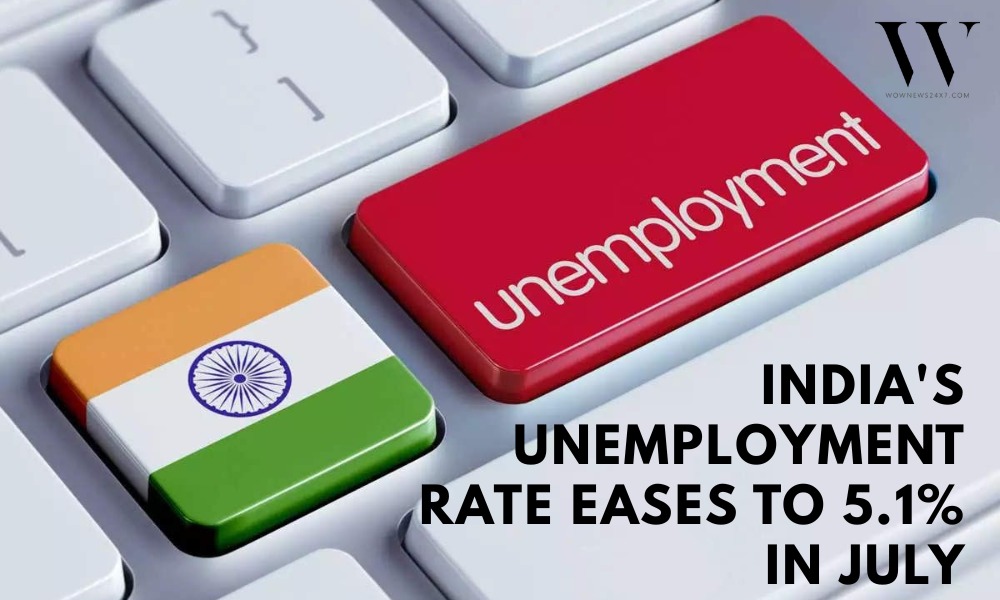
India's unemployment rate eased to 5.1% in July, beating the 5.4% consensus forecast from a Reuters poll. Released by the Ministry of Statistics, the data points to robust labor market participation, steady rural and urban employment growth, and sustained economic resilience.
India’s macroeconomic landscape received a welcome boost as official figures released by the government indicated that the national unemployment rate eased to 5.1%. The reading, derived from comprehensive nationwide labor monitoring frameworks, came in lower than the 5.4% median estimate projected by a Reuters poll of economists.
The data highlights a resilient domestic labor market capable of absorbing seasonal fluctuations and sustaining job creation across multiple economic corridors. Analysts note that the better-than-expected print reflects steady momentum in both rural employment generation and urban participation rates.
Sectoral Breakdown and Labor Force Participation
The latest labor metrics underscore divergent trends across rural and urban geographies. Rural job markets experienced notable absorption capacity, aided by agricultural engagement and localized infrastructure projects, while urban centers registered stable employment growth led by services and manufacturing sectors.
According to labor ministry figures, the Labour Force Participation Rate (LFPR) demonstrated healthy upward movement, signaling that a larger segment of the working-age population is actively engaging with the economy. The Worker Population Ratio (WPR) similarly reflected progressive gains, validating broader economic expansion trends tracked over successive reporting cycles.
Market Reactions and Economic Implications
Financial markets responded favorably to the labor market figures, viewing the moderation in joblessness as a positive indicator of domestic demand stability. Economists point out that a controlled unemployment print provides the Reserve Bank of India (RBI) with a stable macroeconomic backdrop as monetary authorities balance growth objectives against inflation management.
Corporate hiring sentiment across core sectors—including IT, infrastructure, retail, and financial services—remains steady, supported by sustained capital expenditure and robust domestic consumption patterns.
Impact on Citizens, Businesses, and Investors
Job Seekers and Workforce: Improved employment metrics signal stable hiring pipelines across key urban and semi-urban employment hubs.
Corporate Sector: Businesses benefit from an expanding available workforce and steady consumer purchasing power driven by high participation rates.
Investors: Favorable macroeconomic data points reinforce institutional confidence in India's structural growth story and domestic market resilience.
Official Sources Section
According to official statistical data releases and periodic labor market bulletins issued by the Ministry of Statistics and Programme Implementation (MoSPI) and the National Statistical Office (NSO), the findings are compiled through extensive household surveys utilizing standard Current Weekly Status (CWS) frameworks for individuals aged 15 years and above.
"According to officials, the monthly tracking mechanisms provide vital real-time visibility into shifting employment dynamics, allowing policymakers to fine-tune targeted skilling and job creation initiatives."
Why It Matters
Accurate and timely tracking of employment metrics is critical for evaluating the true health of an economy. A lower-than-anticipated unemployment rate signals that macroeconomic policies, infrastructure spending, and private sector investments are successfully translating into tangible livelihood opportunities, supporting equitable growth across diverse demographic segments.
Key Facts at a Glance
Headline Indicator: India's July Unemployment Rate
Official Reported Figure: 5.1%
Reuters Poll Consensus: 5.4%
Data Source: Ministry of Statistics and Programme Implementation (MoSPI) / Periodic Labour Force Survey (PLFS)
Target Demographic: Persons aged 15 years and above
FAQ Section
What was India's unemployment rate in July?
India's unemployment rate stood at 5.1%, outperforming expectations.
How did the actual figure compare to economist predictions?
The 5.1% print came in lower than the 5.4% median figure predicted by the Reuters poll of economists.
Which government body compiles these labor statistics?
The data is compiled and published by the Ministry of Statistics and Programme Implementation (MoSPI) via the Periodic Labour Force Survey (PLFS).
What does the labor force participation rate indicate?
The Labour Force Participation Rate (LFPR) measures the proportion of the working-age population that is either working or actively looking for work, reflecting overall labor market engagement.
Source: Ministry of Statistics and Programme Implementation (MoSPI), Reserve Bank of India (RBI), Reuters Financial News