India has launched a new "hub-and-spoke" aviation model to streamline international travel from Tier-II and Tier-III cities. By allowing seamless baggage transfers and origin-point immigration, the initiative aims to reduce travel times, capture international transfer traffic, and position India as a global aviation hub by 2047.
VARANASI — The Government of India officially inaugurated its new "hub-and-spoke" aviation model on June 25, 2026, marking a transformative shift in the country's air travel infrastructure. Designed to bridge the gap between smaller regional cities and global markets, the initiative allows passengers from Tier-II and Tier-III cities to access international destinations through a single, seamless journey via major transit hubs like Delhi, Mumbai, and Bengaluru.
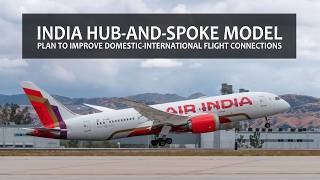
Air India’s inaugural "Easy Connect" flight from Lal Bahadur Shastri International Airport in Varanasi to Delhi served as the pilot for this strategy. The program aims to redirect the estimated 35% of Indian international travelers who currently transit through foreign hubs—such as Dubai, London, and Singapore—back into India’s own airport ecosystem.
How the Hub-and-Spoke Model Works
Under this coordinated aviation network, smaller airports designated as "spokes" feed into major "hubs." The operational framework is designed to eliminate the logistical friction that has historically discouraged international travel from non-metro areas.
Seamless Documentation: Passengers can complete immigration and customs formalities for outbound international travel at their origin "spoke" airport rather than at the hub.
Baggage Logistics: Checked baggage is transferred automatically via airside operations at the hub, removing the need for passengers to reclaim and re-check their luggage during transit.
Unified Journey: Travelers receive integrated boarding passes, ensuring that the connection between the domestic leg and the international flight is treated as a single, continuous journey.
Boosting India’s Global Connectivity
Civil Aviation Minister K. Ram Mohan Naidu announced at the inauguration that six additional cities will be integrated into the network over the next six weeks. The model is a cornerstone of the government’s "Vikas and Virasat" vision, aiming to link India’s cultural and economic heritage with global trade, tourism, and investment opportunities.
"This model paves the way for a monumental shift where regardless of the city one lives in, one can begin their international journey with ease and confidence, on India's own wings," Naidu stated. By decentralizing customs and immigration, the government expects to ease congestion at major metro airports while maximizing the utility of the regional infrastructure developed under the UDAN (Ude Desh ka Aam Nagrik) scheme.
Economic and Operational Impact
The strategic implementation of the hub-and-spoke system is expected to have a profound economic ripple effect. Government estimates suggest the initiative could contribute nearly US$ 1.4 trillion to the Indian economy by 2047, while generating approximately 16 million direct and indirect jobs.
By feeding domestic traffic into international circuits, the model enables Indian airlines to deploy wide-body aircraft more efficiently, supporting longer-haul connectivity. Industry leaders, including Air India CEO Campbell Wilson, have characterized the move as a vital step in evolving India from an end-destination market into a self-reliant global transit hub.
Official Sources
Quote Section
"According to officials, the hub-and-spoke model is a strategic pivot that reverses the trend of routing Indian passengers through foreign airports, instead leveraging India's own geographic advantage between Europe and East Asia to capture international transfer traffic."
Why It Matters
This transition is significant for Indian travelers who have previously faced the "transit tax" of navigating unfamiliar foreign airports or enduring lengthy, multi-booking layovers. For businesses, the reduction in cargo turnaround times—achieved through digitized approvals and the elimination of re-screening for transshipment—will strengthen India's supply chain logistics. For the broader economy, it transforms airports into engines of regional development, bringing smaller cities directly into the global fold.
Key Facts at a Glance
First Spoke City: Varanasi (connected to international destinations via Delhi).
Expansion: Six additional cities to be added to the network within six weeks.
Target: Capture the 35% of international traffic currently transiting through foreign hubs.
Infrastructure Goal: Contribution of ~US$ 1.4 trillion to the Indian economy by 2047.
Tech Integration: Use of DigiYatra and streamlined digital customs/immigration to reduce transit complexity.
FAQ
How does this change the customs and immigration process?
For outbound international passengers, customs and immigration are completed at the "spoke" airport. For inbound passengers, these processes are handled at the final domestic destination airport.
Which airlines are participating?
Air India is the first carrier to operationalize the "Easy Connect" framework, with plans for a phased nationwide rollout involving other domestic carriers.
Will I have to collect my luggage at the transit hub?
No. Under this model, baggage is automatically transferred through airside operations, eliminating the need for passenger intervention during transit.
Source: Press Information Bureau (PIB), Air India, Ministry of Civil Aviation