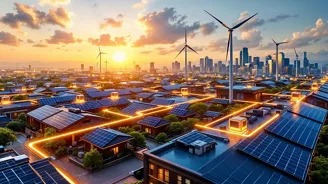
India faces a severe clean energy talent shortage, with a deficit of 1.2 million skilled workers threatening its 500 GW renewable energy target. While the transition could create 44 lakh jobs by 2030, urgent educational reforms are required across advanced solar manufacturing, smart grids, and battery storage infrastructure to secure energy independence
India must urgently accelerate the structural development of its localized green workforce to fulfill its ambitious national climate mandates, according to comprehensive sector data released in June 2026. While the country remains on track to install massive physical clean energy capacity, an acute deficit of specialized local technicians, power plant personnel, and advanced system engineers threatens to stall long-term project execution.
Data from separate labor market evaluations published by the Council on Energy, Environment and Water (CEEW) and international energy bodies indicate that India’s target of establishing 500 gigawatts (GW) of non-fossil fuel capacity by 2030 could unlock more than 44 lakh full-time equivalent (FTE) jobs. However, realizing this socio-economic potential requires an immediate overhaul of domestic technical training networks to prevent multi-month deployment delays.
Expanding Capacity Outpaces Local Specialized Engineering Skills
The workforce imbalance has grown increasingly visible as modern, complex technologies outrun the core human capital available to maintain them. The domestic renewable energy sector currently faces an acute skills shortage estimated at 1.2 million trained professionals—a structural deficit projected to climb to 1.7 million by 2027 if current educational frameworks remain unadjusted.
The human resource bottleneck is particularly severe across frontier green technology fields:
Smart Grid and Digital Systems: Shortages of SCADA engineers and AI-enabled predictive maintenance analysts.
Energy Storage Systems (BESS): Lack of electrochemical engineers capable of designing large-scale battery cell architectures.
Advanced Module Manufacturing: Insufficient technical operators trained in modern high-efficiency thin-film and perovskite solar component fabrication.
Because specialized clean energy talent remains scarce, competitive bidding wars have emerged across the private sector. Certified green technology professionals and climate data analysts are currently commanding average salary premiums of nearly 40% compared to equivalent engineering roles in traditional, carbon-intensive utility segments.
Distributed Solar and Grassroots Skilling Initiatives
According to the joint CEEW and Natural Resources Defense Council (NRDC) study launched in June 2026, decentralized clean energy platforms are significantly more labor-intensive than large-scale utility builds. Out of approximately 6.5 lakh green workers added to the national economy between fiscal years 2023 and 2026, decentralized rooftop solar installations alone accounted for 62% of the total workforce additions.
Rooftop solar generates roughly 45 full-time job-years per megawatt (MW), compared to just 1 job-year per MW for ground-mounted, utility-scale arrays. This high job-intensity demands a decentralized, geographically diverse skilling strategy.
To date, institutional programs have made incremental progress. The Ministry of New and Renewable Energy's (MNRE) Suryamitra Skill Development Programme, managed by the National Institute of Solar Energy (NISE), has certified more than 57,000 solar technicians. Concurrently, the Skill Council for Green Jobs (SCGJ) has verified 550,000 professionals across broader eco-friendly verticals. Yet, these numbers cover less than half of active corporate hiring requests, forcing major engineering firms to rely heavily on expensive, internal in-house training models.
Addressing Gender Imbalances in the Modern Energy Sector
The ongoing talent crisis is further worsened by significant gender disparity within the active green installation ecosystem. The CEEW-NRDC labor audit revealed that women account for just 11% of the total workforce across solar and wind energy manufacturing and project deployment sites.
Furthermore, roughly 61% of these female employees are occupied in non-technical corporate administration roles, including human resources, public relations, and internal accountings. Industry groups emphasize that implementing inclusive workplace guidelines and targeted technical scholarships for women could instantly expand the available talent pool, providing a vital buffer against the current labor crunch.
Official Sources Section
Workforce projections, corporate metrics, and educational data cited in this report have been collated and verified from primary institutions:
Industry and Institutional Quotes
Policy analysts emphasize that regular academic institutions must transform their core engineering pipelines to match real-world climate transitions.
"According to officials leading clean energy human resource groups, deliberate long-term planning and robust industry-training partnerships are non-negotiable to ensure the next generation of domestic workers are equipped for complex field operations."
Why It Matters
Building a robust, domestic clean energy talent pool is no longer just a socio-economic goal—it is a critical infrastructure requirement. Without structural educational adjustments, India risks encountering severe project delivery delays, sub-optimal equipment operations, and an over-reliance on foreign technical consultants, directly threatening the country's legally binding international carbon-reduction commitments.
Key Facts at a Glance
Macro Shortage: India's clean energy segment faces an immediate deficit of 1.2 million skilled workers, which could reach 1.7 million by 2027.
Job Generation: Reaching 2030 climate goals could generate over 44 lakh full-time equivalent jobs, led by distributed solar systems.
Wage Premium: Shortages have driven up labor costs, with skilled green workers commanding 40% higher salaries than fossil-fuel peers.
Gender Disparity: Women constitute only 11% of the current solar and wind workforce, mostly filling non-technical roles.
Frequently Asked Questions
Why does rooftop solar generate more jobs than large-scale solar farms?
Rooftop solar requires custom installations home-by-home and shop-by-shop. This distributed nature demands substantially more manpower for consumer outreach, site surveys, structural engineering, and localized maintenance.
What is being done by the government to bridge the green skills gap?
The government operates targeted programs like the MNRE's Suryamitra scheme alongside the Skill Council for Green Jobs (SCGJ). However, public policy experts state these initiatives must expand significantly to meet current industrial hiring demands.
Where can academic institutions access updated green curriculum frameworks?
Educational bodies can find workforce development guidelines and skill integration frameworks published directly through the International Renewable Energy Agency (IRENA) learning portals.
Source: CEEW Clean Energy Labor Assessments, IRENA Workforce annual reviews, Skill Council for Green Jobs (SCGJ) Compliance Filings.