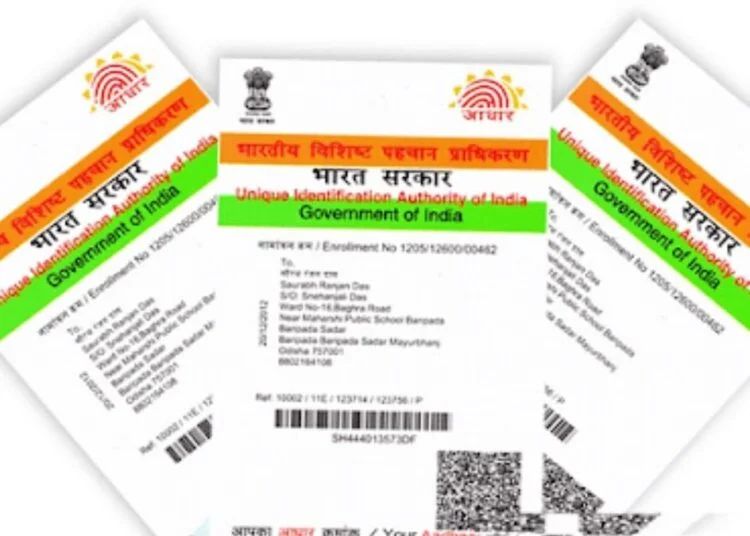
Police units in Kerala have dismantled several illicit networks manufacturing fake identity credentials for ₹700. These counterfeit documents allowed unverified individuals to pose as domestic migrant workers from West Bengal. Authorities are now executing strict biometric cross-checks at construction sites to protect genuine interstate laborers and secure regional infrastructure.
KOCHI — Law enforcement agencies have intensified their scrutiny of regional labor pools following a series of coordinated arrests exposing organized fraud syndicates operating across southern India. Investigations conducted by state security forces confirmed that illicit networks have been actively manufacturing and distributing fake Aadhaar credentials and falsified ration documents for fees as low as ₹700. The synthetic identity footprints allow undocumented foreign nationals to bypass mandatory workplace verifications by successfully posing as internal migrant laborers originating from West Bengal.
The growing cross-border documentation pipeline has triggered an extensive regulatory response across multiple districts. Intelligence units noted that while many of these counterfeit documents were historically generated in remote border municipalities outside the state, recent field operations have unearthed functional printing and lamination hubs operating locally out of commercial storefronts and mobile accessory kiosks. State administrative blocks have warned that the proliferation of unauthenticated national identity assets creates an immediate regulatory blind spot, making it harder to track seasonal workforces and safeguard genuine domestic laborers.
Dismantling Local Fabrication Centers and Operational Hubs
Recent tactical raids conducted by special squads have shifted the focus of the investigation from simple border infiltration to the local manufacturing of forged state records.
According to charging documents released by security officials, law enforcement officers discovered that operators were utilizing standard high-resolution digital infrastructure to modify existing templates. The syndicates routinely harvested the legitimate address records of native citizens—frequently compiled from old SIM card registration files—and combined them with new photographs to print physically convincing identity documents that lacked any actual backend biometric registration on national databases.
Maintaining Internal Security Without Disrupting the Labor Force
The challenge for regional planners is implementing robust verification measures without alienating the millions of genuine interstate migrant workers who form the backbone of the local construction and agricultural economies.
Distinguishing Legitimate Personnel From Syndicate Clients
Because the southern manufacturing and infrastructure sectors rely heavily on manual labor from eastern states, indiscriminate crackdowns risk stalling major commercial projects. Industry associations have urged local authorities to deploy precise digital checks rather than relying purely on visual document inspections.
The unified law enforcement roadmap currently prioritizes four key operational objectives:
Mandatory Biometric Cross-Checking: Equipping localized police field units with live verification terminals to validate the security chips embedded in official identity documents.
Syndicate Raid Expansion: Shutting down illicit internet cafes and communications kiosks used to modify official government document formats.
Contractor Compliance Audits: Requiring major construction and logistics employers to submit complete labor rosters directly to state tracking databases.
Protecting Inter-State Laborers: Ensuring that legal workers from regions like West Bengal face no administrative harassment during ongoing verification sweeps.
Political Leadership Demands Coordinated Tracking
The political implications of these documentation rings have drawn sharp commentary from national and regional representatives, who warn that inadequate oversight poses a long-term challenge to internal security.
"According to officials and state intelligence briefs, the primary vulnerability lies in the lack of real-time validation by small-scale employers. Intermediary agents are able to easily exploit these gaps, selling lookalike credentials to avoid regulatory scrutiny."
Expressing concern over the findings, senior political leaders have called for immediate coordination between federal intelligence agencies and local police commands. Commentators emphasized that while the state must remain a welcoming destination for legitimate domestic laborers seeking livelihood opportunities, maintaining stringent tracking protocols is non-negotiable to prevent international syndicates from exploiting regional labor markets.
Why It Matters
For ordinary citizens and local neighborhoods, the presence of unregulated documentation rings weakens the overall integrity of public distribution systems and localized welfare frameworks. If unverified individuals slip onto regional rolls using fake identity assets, it can drain community resources intended for vulnerable domestic populations.
For corporate businesses, developers, and micro-enterprises, the crackdown means that onboarding processes for seasonal workforces must become far more rigorous. Shifting toward mandatory biometric checks helps insulate companies from legal liabilities, ensuring that payroll expenditures go exclusively to legally documented domestic workers.
Key Facts at a Glance
The Price of Forgery: Illicit syndicates have been caught issuing highly accurate physical lookalike identity cards for prices ranging between ₹500 and ₹700.
Local Infrastructure Busted: Multiple print networks operating out of mobile phone shops have been dismantled by rural police forces.
Data Exploitation: Investigation logs indicate that brokers frequently reused real citizens' address details from old SIM card applications to manufacture the cards.
Enforcement Action: Security teams have established dedicated task forces to carry out real-time digital verifications across major labor hubs.
Frequently Asked Questions
How do these fake cards differ from authentic government-issued identity documents?
While the forged cards mimic the physical appearance, layout, and paper weight of genuine documents perfectly, they do not possess any valid backend biometric registration on central government databases.
What steps are authorities taking to prevent the harassment of genuine domestic migrant workers?
State guidelines emphasize using targeted biometric scanning at employee onboarding sites to quickly verify legitimate domestic workers while avoiding broad, disruptive community sweeps.
Are local businesses liable if their sub-contracted workers hold falsified credentials?
Under evolving regulatory rules, businesses are being urged to cross-verify all worker documents via official portal tools, and failure to perform basic due diligence could result in legal penalties.
Sources
Criminal case files and enforcement summaries issued by the Kerala District Police Command.
Public security updates and official border monitoring reports distributed by the Press Trust of India (PTI).
Statutory verification protocols and database access guidelines published by the Unique Identification Authority of India (UIDAI).
Labor registry directives and tracking framework mandates issued by the Department of Labour, Government of Kerala.