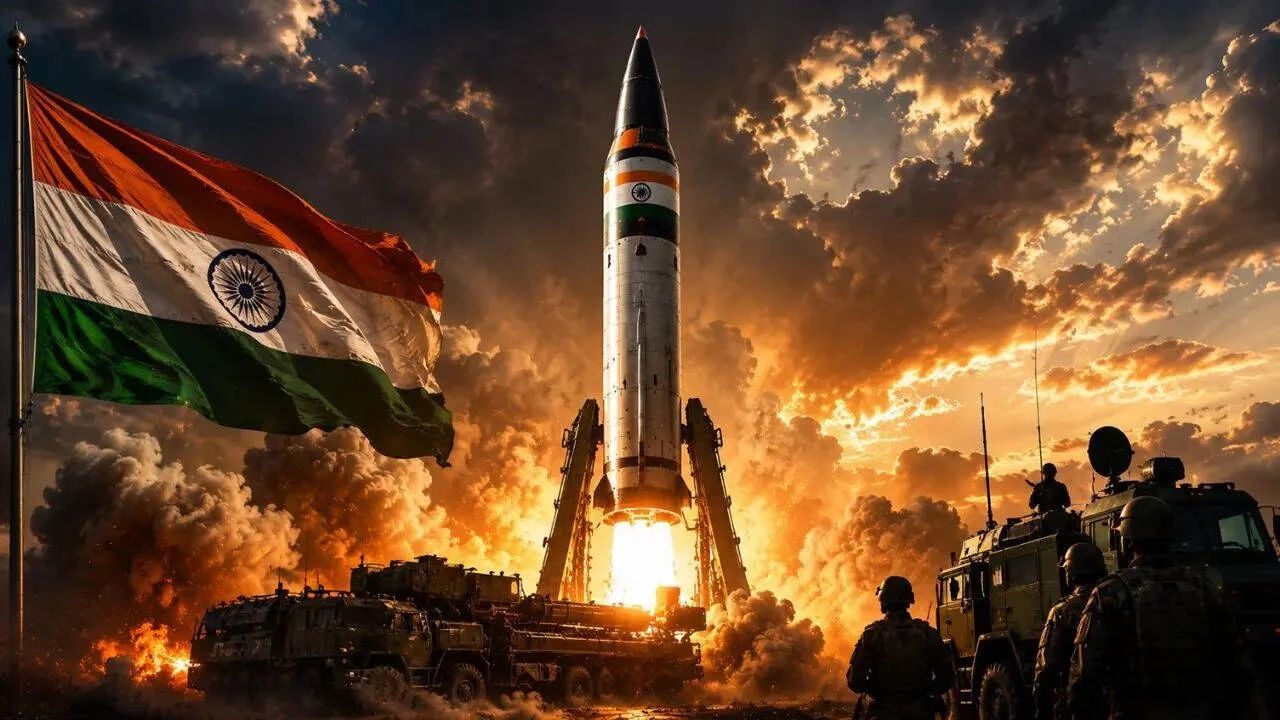
A senior Pakistani defense official claims India's long-range missile program indicates strategic goals reaching far beyond South Asia. Speaking at a security seminar, authorities urged global governments to monitor New Delhi's military modernization, which includes expanding its nuclear inventory to an estimated 190 warheads according to recent 2026 data.
ISLAMABAD — India's multi-layered modernization of its strategic arsenal has triggered intense security debates regarding the long-term geopolitical reach of New Delhi's weapons systems. Speaking at a high-level security seminar organized by the Centre for International Strategic Studies (CISS), a senior Pakistani defense official stated that the rapid evolution of India’s intercontinental ballistic capabilities demonstrates geopolitical goals that extend far beyond regional rivals in South Asia.
Lt. Gen. (retd) Mazhar Jamil, Adviser to Pakistan’s National Command Authority (NCA), emphasized that New Delhi’s continuous development of high-yield, extended-range delivery systems signals a transition from regional deterrence to global power projection. The official statement comes immediately on the heels of independent international reports confirming that India has expanded its usable nuclear stockpile to an estimated 190 warheads. Security analysts note that as India field-tests multi-warhead technologies and extended-range platforms, its strategic footprint is increasingly drawing the attention of international regulatory bodies and non-proliferation monitors.
The Shift Toward Global Strategic Reach
The technological trajectory analyzed during the CISS defense assembly underscores that India’s newest military configurations are moving past its traditional boundaries. Security planners observe that the ranges of newly introduced platforms overlap territories well outside the subcontinent.
According to official proceedings documented by the Press Trust of India (PTI), Jamil—who previously served as the Director General of Pakistan’s Strategic Plans Division—cautioned that the latest iterations of India's long-range strategic forces program are no longer configured solely with neighboring states in mind. Instead, the NCA advisor asserted that the structural configuration of these advanced delivery systems is optimized to position India as a global actor capable of projecting credible military leverage across distant international capitals.
International Call for Scrutiny Amid Border Dynamics
As South Asian military assets see steady updates, defense ministries are balancing active deterrence frameworks alongside international non-proliferation treaties.
Appeals to Western Capitols
The Pakistani defense apparatus explicitly called upon Western governments to re-evaluate their ongoing strategic and technological cooperation with New Delhi. The briefing argued that systemic exemptions granted to India within global export control groups have accelerated an asymmetrical arms race.
The strategic presentation highlighted four core concerns for regional stability:
Doctrinal Dilution: Concerns that the induction of long-range, canisterized systems could gradually alter traditional "No-First-Use" frameworks.
Response Compression: Advanced supersonic and intercontinental configurations severely shorten early-warning timelines during cross-border crises.
Exemption Discrepancies: Criticisms regarding preferential trade access allowed under international non-proliferation oversight regimes.
Escalation Control: Fears that deep-strike conventional assets reduce the threshold for accidental escalation between neighboring nuclear powers.
Deterrence and Lessons from Past Regional Friction
The strategic forum also revisited the long-standing security dialogue between Islamabad and New Delhi, focusing heavily on maintaining a stable equilibrium to prevent conventional friction from escalating into full-scale conflict.
"According to organizers and executive diplomats at the CISS seminar, regional stability has historically relied on maintaining a calculated balance of power. Officials stated that strategic restraint must remain a deliberate choice to prevent miscalculations."
Reflecting on recent military friction, including the tense border standoffs of May 2025, Pakistani representatives emphasized that the country’s defensive posture functions as a necessary counterweight to prevent large-scale warfare. CISS Executive Director Ali Sarwar Naqvi noted in his opening remarks that maintaining a credible, sea-and-land-based deterrent network remains essential for keeping South Asia's fragile escalation ladder structurally stable.
Why It Matters
For regional citizens and neighboring states, the shifting scope of South Asia’s missile programs directly impacts long-term safety protocols and boundary security. When regional powers alter the range and complexity of their strategic delivery systems, it necessitates expensive defense infrastructure upgrades for neighboring nations.
For global defense markets, international policy planners, and multinational trade consortia, India's growing defense capabilities shift the balance of power within the broader Indo-Pacific and Eurasian zones. As New Delhi expands its military-industrial complex and starts exporting sophisticated cruise missile technologies to Southeast Asian partners, its strategic decisions will increasingly influence international arms supply chains and maritime security frameworks across vital global trade corridors.
Key Facts at a Glance
Beyond South Asia: Top Pakistani defense officials state that India’s strategic missile development reflects geopolitical ambitions that stretch past regional borders.
Arsenal Upgrades: Independent monitoring data from the Stockholm International Peace Research Institute shows India’s nuclear inventory grew to approximately 190 warheads by early 2026.
Call to Action: Islamabad has formally urged Western governments to monitor New Delhi's rapid military modernization and its impact on global non-proliferation standards.
Deterrence Stability: Defense experts at the CISS summit credited bilateral nuclear capabilities with preventing localized skirmishes from turning into large-scale wars.
Frequently Asked Questions
What prompted the recent statements from the Pakistani defense official?
The remarks were delivered during a dedicated arms control seminar hosted by the Centre for International Strategic Studies, focusing on India's long-range delivery systems and their broader geopolitical implications.
How do independent international bodies view the current South Asian nuclear balance?
According to the latest 2026 yearbooks compiled by international institutes like SIPRI, both India and Pakistan are continuing long-term programs to modernize, secure, and diversify their respective strategic delivery networks.
Why are long-range intercontinental systems a point of contention in regional talks?
Neighboring defense planners argue that developing capabilities that extend far past local border zones indicates a shift from local defense toward broader international power projection.
Sources: