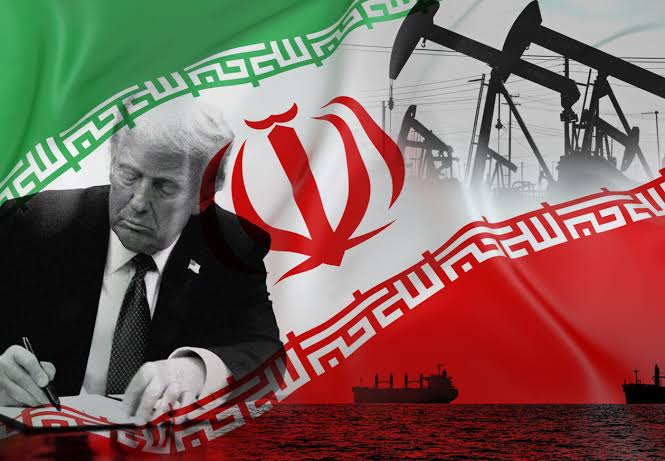
Global oil prices dropped sharply by over 3% after U.S. President Donald Trump announced the cancellation of scheduled military strikes against Iran. The sudden de-escalation follows high-level diplomatic breakthroughs approved by Iranian leadership and a multi-nation coalition, offering relief to global energy markets despite an ongoing naval blockade.
WASHINGTON — Global crude benchmarks tumbled more than 3% on Thursday evening following a surprise announcement by U.S. President Donald Trump that he had called off a series of scheduled military strikes and bombings against Iran. The decision comes just hours after the White House threatened an expansive escalation of the ongoing West Asia war, including proposals to seize control of Iran's vital energy assets. The sudden pivot toward high-level negotiations instantly cooled energy supply anxieties, driving down crude futures that had surged on fears of an immediate regional conflagration.
The dynamic reversal has temporarily stabilized international financial markets. By late Thursday, August Brent crude futures slid 3.48% to settle at $89.87 per barrel, while U.S. West Texas Intermediate (WTI) futures for July delivery shed 3.25% to drop to $87.10 per barrel, reversing a sharp intra-day spike that had been triggered by the imminent threat of U.S. aerial operations.
High-Stakes Pivot Prevents Looming Escallation
The cancellation of the military operations followed a highly volatile 24-hour window during which a fragile two-month-old ceasefire appeared to face total collapse. Earlier on Thursday, President Trump had stated via social media that the U.S. military would hit Iran "very hard," going so far as to outline future plans to capture Kharg Island—the primary deep-water export terminal handling roughly 90% of Iran's crude oil exports.
In response to the initial American threats, senior Iranian officials issued severe warnings regarding regional infrastructure. General Ali Abdollahi, commander of the Khatam al-Anbiya Central Headquarters, declared that renewed U.S. actions would trigger a harsher response and expand the boundaries of instability. Simultaneously, Mohammad-Bagher Ghalibaf, the speaker of the Iranian parliament and a top negotiator, warned that "impulsive decisions" would explode energy infrastructure and pull Washington into an "endless quagmire." Following frantic regional diplomacy involving Gulf states, President Trump confirmed that the planned evening bombardments were permanently shelved due to sudden progress in diplomatic talks.
The Diplomatic Framework and Regional Alignment
According to statements released by the White House on Truth Social, the decision to halt the attacks was solidified after direct communications reached the absolute apex of the Iranian government. The diplomatic breakthrough allegedly includes a broad spectrum of regional stakeholders who have given conceptual approval to an upcoming structural transaction.
The consensus framework reportedly involves an extensive coalition, including the United States, Israel, Saudi Arabia, the United Arab Emirates, Qatar, Turkey, Pakistan, Bahrain, Kuwait, Jordan, and Egypt. Despite the cancellation of the active bombing runs, Washington emphasized that its enforced naval blockade of the region will remain fully active until a formal, legally binding international agreement is officially signed by all primary participants.
Impact on Consumers and Global Commerce
The sudden de-escalation provides immediate, vital breathing room for commercial transport and retail consumers alike. Prior to the announcement, the Persian Gulf Strait Authority (PGSA) had declared the critical Strait of Hormuz closed to all maritime traffic, including commercial container ships and oil tankers, sending shockwaves through global supply chains. Since the West Asia conflict reignited in late February, American households have faced severe economic pressure, with the national average gas price climbing to approximately $4.16 per gallon, driving broader domestic inflation up to 3.8%.
For international shipping firms, travelers, and energy investors, the potential resolution of the naval deadlock hints at a return to normalized trade volumes. Currently, the number of daily vessel crossings through the Strait of Hormuz remains drastically lower than the baseline of 130 ships per day recorded prior to the outbreak of the war. A finalized diplomatic deal could ease stringent maritime insurance premiums and lower international freight costs.
Official Sources Section
The financial parameters and trading figures cited in this report are verified through public market data aggregates provided by financial tracking firms. Statements detailing the cancellation of the military strikes, the involvement of regional allies, and the status of the naval blockade are sourced directly from the official executive communications of the White House. Historical details, regional military reactions, and diplomatic responses have been compiled via official transcripts from the U.S. Central Command (CENTCOM) and state media statements from the Islamic Republic of Iran.
Quote Section
"Based on the fact that discussions with the Islamic Republic of Iran have been brought to the highest level of Iranian leadership and approved, I have, as President of the United States of America, cancelled the scheduled strikes and bombings against Iran this evening," stated U.S. President Donald Trump in an official public brief detailing the sudden policy shift.
Why It Matters
The shift from military confrontation to active diplomacy carries profound implications for the global economy. By defusing an immediate threat to Kharg Island and the surrounding waterways, the risk of a catastrophic disruption to 20% of the world's daily oil transit has dropped significantly. For investors, this reduces the near-term probability of crude oil spiking toward projected worst-case scenarios of $120 to $200 per barrel. For everyday citizens, it offers a concrete path toward lower fuel costs, which have systematically inflated the price of groceries, logistics, and consumer goods throughout 2026.
Key Facts at a Glance
Market Correction: August Brent crude fell 3.48% to $89.87, and July WTI decreased 3.25% to $87.10 immediately following the announcement.
Strike Cancellation: President Donald Trump officially revoked orders for scheduled evening air strikes and bombings against Iranian targets.
Diplomatic Breakthrough: The White House confirmed that conceptual points for a regional transaction have been approved by the highest tiers of Iranian leadership alongside an international coalition including Israel, Saudi Arabia, and the UAE.
Blockade Status: While active aerial bombardments are cancelled, the comprehensive U.S. naval blockade surrounding Iranian waters remains in full effect until a final transaction is signed.
FAQ Section
Q: Why did global oil prices drop so suddenly?
A: Crude oil prices fell by over 3% because the immediate risk of a major military escalation in West Asia decreased after the U.S. cancelled scheduled air strikes on Iranian infrastructure.
Q: What infrastructure was originally being threatened by the U.S.?
A: Earlier in the day, threats were directed at Iran's main deep-water oil export terminal on Kharg Island, which handles roughly 90% of the country's crude exports.
Q: Is the military conflict between the U.S. and Iran completely over?
A: No. While the scheduled evening strikes were called off due to diplomatic progress, the U.S. naval blockade remains fully active until a formal agreement is finalized and signed.
Q: Which countries are involved in the proposed diplomatic solution?
A: According to official U.S. communications, the framework involves the United States, Iran, Israel, Saudi Arabia, the UAE, Qatar, Turkey, Pakistan, Bahrain, Kuwait, Jordan, and Egypt.
Source: The White House Official Briefings, U.S. Central Command Press Operations, Bloomberg Energy Index Data.