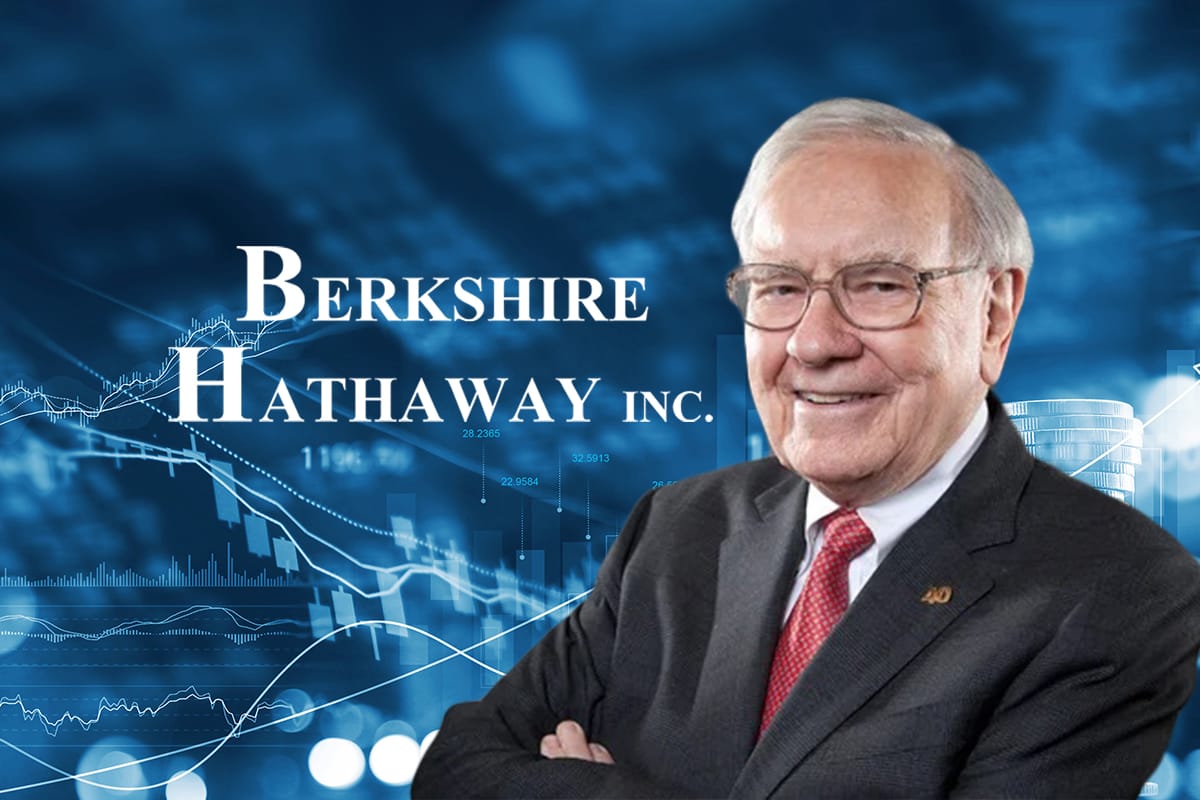
Warren Buffett has issued a strong warning to investors as Berkshire Hathaway grows its cash reserves to nearly $400 billion. Driven by his core rule that "fools give you reasons, wise men never try," the move highlights severe market overvaluation and a defensive turn away from a speculative, casino-like stock market.
OMAHA — As international stock indexes fluctuate near historical highs, Berkshire Hathaway Chairman and CEO Warren Buffett has issued a stark warning regarding the structural vulnerabilities of the current financial ecosystem. Speaking broadly to investors amid a shifting macroeconomic backdrop in June 2026, the legendary value investor repeated his timeless, historical axiom: "Fools give you reasons, wise men never try." The cautionary stance arrives as Berkshire Hathaway has systematically accumulated one of the largest corporate liquidity reserves in history, signaling a profound mismatch between current equities pricing and intrinsic corporate value.
The development comes at a critical juncture for retail and institutional participants. Despite a series of minor market corrections during the opening quarter of the year, major indexes remain heavily supported by concentrated technology earnings and widespread speculation. By pausing significant capital deployment, Buffett’s current positioning serves as a loud institutional advisory that the broader market may be fundamentally overheating.
The Logic Behind the Historic Cash Hoard
The primary operational indicator of Buffett's cautious outlook is the unprecedented scale of Berkshire Hathaway’s balance sheet liquidity. Financial regulatory filings confirm that the conglomerate's cash position has expanded dramatically, now approaching $400 billion held primarily in liquid cash and short-term U.S. Treasury bills. For decades, institutional shareholders have questioned Berkshire’s reluctance to deploy capital during extended bull runs, yet the firm has remained highly disciplined.
This monumental liquid position reflects a structural choice rather than an administrative delay. Buffett has long treated cash not as an underperforming asset, but as absolute strategic optionality. By maintaining deep liquidity while remaining a net seller of equities for consecutive quarters, Berkshire ensures it possesses the unrestricted capacity to act decisively when market distress eventually forces a broad liquidation of high-quality assets.
The Speculative Environment and the "Buffett Indicator"
A core driver of the current institutional caution is the systemic rise of short-term speculative behavior across public brokerages. During recent market commentary, Buffett compared contemporary equities trading to a highly gamified environment, noting that public markets increasingly exhibit the characteristics of an active casino. The proliferation of high-frequency trading and zero-days-to-expiration (0-DTE) options contracts—which now comprise more than 60% of all S&P 500 options volume—has decoupled short-term stock prices from long-term corporate fundamentals.
Simultaneously, the famous "Buffett Indicator"—the mathematical ratio evaluating the aggregate value of the publicly traded stock market against the overall gross domestic product (GDP) of the United States—has surged into uncharted territory. Historically, Buffett established that a ratio approaching the 200% threshold represents an incredibly high-risk entry point for capital. With the metric currently hovering between 227% and 230%, the indicator strongly corroborates Berkshire's decision to wait on the sidelines.
Historic Precedents of Prophetic Patience
The operational philosophy of "Fools give you reasons, wise men never try" is deeply rooted in Berkshire's historical triumphs over previous market collapses. Buffett originally leveraged this precise framework to navigate the dot-com bubble of the late 1990s and early 2000s, where he was heavily criticized for ignoring sky-high valuations in early internet start-ups. The subsequent market crash validated his patience, allowing Berkshire to acquire distressed industrial and insurance assets at steep discounts.
A identical pattern occurred before the 2008 Global Financial Crisis. While Wall Street firms aggressively chased yields through complex mortgage-backed securities, Berkshire quietly preserved its cash. When the credit markets collapsed, major financial institutions were forced to seek emergency capital funding, allowing Buffett to negotiate highly lucrative, protected preferred stock terms with entities like Goldman Sachs and General Electric.
Official Sources Section
The corporate balance sheet metrics, cash allocations, and portfolio adjustments cited in this report are sourced directly from the official regulatory filings submitted to the U.S. Securities and Exchange Commission (SEC). Market valuation percentages, options volumes, and macroeconomic indices are verified through the public trading registries of the New York Stock Exchange and the Federal Reserve Bank of St. Louis (FRED).
Quote Section
"Fools give you reasons, wise men never try," Warren Buffett famously observed regarding the corporate temptation to synthesize complex analytical justifications for buying into an obviously overvalued, speculative marketplace.
Why It Matters
For everyday consumers, retail traders, and retirement planners, Buffett’s refusal to chase the market carries immediate practical weight. When the world’s most successful value investor chooses to earn modest yields on Treasury bills rather than risk capital in overextended equities, it highlights the danger of market entry at current levels. For institutional investors, this positioning alters broader liquidity expectations, proving that sitting out speculative trends is a legitimate strategy for capital preservation.
Key Facts at a Glance
Liquidity Milestone: Berkshire Hathaway is hoarding a record cash reserve approaching $400 billion in cash and Treasury instruments.
Valuation Warning: The Buffett Indicator has breached a record high of over 225%, well above the historical 200% danger threshold.
Speculative Volatility: Short-term speculative tools, such as zero-day options, now dominate a majority of daily index trading volumes.
Defensive Posture: Berkshire Hathaway has remained a net seller of equities for more than a dozen consecutive quarters, waiting for a significant market correction.
FAQ Section
Q: What does Warren Buffett mean by "Fools give you reasons, wise men never try"?
A: It highlights that during highly speculative asset bubbles, people will invent complex reasons to justify inflated prices, whereas disciplined investors avoid trying to rationalize bad valuations.
Q: Why is Berkshire Hathaway keeping so much money in cash right now?
A: Warren Buffett views cash as strategic optionality, allowing the firm to wait patiently until prices fall significantly and high-quality assets become cheap during a market downturn.
Q: What is the "Buffett Indicator" and what does it show?
A: It is the ratio of total stock market value to national GDP. A reading over 200% indicates the market is dangerously overvalued; the metric is currently sitting above 225%.
Q: Should retail investors completely stop buying stocks based on this warning?
A: The warning suggests extreme caution regarding speculative and overvalued stocks, emphasizing that long-term success relies on buying quality companies at fair prices rather than chasing market momentum.
Source: U.S. Securities and Exchange Commission (SEC) Filings, Federal Reserve Economic Data, Berkshire Hathaway Shareholder Communications.