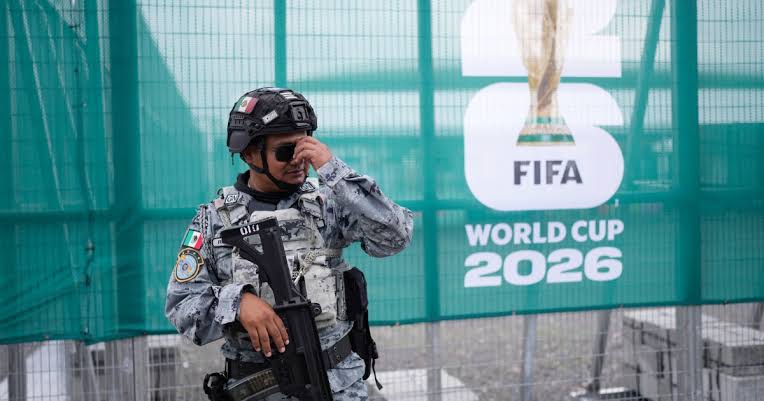
The FIFA World Cup opened in Mexico City amid significant tension as thousands of striking teachers and activist groups blocked major roadways near the stadium. Backed by 100,000 security personnel, authorities maintained tight perimeters, ensuring the opening match against South Africa kicked off despite the surrounding civil protests.
MEXICO CITY, MEXICO — The 2026 FIFA World Cup opening ceremony and inaugural match between Mexico and South Africa commenced under unprecedented security measures on Thursday, as thousands of striking teachers and activist groups converged on the capital to protest. Heavy lines of federal police and National Guard forces established strict perimeters around the Estadio Azteca—officially renamed Estadio Ciudad de México for the tournament—to insulate global football fans and dignitaries from escalating civil unrest.
The widespread demonstrations, led primarily by the dissident National Coordination of Education Workers (CNTE) teachers' union, have placed Mexican President Claudia Sheinbaum’s administration under severe international scrutiny. Activists are leveraging the global media spotlight of the tournament’s opening day to demand sweeping wage increases, pension reforms, and state accountability for the country’s missing persons crisis, clashing directly with the government's efforts to present a unified national showcase.
Heavy Security Grid Set Up Around Renamed Estadio Azteca
According to official briefings from Mexico City Security Chief Pablo Vázquez, more than 100,000 soldiers, sailors, National Guard members, and specialized police officers have been mobilized to protect tournament infrastructure across host venues. Concrete barriers and multi-layered riot shield walls were deployed to block intersecting avenues leading to the stadium, stopping a massive protest march "at the last mile" before it could reach the immediate spectator gates.
The security lockdown also extended to the historic Zócalo central square, home to the capital’s primary, free FIFA Fan Festival zone. A large tent village established by striking union members has effectively obstructed standard access to the square for over a week. While local police previously utilized tear gas and rubber bullets to push back demonstrators who breached metal security fences during stage construction, current strategies have shifted toward containment and isolation.
Social Grievances Collide With High-Cost Tournament Infrastructure
The disruption in Mexico City highlights deep-seated domestic friction regarding public spending priorities. Striking CNTE union members have been on strike to demand an overhaul of current public pension caps and structural salary adjustments, adjustments that federal fiscal analysts have declared economically unfeasible.
The teachers' ranks were joined on the eve of the opening ceremony by secondary demonstration blocks, including transport unions protesting unsafe work environments and search collectives representing families of Mexico’s 130,000 missing persons. Protesters expressed frustration that substantial public funds were channeled into high-end aesthetic urban upgrades—such as specialized metro infrastructure and stadium renovations—while pressing socio-economic programs remain underfunded.
The ongoing demonstrations have directly impacted various local groups:
International Travelers and Fans: Spectators faced sweeping road closures, heavily delayed transit routes, and intensive perimeter checkpoints requiring hours of additional travel time to reach stadium seats.
Local Business Owners: Merchants near the Zócalo reported significant disruptions to foot traffic and commercial access, tempering expected tourism revenue windfalls.
Working-Class Residents: Sky-high secondary ticket prices averaging over $2,200 per match have alienated many local residents, leading to public complaints of socioeconomic discrimination.
Global Sports Event Marred by Geopolitical Discord
The domestic friction mirrors wider international tensions surrounding the expanded 48-team tournament, which is being co-hosted across 16 cities in Mexico, the United States, and Canada. A lack of unified marketing strategies, coupled with diplomatic friction over trade regulations and strict border immigration policies implemented by the United States, has disrupted the initial vision of absolute North American sports unity.
The friction has trickled directly down to participants; the national football team of Iran was forced to relocate its primary training camp to Tijuana, Mexico, after several key staff members were denied standard entry visas by U.S. authorities.
Official Sources Section
The information, security deployment numbers, and policy declarations detailed in this report are sourced from:
Official administrative communiqués issued by the Mexico City Secretariat of Citizens' Security (SSC).
Federal press briefings delivered by Mexican President Claudia Sheinbaum at the National Palace.
Public strike mandates and platforms published by the leadership of the National Coordination of Education Workers (CNTE).
Quote Section
Defending her administration's management of both the sporting tournament and the civic demonstrations, Mexican President Claudia Sheinbaum stated during a press conference:
"The opening match is absolutely guaranteed, and everything is under control. They want to make it seem like there is mass social turmoil in Mexico, and that's not true. If for some reason the Zócalo cannot be fully utilized for the opening night, there are 18 alternative venues across the city where people can watch the match completely free of charge."
Conversely, articulating the stance of the demonstrating working class, strike participant Emiliano Cárdenas stated:
"We understand who will benefit from the government investment in the World Cup. It will never be any of us. These types of things never benefit the working class; they benefit those who already have everything to begin with. We are not going anywhere."
Why It Matters
For multinational corporate sponsors, international broadcasters, and global investors, the disruptions demonstrate the operational risks of staging premier sporting events in regions with active social friction. The capacity of municipal services to maintain public transit, safeguard high-capacity fan zones, and prevent major civil blockades over the five-week tournament will serve as a test case for future mega-event logistics worldwide.
Key Facts at a Glance
The Event: The opening ceremony and Group A opening match of the FIFA World Cup between Mexico and South Africa at the renamed Estadio Ciudad de México.
The Disruption: Sweeping street blockades and protest camps organized by the CNTE teachers' union, transport workers, and civil rights collectives.
The Demands: Substantial wage increases, the total reversal of state pension laws, and increased resource allocation toward solving missing persons cases.
The Grid: Over 100,000 security personnel deployed across host cities utilizing concrete barriers and defensive perimeters to isolate the stadium from active protest marches.
FAQ Section
Is the opening match between Mexico and South Africa being postponed due to the protests?
No. While protesters successfully blocked major arterial avenues leading toward the stadium for several hours, extensive police blockades stopped the march a mile short of the gates, allowing the opening ceremony and match kickoff to proceed as scheduled.
What are the primary demands of the striking Mexican teachers?
The breakaway faction of the CNTE teachers' union is demanding a substantial increase to baseline public education salaries and the complete reversal of state pension laws, which restrict retirement benefits.
Can fans safely access the official FIFA Fan Festival in Mexico City?
The main fan zone at the Zócalo remains heavily compromised by an ongoing protest tent village. While the government maintains the area is secure, officials have established 18 alternative public viewing venues across Mexico City to handle overflow crowds.
Source: FIFA Official Tournament Hub, Mexico City Secretariat of Citizens' Security Regulatory Updates, Reuters and Associated Press Latin America Bureau Dispatches