India's space regulator, IN-SPACe, has awarded milestone-linked financial support to Bengaluru-based Astrobase Space Technologies under its Rs 500-crore Technology Adoption Fund. The grant accelerates the development of an indigenous 800-kN reusable LOX-Methane rocket engine, currently undergoing hot-fire testing, as India targets a USD 44 billion space economy by 2034.
AHMEDABAD, India — In a major milestone for India’s expanding commercial space sector, the Indian National Space Promotion and Authorization Centre (IN-SPACe) announced on June 11, 2026, that it has selected private aerospace firm Astrobase Space Technologies for milestone-linked financial support under its flagship Technology Adoption Fund (TAF). The institutional grant will directly accelerate the engineering of Astrobase’s indigenous, 800-kilonewton (kN) high-thrust Full Flow Staged Combustion (FFSC) liquid oxygen (LOX)-methane rocket engine.
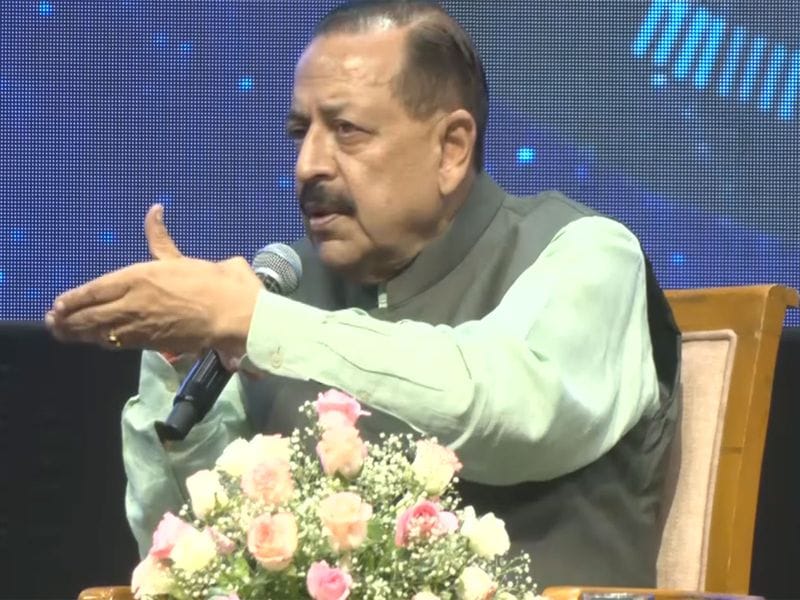
The strategic funding development emerges at a time when India is aggressively restructuring its policy framework to scale its local space economy from early-stage research into a globally competitive USD 44 billion marketplace by 2034. Speaking at the 10th IN-SPACe Industry Connect event in Ahmedabad, Union Minister of State for Science and Technology Dr. Jitendra Singh asserted that India's geopolitical and commercial edge in the global space race relies squarely on internal talent pools and targeted structural reforms, rather than purely state-funded capital injections.
Technical Edge: The 80-Ton Reusable FFSC Rocket Engine
The capital allocation drawn from IN-SPACe’s Rs 500-crore Technology Adoption Fund will support Astrobase's modular propulsion architecture designed for future medium- and heavy-lift launch vehicles. The target system is an 800-kN (approximately 80-ton thrust) closed-cycle engine utilizing liquid oxygen and liquefied natural gas (LNG/Methane).
According to technical releases from Astrobase, the engine is already undergoing hot-fire testing phases at the company’s dedicated propulsion test facility located in Anantapur, Andhra Pradesh. The full-flow staged combustion cycle offers supreme fuel efficiency and reusability compared to traditional open-cycle systems, positioning the company to compete globally alongside specialized launch operators like SpaceX and Stoke Space.
The official grant agreement was finalized during an industrial signing ceremony hosted by Dr. Pawan Goenka, Chairman of IN-SPACe, alongside Astrobase Co-Founder and CEO Neeraj Khandelwal. The high-profile space ecosystem event was attended by senior industry executives and Union Minister of Commerce and Industry Piyush Goyal.
India’s Commercial Space Strategy vs. Global Models
Addressing private sector stakeholders, Union Minister Jitendra Singh highlighted the contrasting financial and social methodologies shaping international space capabilities, drawing a direct comparison with China’s state-directed scientific investments.
"Scaling up technology also would require money," Minister Singh stated during the press briefing. "We need to have more and more investments coming in domestically and internationally, whether in the form of philanthropy, from foundations, or from business players."
Singh pointed out that while heavily centralized governance structures can instantly inject massive state reserves into targeted scientific ecosystems, democratic market frameworks must balance technological capital with public social safety nets. He noted that despite fiscal constraints, India’s intrinsic human resources remain its primary competitive leverage.
"China has advanced so much... they said dump all the money to science technology," Singh observed. "We can’t be doing that. But in spite of that, if we are competitive, I think it’s our strength. I think we have human resource in abundance. India wins on talent."
Broader Startup Cohort Under the Technology Adoption Fund
Astrobase Space Technologies is part of the initial three-startup cohort selected by IN-SPACe following a multi-stage technical vetting process. The review committee featured expert evaluators from the Indian Space Research Organisation (ISRO), the Department for Promotion of Industry and Internal Trade (DPIIT), and the Department of Science and Technology (DST).
Under the specific guidelines governing the TAF scheme, IN-SPACe offers funding coverage of up to 60 percent of net project costs for approved startups and MSMEs, subject to a strict financial cap of Rs 25 crore per individual project. Any intellectual property (IP) created through the program remains owned by the respective private entities, though secondary commercial licensing requires regulatory sign-off from IN-SPACe.
The complete inaugural funding round covers three distinct operational gaps in India's domestic space supply chain:
| Startup | Core Location | Technology Funded | Core Sector Impact |
| Astrobase Space Technologies | Bengaluru, Karnataka | 800-kN Reusable LOX-Methane Rocket Engine | Medium-to-heavy commercial launch vehicles |
| SatSure Analytics India | Bengaluru, Karnataka | "Dhaarini" Large Earth Observation Model | AI-driven remote sensing for agriculture and disaster management |
| TM2SPACE Technologies | Hyderabad, Telangana | AI-Powered Satellite Star Tracker Systems | High-precision attitude determination and satellite orientation |
Institutional Background and Market Impact
Established as an autonomous single-window nodal agency under the Department of Space, IN-SPACe acts as the primary regulator and promoter for Non-Governmental Entities (NGEs) utilizing India’s national space infrastructure. The rollout of the TAF mechanism complements a parallel Rs 1,000-crore state-backed Venture Capital Fund managed via SIDBI Venture Capital Ltd, designed to bankroll up to 40 space tech firms over a five-year cycle.
Dr. Pawan Goenka, Chairman of IN-SPACe, noted that the selected projects represent highly practical, market-ready solutions rather than abstract concepts. The agency will maintain milestone-linked disbursements alongside continuous technical oversight to ensure systemic translation from laboratory testing into scalable commercial launch architectures.
Key Facts at a Glance
The Engine: Astrobase is actively manufacturing a modular, reusable 800-kN (80-ton) Full Flow Staged Combustion engine using liquid oxygen and methane fuel.
The Location: Current hot-fire trials and structural testing of the rocket engine are underway at Astrobase’s private propulsion center in Anantapur, Andhra Pradesh.
The Fund: The Technology Adoption Fund (TAF) supports up to 60% of total project costs for space startups, capped firmly at Rs 25 crore per venture.
The Cohort: Astrobase is joined by SatSure Analytics (developing AI earth observation models) and TM2SPACE (developing high-precision satellite star trackers).
Frequently Asked Questions (FAQ)
What is the primary objective of the IN-SPACe Technology Adoption Fund (TAF)?
The TAF is a specialized Rs 500-crore fund set up by IN-SPACe to help Indian non-governmental space companies absorb, adapt, and transition early-stage space concepts into commercially viable, market-ready technologies.
Why is a LOX-Methane full-flow staged combustion engine significant?
LOX-Methane engines provide higher performance efficiency, burn cleaner, and minimize soot accumulation compared to traditional kerosene engines. This makes them highly suitable for quick-turnaround reusable rockets, drastically reducing commercial cost-per-kilogram delivery to orbit.
Who retains the intellectual property rights for technologies funded under this scheme?
Per official IN-SPACe criteria, all intellectual property generated under the TAF scheme remains exclusively owned by the developing company. However, subsequent third-party licensing of that IP requires structural regulatory clearance from IN-SPACe.
Sources: Official Press Communiqué:Indian National Space Promotion and Authorization Centre (IN-SPACe),Corporate Operational Filing: Astrobase Space Technologies Pvt. Ltd., Ministerial Briefing: Dr. Jitendra Singh, Union Minister of State (Science & Technology), at the 10th IN-SPACe Industry Connect Session, June 11, 2026.