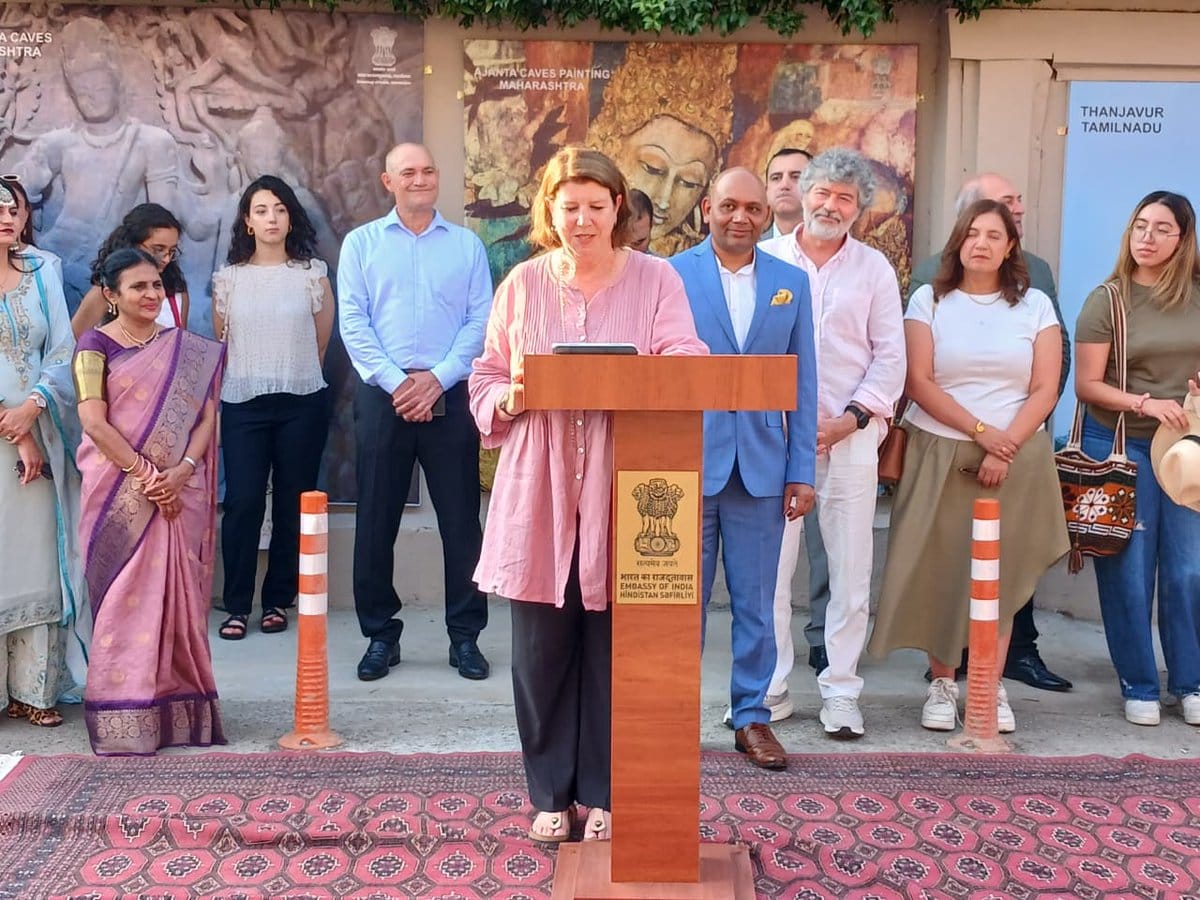
The Embassy of India in Baku has launched a permanent exhibition highlighting the 44 UNESCO World Heritage Sites of India. Inaugurated by Ambassador Abhay Kumar and UN-Habitat's Anna Soave, the 17-panel display aims to bolster bilateral tourism, strengthen cultural diplomacy, and deepen historical ties with Azerbaijan.
BAKU, Azerbaijan — The Embassy of India in Baku formally inaugurated a permanent exhibition dedicated to the UNESCO World Heritage Sites of India on Saturday, July 18, 2026. The diplomatic initiative, designed to strengthen cultural diplomacy and bilateral tourism, showcases India's vast architectural and natural legacy directly to Azerbaijani citizens, international diplomats, and travel industry stakeholders. The establishment of this permanent installation underscores a growing effort by New Delhi to leverage historical heritage as a bridge for deeper economic and international partnerships in the Caspian region.
Strategic Inauguration of the Permanent Cultural Exhibition
The formal opening ceremony took place at the Embassy of India premises in Baku, drawing a high-profile audience of international dignitaries and state officials. The exhibition was jointly inaugurated by the Ambassador of India to Azerbaijan, Abhay Kumar, alongside Anna Soave, the Head of the Country Programme for UN-Habitat Azerbaijan.
The curated display consists of 17 expansive illustrative panels that provide detailed insights into a selective group of India’s most historically significant cultural and natural landmarks. Conceived and executed under the direct guidance of Ambassador Kumar, the installation is designed to serve as a permanent educational and promotional resource for visitors to the embassy.
The launch event attracted a diverse gathering, including:
Ambassadors and senior diplomats representing various global missions.
Members of the Parliament of Azerbaijan.
Prominent figures from the Azerbaijani business sector and corporate community.
Leading tour operators, travel agents, and hospitality stakeholders.
Media professionals, journalists, and regional social media influencers.
Members of the expanding Indian diaspora residing in Azerbaijan.
Contextualizing the UNESCO World Heritage Sites of India
During his inaugural address, Ambassador Abhay Kumar emphasized the civilizational depth of the Indian subcontinent, noting that India represents one of the world's oldest continuous civilizations with a cultural legacy stretching across millennia. Central to this narrative is the country's footprint on the global heritage stage.
As documented by the United Nations Educational, Scientific and Cultural Organization, there are currently 44 recognized UNESCO World Heritage Sites of India. This extensive portfolio is categorized into three distinct classifications:
Cultural Sites (36): Including architectural marvels, ancient temples, fortresses, and monumental ruins that reflect diverse historical epochs.
Natural Sites (7): Comprising unique ecosystems, national parks, and bio-reserves of global ecological significance.
Mixed Sites (1): Representing locations that exhibit inseparable characteristics of both unique human culture and natural biodiversity.
Ambassador Kumar stated that these 44 properties do not merely represent the localized achievements of India, but form an integral component of humanity’s shared global heritage.
Impact on Tourism, Aviation, and Business Sectors
The establishment of a permanent exhibition focusing on the UNESCO World Heritage Sites of India comes at a time of accelerating people-to-people exchanges between Baku and New Delhi. Aviation data from recent quarters indicates a sharp rise in direct flight connectivity between India and Azerbaijan, turning Baku into a highly sought-after destination for Indian travelers, while concurrently opening up Indian historical circuits to Azerbaijani tourists.
For travel operators and investors present at the launch, the 17-panel exhibit offers a direct marketing tool to structure new specialized itineraries. Industry experts note that standard tourism from the South Caucasus region has historically favored regular leisure destinations; however, a dedicated emphasis on cultural heritage sites could diversify travel packages to include India’s ancient architectural networks, wellness retreats, and ecological corridors.
Furthermore, corporate leaders at the venue noted that cultural diplomacy initiatives frequently lay the groundwork for expanded bilateral trade. Enhanced mutual familiarity is anticipated to benefit sectors beyond tourism, including pharmaceuticals, information technology, and traditional textiles.
Official Statements and Remarks
"According to officials from the Indian Embassy, the installation will remain a core fixture of the mission's cultural outreach program, serving as a first point of reference for Azerbaijani tour operators seeking to collaborate with Indian counterparts."
In her remarks at the event, Anna Soave of UN-Habitat Azerbaijan acknowledged the cross-cultural significance of preserving and publicizing heritage sites, noting how urban planning, historical preservation, and cultural presentation intersect to foster sustainable tourism and international goodwill.
Why It Matters: The Geopolitical and Practical Implications
In modern international relations, cultural diplomacy is an essential instrument for strengthening bilateral ties. By anchoring its diplomatic outreach around the UNESCO World Heritage Sites of India, New Delhi aims to achieve several practical objectives:
Diversifying the Tourist Inflow: Shifting consumer interest from standard commercial itineraries to experiential, heritage-based travel.
Strengthening Diplomatic Capital: Utilizing shared global platforms like UNESCO and UN-Habitat to forge stronger institutional alignments with Azerbaijani authorities.
Enhancing Brand Awareness: Providing a tangible, visual narrative of India's historical and economic development to high-net-worth investors and decision-makers visiting the diplomatic enclave in Baku.
Key Facts at a Glance
Event: Inauguration of a Permanent Exhibition focusing on the UNESCO World Heritage Sites of India.
Location: Embassy of India premises, Baku, Azerbaijan.
Key Dignitaries: Indian Ambassador Abhay Kumar and UN-Habitat Azerbaijan Head Anna Soave.
Exhibition Scope: 17 specialized illustrative panels highlighting cultural, mixed, and natural properties.
Total Listed Sites: India manages 44 total UNESCO recognized locations, consisting of 36 cultural, 7 natural, and 1 mixed designation.
FAQ Section
What is the primary objective of the permanent exhibition in Baku?
The permanent exhibition aims to showcase the cultural, historical, and natural wealth of the UNESCO World Heritage Sites of India to Azerbaijani citizens, international diplomats, and travel operators, thereby fostering stronger bilateral tourism and diplomatic ties.
How many UNESCO World Heritage Sites does India currently possess?
India is home to 44 officially inscribed UNESCO World Heritage Sites, which include 36 cultural sites, 7 natural sites, and 1 mixed site.
Who inaugurated the exhibition at the Indian Embassy?
The exhibition was jointly inaugurated by the Ambassador of India to Azerbaijan, Abhay Kumar, and the Head of Country Programme of UN-Habitat Azerbaijan, Anna Soave.
Is the exhibition accessible to the general public?
The installation is permanently housed within the premises of the Embassy of India in Baku and will be utilized during institutional briefings, cultural events, and diplomatic interactions involving travel trade stakeholders and the public.
Source:
Official press release and event coverage documented by the Embassy of India in Baku and regional diplomatic logs.