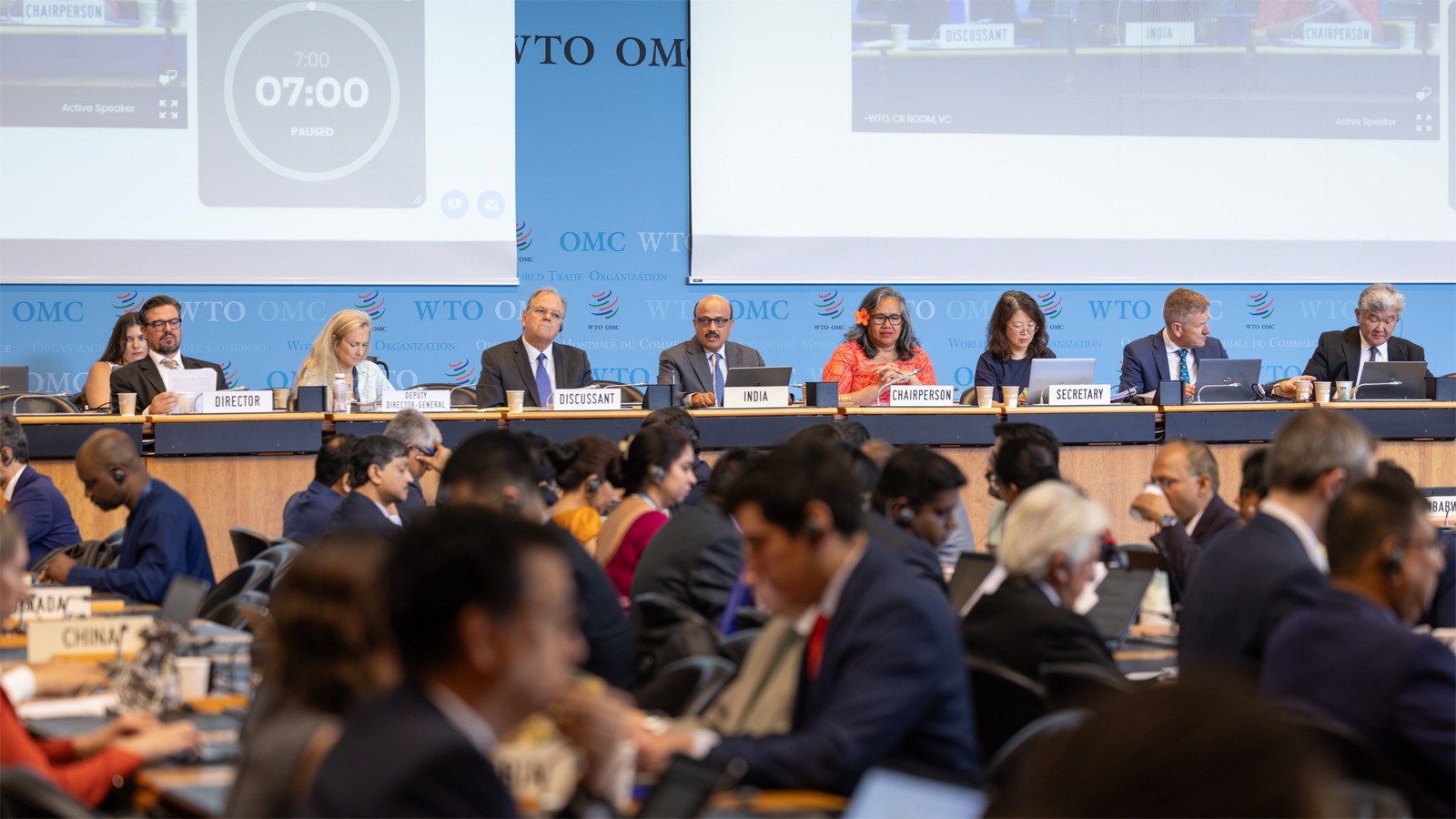
India concluded its 8th Trade Policy Review at the World Trade Organization in Geneva on July 23, 2026. New Delhi reaffirmed its commitment to WTO-consistent trade rules, defended its agricultural tariff structure for small-scale farmers, and urged that global trade institution reforms remain development-oriented for emerging economies.
GENEVA — India officially concluded its 8th Trade Policy Review (TPR) at the World Trade Organization (WTO) headquarters in Geneva, reaffirming its commitment to an open, transparent, and rules-based multilateral trading system.
Led by Commerce Secretary Rajesh Agarwal, the Indian delegation presented the nation's economic track record and trade policy agenda covering the 2021–2025 review period. Addresssing representatives from 68 participating member states, New Delhi reiterated that its trade strategies are strictly guided by WTO-consistent principles while balancing the critical developmental requirements of a large emerging economy.
The two-session review, held on July 21 and July 23, 2026, served as a core peer-monitoring transparency mechanism. Indian officials responded to 1,094 written queries submitted by 44 WTO member nations regarding tariff structures, non-tariff measures, digital public infrastructure, and domestic manufacturing incentives.
Defense of Tariffs and Agricultural Protections
During the review sessions, the Indian delegation addressed questions raised by trading partners regarding tariff levels and market access. Commerce Secretary Agarwal clarified that India's agricultural tariff framework is designed to protect the livelihoods of millions of resource-poor and smallholder farmers.
In industrial sectors, officials emphasized that import duties are calibrated to build resilient supply chains, support domestic manufacturing under the Aatmanirbhar Bharat framework, and foster diversification.
Key operational points highlighted by the Commerce Ministry during the proceedings included:
Record Export Performance: India's total exports of merchandise and services reached an all-time high of $863.1 billion in the 2025–26 fiscal year.
Trade Facilitation & Customs: Progressive rollout of digital customs, logistics modernization, and the Jan Vishwas initiative to simplify regulatory compliance.
Fisheries Agreement: Formal acceptance and deposit of the instrument of acceptance for the WTO Agreement on Fisheries Subsidies.
Quality Control Orders (QCOs): Clarified that technical regulations and standards are implemented non-discriminatorily to achieve legitimate public safety and quality standards.
Calls for Development-Oriented WTO Reforms
Addressing the broader governance of global commerce, India urged member nations to ensure that institutional WTO reforms prioritize the developmental interests of developing countries and Least Developed Countries (LDCs).
New Delhi stressed that structural reforms must preserve necessary policy space for industrialization, restore a fully functioning two-tier dispute settlement mechanism, and deliver on long-standing mandates such as a permanent solution for public stockholding for food security.
Delegates from several nations, including discussant Ambassador Guilherme de Aguiar Patriota of Brazil, acknowledged India's economic resilience, its role as an engine of global demand, and its Duty-Free Tariff Preference (DFTP) scheme supporting LDCs.
Official Sources Section
Information and data points in this article are based on official government press releases and institutional proceedings:
Ministry of Commerce & Industry, Government of India: Official Press Information Bureau (PIB) releases regarding the 8th Trade Policy Review.
World Trade Organization (WTO): Trade Policy Review Body (TPRB) summary statements and member interventions in Geneva.
Quote Section
"Responding to the issues raised by Members, the Commerce Secretary reiterated that India's trade policies are guided by WTO-consistent principles while balancing the developmental needs of a large developing economy," stated official representatives from the Ministry of Commerce & Industry.
Why It Matters
The conclusion of India's Trade Policy Review carries practical implications for international business and trade policy:
For International Exporters & Businesses: Provides clarity on India's tariff policies, customs simplification, and commitment to transparent trade regulations.
For Domestic Agricultural Producers: Reaffirms sovereign policy safeguards protecting domestic farm livelihoods against global price volatility.
For Global Trade Governance: Reinforces India's position as a key bridge-builder advocating for balanced, development-focused multilateral rules.
Key Facts at a Glance
8th Review Concluded: India completed its 8th WTO Trade Policy Review covering the 2021–2025 period in Geneva.
1,094 Questions Answered: Indian officials addressed written queries from 44 member states during the two review sessions.
$863.1 Billion Exports: Combined annual merchandise and services exports reached record highs during the review period.
Focus on WTO Reform: New Delhi called for WTO structural reforms to preserve policy space for developing economies.
Frequently Asked Questions (FAQ)
What is the WTO Trade Policy Review Mechanism?
The Trade Policy Review Mechanism (TPRM) is a peer-review transparency exercise under which WTO members periodically examine each other's trade policies to ensure compliance with multilateral rules and foster constructive dialogue.
How often is India reviewed by the WTO?
As one of the world's major trading entities, India undergoes a Trade Policy Review approximately once every five years.
What was India's stance on agricultural tariffs during the review?
India defended its agricultural tariff structure as essential to protecting the food security and livelihoods of millions of resource-poor, smallholder farmers.
What reforms is India seeking at the WTO?
India advocates for WTO reforms that are development-oriented, protect special and differential treatment for developing nations, restore the dispute settlement system, and resolve public stockholding for food security.
Source: