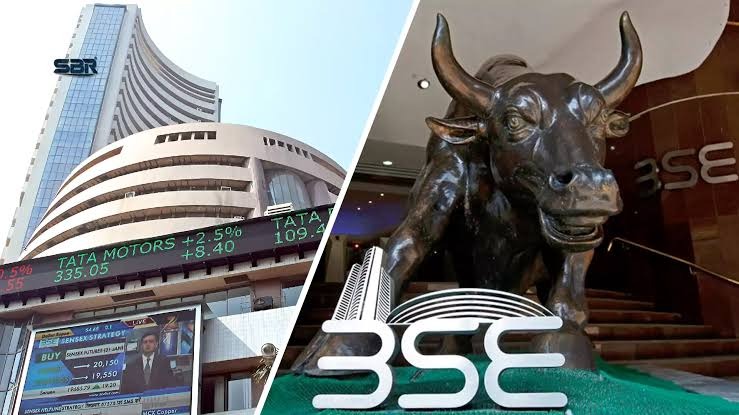
India’s benchmark BSE Sensex (.BSESN) dipped 0.27% in early trade, driven by persistent selling pressure in major banking heavyweights following disappointing Q1 FY27 earnings. Broader market sentiment remained cautious amid elevated global crude oil prices and sustained foreign portfolio capital outflows across domestic stock exchanges.
MUMBAI, India — India’s flagship equity benchmark, the BSE Sensex (.BSESN), traded lower by 0.27% during morning transactions on the BSE Limited. The decline extends early-session weakness across Dalal Street as institutional investors respond to margin pressures disclosed in recent quarterly banking results, alongside persistent geopolitical tensions and volatile crude oil benchmarks.
The broader weakness in blue-chip shares was mirrored on the National Stock Exchange of India (NSE), where the Nifty 50 index also registered modest losses during morning trade.
Banking Sector Drag and Sectoral Performance
The downturn was led by frontline private sector lenders, which faced active selling following mixed earnings and margin compression for the June quarter (Q1 FY27). Banking and financial service indices recorded notable declines, offsetting gains across defensive sectors.
While financial stocks dragged the benchmark index down, capital goods, healthcare, and power utility counters offered moderate support, absorbing broader downside pressure.
Macroeconomic Headwinds and Foreign Institutional Outflows
Market participants attribute the cautious tone across Indian equities to a combination of domestic and international headwinds. Elevated Brent crude oil prices continue to pose inflationary challenges for India's import-dependent energy ecosystem.
Additionally, foreign institutional investors (FIIs) have maintained a selective approach, rebalancing portfolios toward alternative Asian markets amid shifting US dollar yield expectations. Domestic institutional investors (DIIs), however, continue to provide structural liquidity through systematic investment plan (SIP) inflows, preventing sharper index corrections.
Official Sources Section
Real-time stock indices, market capitalization data, and daily trading volumes are calculated and published under statutory frameworks by BSE Limited and the National Stock Exchange of India (NSE) under the regulatory supervision of the Securities and Exchange Board of India (SEBI).
Quote Section
"According to officials and exchange trading disclosures, morning index fluctuations reflect short-term portfolio adjustments by institutional participants following first-quarter earnings announcements across major banking constituents."
Why It Matters
For Retail & Equity Investors: Highlights the impact of banking sector earnings on broader market valuations, signaling potential volatility around quarterly earnings announcements.
For Institutional Markets: Reflects ongoing institutional asset allocation between cyclical banking stocks and defensive sectors amid global macroeconomic uncertainty.
For Mutual Fund Holders: Daily index movements directly influence equity scheme NAVs, particularly those heavily weighted toward financial services.
Key Facts at a Glance
Index Movement: BSE Sensex (.BSESN) down 0.27% in morning trading.
Primary Sector Drag: Financials and private banking stocks leading intraday losses.
Market Support: Defensive sectors, including pharmaceutical and power stocks, mitigating steep declines.
Regulatory Authorities: BSE Limited and Securities and Exchange Board of India (SEBI).
Frequently Asked Questions (FAQ)
What is the BSE Sensex (.BSESN)?
The BSE Sensex (S&P BSE Sensex) is India's benchmark equity index, tracking 30 of the largest, most financially sound, and liquid companies listed on the BSE Limited.
Why are banking stocks driving the Sensex lower?
Banking heavyweights are experiencing profit-taking due to narrowing Net Interest Margins (NIMs) disclosed in recent Q1 FY27 financial results, alongside rising credit costs in select retail portfolios.
How do global oil prices impact the BSE Sensex?
Higher crude oil prices increase India's import bill, adding pressure on the Indian Rupee and corporate profit margins across energy-intensive industries, which can prompt foreign institutional selling in benchmark equities.
Source: Live equity index statistics provided by BSE Limited and statutory market filings monitored by the Securities and Exchange Board of India (SEBI).